Stainless Steel vs Wood, Laminate and Mild Steel: Choosing Materials for Commercial Kitchens in the GCC
A practical comparison of stainless steel, wood, laminate and mild steel for counters and cabinets in Gulf commercial kitchens, explaining performance in the GCC climate and offering selection and maintenance guidance for operators in the UAE and nearby markets.

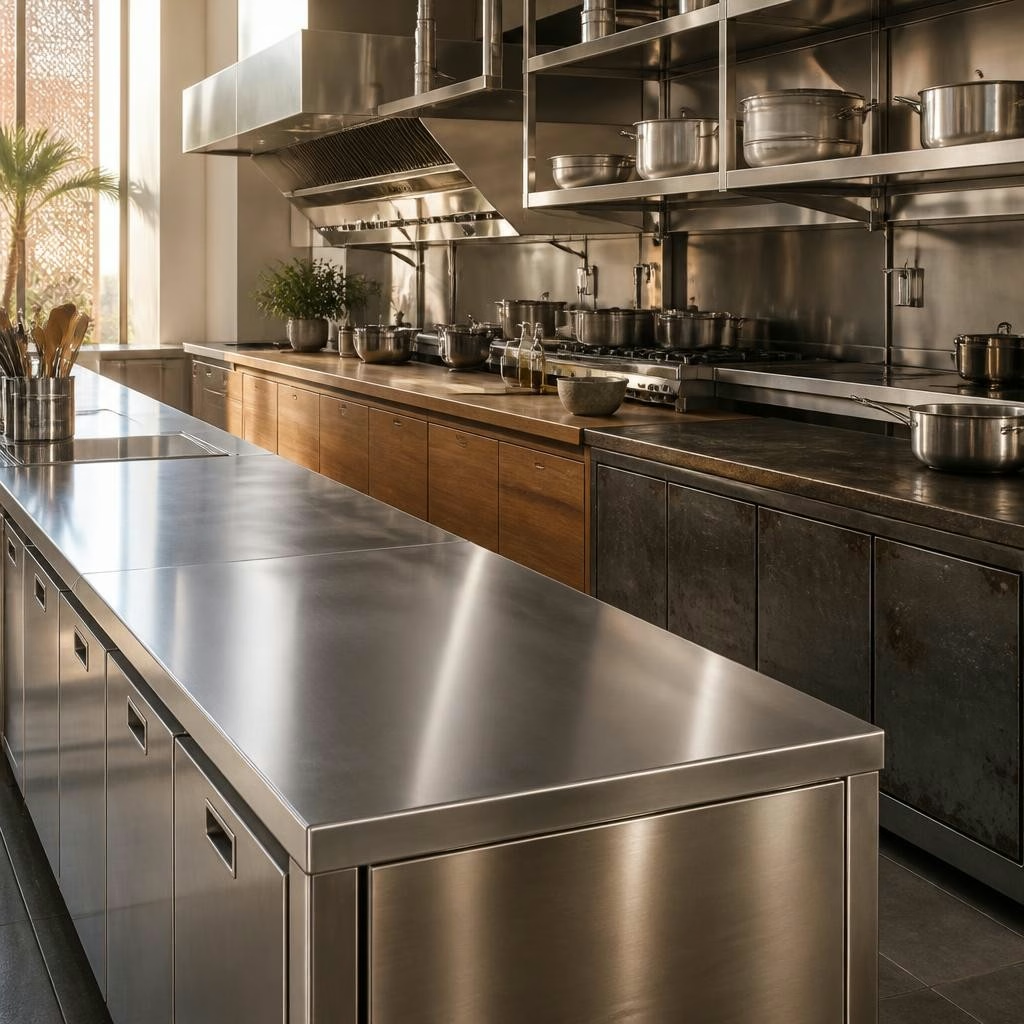
Why material choice matters in GCC commercial kitchens
Material selection for counters and cabinets affects hygiene, durability, lifecycle cost and downtime. In the Gulf region, high ambient temperatures, seasonal humidity and coastal salt-laden air increase corrosion and wear. For restaurants, cafés and hotels these environmental stresses, combined with heavy daily use, make the right material choice especially important for long-term performance and operational continuity.
What stainless steel brings to professional kitchens
Stainless steel is widely used in commercial kitchens because it resists corrosion, withstands heat, and does not absorb liquids or food residues—qualities that support food safety and easy cleaning. Its structural strength suits heavy equipment, long countertops and open shelving, while welded construction avoids gaps where dirt and pests collect. For many Gulf operators, this combination of hygiene and durability makes stainless a practical baseline for back‑of‑house work surfaces and cabinets.
How the GCC climate affects stainless steel performance
Coastal humidity and salt spray accelerate corrosion for lesser steels and poorly finished metalwork. Properly specified stainless, with a corrosion-resistant finish and correct joint detailing, performs well in these conditions. For sites very close to the sea or in highly humid environments, consider specifying higher-corrosion‑resistance finishes and protective design details (such as sealed welds and raised legs) to extend service life.
When wood is appropriate—and its limitations
Wood offers a warm, attractive look that suits front‑of‑house counters, service desks and displays. However, wood is porous, sensitive to moisture and can harbor bacteria if not fully sealed and maintained. In busy, wet or heat-exposed kitchen zones, wood tends to warp, crack or delaminate. If used in Gulf kitchens, wood should be restricted to low‑moisture areas, fully sealed with food‑safe finishes, and inspected frequently for wear.
Laminate: cost-effective appearance with caveats
Laminate panels and countertops provide a wide range of finishes at lower upfront cost and are commonly used in front‑of‑house or dry prep areas. In the GCC, laminate can delaminate or swell when exposed to persistent humidity, steam or repeated cleaning with strong chemicals. For humid environments, choose high‑quality, moisture‑resistant laminates and ensure edging and joints are well sealed to reduce the risk of damage.
Mild steel and painted steel: pros and maintenance needs
Mild or carbon steel can be cheaper initially and is often used where budget constraints are tight. However, unless properly coated and regularly maintained, it corrodes quickly in humid or salty conditions. Painted or coated finishes will require ongoing maintenance and touch‑ups; otherwise rust and flaking lead to hygiene and structural issues. In many Gulf projects, stainless steel is chosen over mild steel because it reduces long‑term maintenance burdens.
Lifecycle cost: initial price vs total cost of ownership
Choosing the lowest upfront cost can result in higher total cost of ownership when you factor in maintenance, repairs, replacements and lost operating days. Stainless steel may have a higher initial price than laminate or painted steel, but its resistance to corrosion, ease of cleaning and longer service life often produce lower lifecycle costs in high‑use commercial kitchens—especially in the GCC where environmental stresses are greater.
Practical selection criteria for GCC operators
Assess each area of the kitchen by exposure to heat, moisture and cleaning chemicals. Use stainless steel for wet prep, cooking lines, sinks and heavy‑use cabinets. Reserve laminate or finished wood for front‑of‑house surfaces that prioritize aesthetics and are protected from steam and spills. Near coastal locations, specify corrosion‑resistant finishes and consider elevated legs, removable panels for inspection, and welded seams to avoid ingress points for moisture and salt.
Maintenance and cleaning best practices
Daily cleaning with neutral detergents, rinsing and drying prevents salt and grease buildup. Avoid prolonged use of chlorine‑based bleaches or abrasive powders that damage protective films. Regularly inspect welds, seals and coatings; repair chips and damaged edge seals promptly to prevent moisture ingress. For operators seeking professional installation and ongoing support, working with a supplier experienced in design, manufacturing and site installation helps ensure correct material specification and easier maintenance over time. One customer review highlighted that SAS Kitchens’ stainless products are durable and that the team is responsive—an example of how supplier experience can influence long‑term satisfaction.
Summary recommendations and next steps
For most GCC commercial kitchen back‑of‑house applications, stainless steel offers the best balance of hygiene, durability and lower lifecycle cost. Laminate or wood remain useful for front‑of‑house areas where appearance matters and exposure to moisture is limited. Mild steel can be considered where budget is constrained but requires a disciplined maintenance plan. When planning a fit‑out, assess exposure conditions, request corrosion‑resistant finishes for coastal sites, and work with an experienced manufacturer/installer to specify details that reduce long‑term risk. SAS Kitchens, based in Sharjah and serving the UAE and neighboring markets, provides design, manufacture and installation services tailored to commercial kitchens—an option operators can evaluate when specifying materials for GCC conditions.
Customer review


Article by
SAS Kitchens - Commercial Kitchen Equipment
SAS Kitchens is a trusted provider of high-quality stainless steel commercial kitchen equipment in the UAE. We specialize in designing, manufacturing, and installing durable, high-performance kitchen solutions for restaurants, cafés, hotels, and food service businesses. With a focus on precision craftsmanship, functionality, and hygiene, our equipment is built to withstand the demands of professional kitchens. Our experienced team is committed to delivering reliable service, timely project execution, and tailored solutions that meet each client’s operational needs. At SAS Kitchens, customer satisfaction, product durability, and professional support are at the core of everything we do.