Upgrading Your Restaurant Kitchen in Sharjah: Repair, Retrofit, or Replace?
Practical guidance for Sharjah restaurant owners on deciding whether to repair, retrofit, or replace worn commercial kitchen equipment, with steps to assess condition, compare lifecycle costs, and plan downtime with a local supplier.

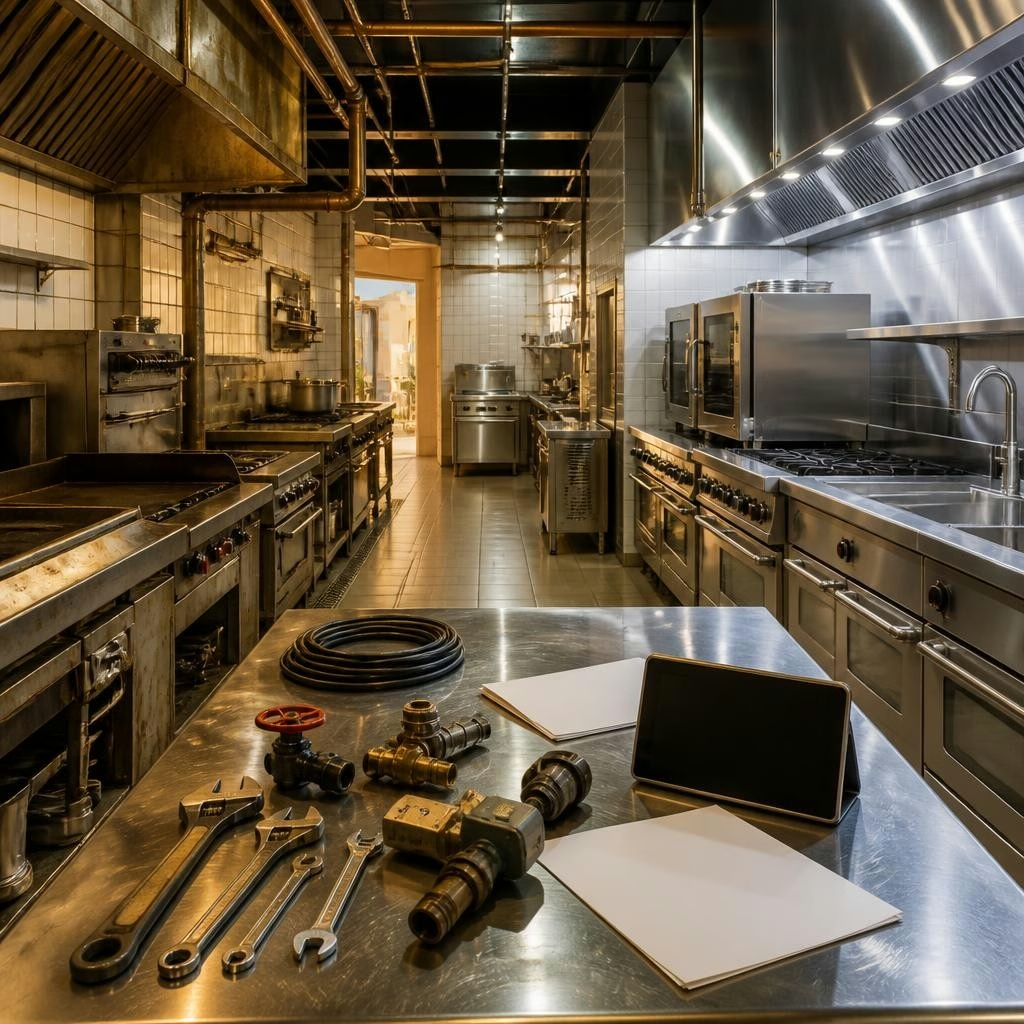
Why this decision matters
Choosing whether to repair, retrofit, or replace kitchen equipment affects daily operations, food quality, energy costs, and long-term capital needs. For older restaurants in Sharjah and nearby emirates, the right choice reduces unexpected breakdowns, keeps health and safety standards, and controls operating expenses. This article explains practical criteria and a step-by-step approach tailored to commercial stainless steel equipment common in professional kitchens.
Start with a structured condition assessment
Begin by inspecting each major item (cooklines, fryers, refrigeration, prep tables, exhaust systems). Look for safety and performance indicators: visible corrosion or perforation of stainless steel, oil or gas leaks, erratic temperature control, unusually high energy use, repeated breakdowns, and hygiene risks from damaged surfaces. Record age, service history, and frequency of repairs. A thorough assessment gives a factual basis for choosing repair, retrofit, or replacement rather than relying on guesswork.
When repairing is the right choice
Repair is often appropriate if a single component has failed, spare parts are available, the equipment is otherwise sound, and repair restores safe, efficient operation. Short-term repairs make sense when downtime must be minimal or when the unit is not near end‑of‑life. Before approving repairs, confirm expected remaining useful life and ask for an estimate of recurring maintenance needs—if service visits will be frequent, replacement may be more economical in the long run.
When to consider retrofitting or upgrading components
A retrofit can be a cost‑effective middle ground when core equipment is structurally sound but outdated. Typical retrofits include installing more efficient burners or thermostats, replacing control panels, upgrading insulation in refrigeration, or adding stainless steel work-surfaces to improve workflow and hygiene. Retrofitting is also appropriate when you change menu items or increase throughput and need targeted performance improvements without replacing entire lines.
Signs that full replacement is the best option
Replace equipment when structural failure, pervasive corrosion, obsolete controls, or repeated major repairs compromise safety or food quality. Full replacement is also justified if older machines are energy‑inefficient and cause high utility or maintenance costs, or if they cannot meet new regulatory or capacity requirements. Replacing aging systems can reduce long‑term costs through improved energy performance, better hygiene, and reduced downtime.
Comparing lifecycle costs (a practical approach)
Compare options by estimating total lifecycle costs rather than upfront price alone. Include purchase or repair cost, expected remaining service life, energy consumption, likely maintenance visits, downtime costs (lost revenue or reduced covers), and warranty coverage. Create side-by-side scenarios: (A) repair now and expect X months of service, (B) retrofit for targeted gains, and (C) full replacement with warranty and lower operating costs. This structured comparison helps identify the financially sound choice for your operation.
Minimizing downtime during upgrades
Downtime is often the most costly invisible expense. To reduce disruption, schedule work during low-service periods, stage upgrades one station at a time, and consider temporary rental equipment for critical functions. Lead times for custom stainless steel fabrication or major appliances can vary, so plan procurement early. Many local suppliers emphasize timely project execution and delivery—choose a partner that can coordinate installation and handover to minimize lost service days.
Warranty and after‑sales service matter
Confirm what warranty and post‑sale support are included before committing. A supplier who stands behind their products and provides responsive maintenance reduces operational risk. Customer feedback commonly highlights the value of warranty coverage and helpful after‑sales support when equipment problems arise. Make warranty terms and expected service response times part of the procurement decision.
Selecting a local partner in Sharjah
Choose a partner experienced with stainless steel commercial kitchen equipment, able to survey existing layouts, provide viable options (repair, retrofit, replace), and execute installations to hygiene and safety standards. Look for documented project experience in restaurants and cafés, clear timelines, spare‑parts availability, and references. SAS Kitchens is based in Sharjah and specializes in designing, manufacturing, and installing stainless steel solutions across the UAE and GCC; use the supplier’s track record and customer feedback when evaluating proposals.
Action checklist and next steps
1) Schedule a professional site assessment to list equipment condition and failure risk. 2) Prioritize safety‑critical items and units that most affect food quality. 3) Request three scenarios—repair, retrofit, replacement—with expected service life and downtime estimates. 4) Compare total lifecycle costs including energy and maintenance. 5) Confirm warranty and post‑sale support before signing. If you are based in Sharjah, consider visiting the local showroom at Shop no 1-3, Dar Al Khan Building for a consultation and to review stainless steel options in person.
Customer review


Article by
SAS Kitchens - Commercial Kitchen Equipment
SAS Kitchens is a trusted provider of high-quality stainless steel commercial kitchen equipment in the UAE. We specialize in designing, manufacturing, and installing durable, high-performance kitchen solutions for restaurants, cafés, hotels, and food service businesses. With a focus on precision craftsmanship, functionality, and hygiene, our equipment is built to withstand the demands of professional kitchens. Our experienced team is committed to delivering reliable service, timely project execution, and tailored solutions that meet each client’s operational needs. At SAS Kitchens, customer satisfaction, product durability, and professional support are at the core of everything we do.