Ventilation and Heat Management for UAE Commercial Kitchens
Practical guidance on hoods, exhaust, airflow planning, and how stainless steel equipment layouts can be paired with efficient ventilation systems to keep UAE restaurants safe, comfortable, and compliant.

Why ventilation and heat control matter in UAE kitchens
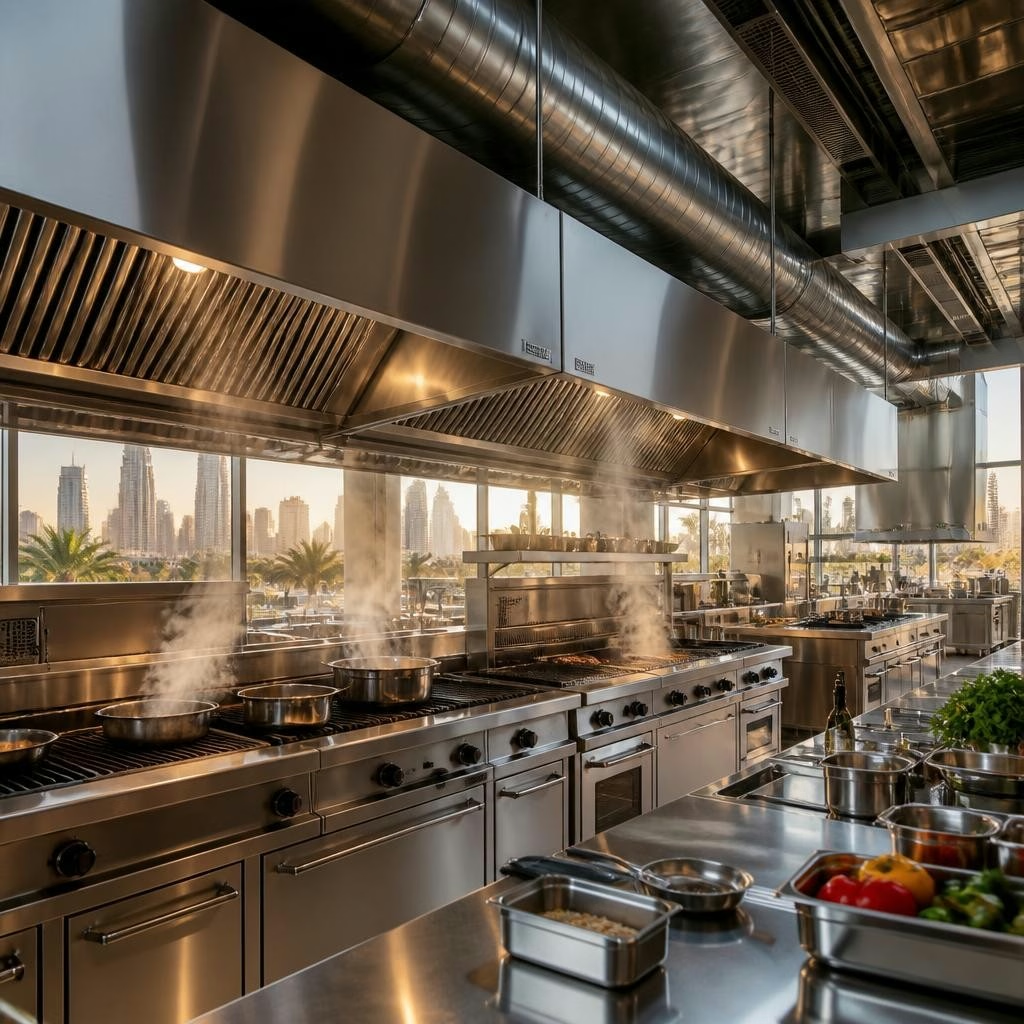
High ambient temperatures in the UAE make effective kitchen ventilation and heat management essential for staff comfort, food safety, and equipment longevity. A well-designed ventilation system removes heat, cooking fumes, and grease-laden air while supplying conditioned make-up air so operational areas stay within usable temperature and air-quality ranges. For restaurant owners and kitchen designers, planning ventilation alongside the kitchen layout reduces energy waste and improves workflow.
Core components: hoods, exhaust, and make-up air
The primary ventilation components are the capture hood (installed over cooking appliances), the exhaust fan and ducting that evacuate contaminated air, and the make-up air system that replaces the extracted volume. Canopy hoods are common in commercial kitchens because they efficiently capture rising heat and smoke from grills, woks, and fryers. Make-up air must be tempered and balanced with exhaust to avoid negative pressure, backdrafts, or uncomfortable dining-room conditions.
Matching hood type to your cooking profile
Choose hood types and capture configurations based on the dominant cooking methods in the kitchen. Heavy application cooking—deep-frying, char-broiling, or high-heat wok stations—requires hoods with better capture and grease management than light-prep or cold stations. Plan dedicated hoods for heavy-use equipment and consider modular hoods for flexible layouts that may change as menus evolve.
Airflow planning without guessing
Airflow needs depend on the kitchen’s equipment mix, operational hours, and local climate. Instead of relying on general rules, work with a ventilation designer to assess real heat loads and cooking effluent. Proper planning considers hood capture efficiency, required exhaust volumes, the distance and friction in duct runs, and the interaction between multiple hoods so adjacent stations don’t compromise each other’s performance.
Layout tips: pairing stainless steel equipment with ventilation
Stainless steel worktops, cabinets, and appliances are durable and easy to clean, making them a natural fit under and around hoods. When laying out equipment, place high-heat appliances directly beneath appropriately sized hoods, leave clear service aisles for staff, and position heat-generating stations away from refrigeration and delicate prep areas. Using continuous stainless-steel backsplashes and channels can simplify cleaning where grease and condensation migrate toward extract points.
Duct routing and rooftop equipment considerations
Ductwork should be as direct as possible and designed for easy access for inspection and cleaning. In hot climates, insulating ducts and locating fans and discharge points to minimize recirculation of hot rooftop air improves performance. Rooftop fan selection and placement affect noise and vibration in the dining areas; coordinate fan selections and structural supports early in the project to avoid costly retrofits.
Grease control, filtration, and hygiene
Grease filters, capture trays, and scheduled cleaning are non-negotiable in commercial kitchens. Choose filter types that match the cooking load and ensure there is a practical plan for filter removal and cleaning without disrupting service. Stainless-steel surfaces and removable components simplify routine hygiene tasks. Include grease interceptors in plumbing design where local regulations require them and schedule regular maintenance to prevent build-up that can reduce airflow and increase fire risk.
Maintenance, warranties, and after-sales service
Ventilation systems require regular inspection, filter changes, and occasional fan or motor servicing to remain effective. When selecting suppliers and installers, confirm what maintenance support and warranty terms are offered. Many customers value suppliers that provide clear handover documentation and service plans so cleaning and upkeep tasks are straightforward; ask for recommended maintenance intervals and contacts for post-installation support.
Choosing a vendor and managing installation
Select vendors who can coordinate hood and equipment design together rather than treating them as separate trades. Look for providers experienced in stainless-steel fabrication and in-site installation so dimensions, clearances, and duct penetrations are handled cleanly during fit-out. Customers frequently report better outcomes when the equipment fabricator and the ventilation installer collaborate during design review and on-site checks.
Customer experience: what to expect during a project
In well-run projects, teams handle measurement, fabrication, installation, and commissioning with minimal disruption to other trades. One reviewer specifically noted that their kitchen setup was completed smoothly, efficiently, and professionally, highlighting the value of coordinated execution. Ask prospective suppliers for examples of past installations and for references that demonstrate timely delivery and effective on-site coordination.
Pre-installation checklist for restaurant owners
Before installation, confirm: exact equipment list and heat outputs; approved hood sizes and clearances; duct routing and rooftop fan locations; access points for filter removal and cleaning; make-up air provisions; required structural supports for rooftop equipment; and a maintenance schedule and contact for post-installation service. Having these items settled in advance reduces delays, avoids rework, and helps align stainless-steel equipment placement with ventilation performance.
Next steps and local support
SAS Kitchens, based in Sharjah, specializes in designing, manufacturing, and installing stainless-steel commercial kitchen equipment and works with clients across the UAE and the wider GCC. If you are planning a new kitchen or upgrading ventilation, start with a site survey and a coordinated equipment-plus-ventilation plan. A combined approach — matching robust stainless-steel layouts with properly sized hoods, ducts, and make-up air — delivers safer, more comfortable, and longer-lasting kitchen environments.
Customer review


Article by
SAS Kitchens - Commercial Kitchen Equipment
SAS Kitchens is a trusted provider of high-quality stainless steel commercial kitchen equipment in the UAE. We specialize in designing, manufacturing, and installing durable, high-performance kitchen solutions for restaurants, cafés, hotels, and food service businesses. With a focus on precision craftsmanship, functionality, and hygiene, our equipment is built to withstand the demands of professional kitchens. Our experienced team is committed to delivering reliable service, timely project execution, and tailored solutions that meet each client’s operational needs. At SAS Kitchens, customer satisfaction, product durability, and professional support are at the core of everything we do.