Activity-Based Learning Ideas Ghaziabad Parents Can Try at Home
Practical, school-style activity ideas parents in Ghaziabad can use at home to reinforce pre-school and early primary concepts—simple setups, step-by-step examples, and tips for fitting activities into a busy family routine.
Why activity-based learning helps young children
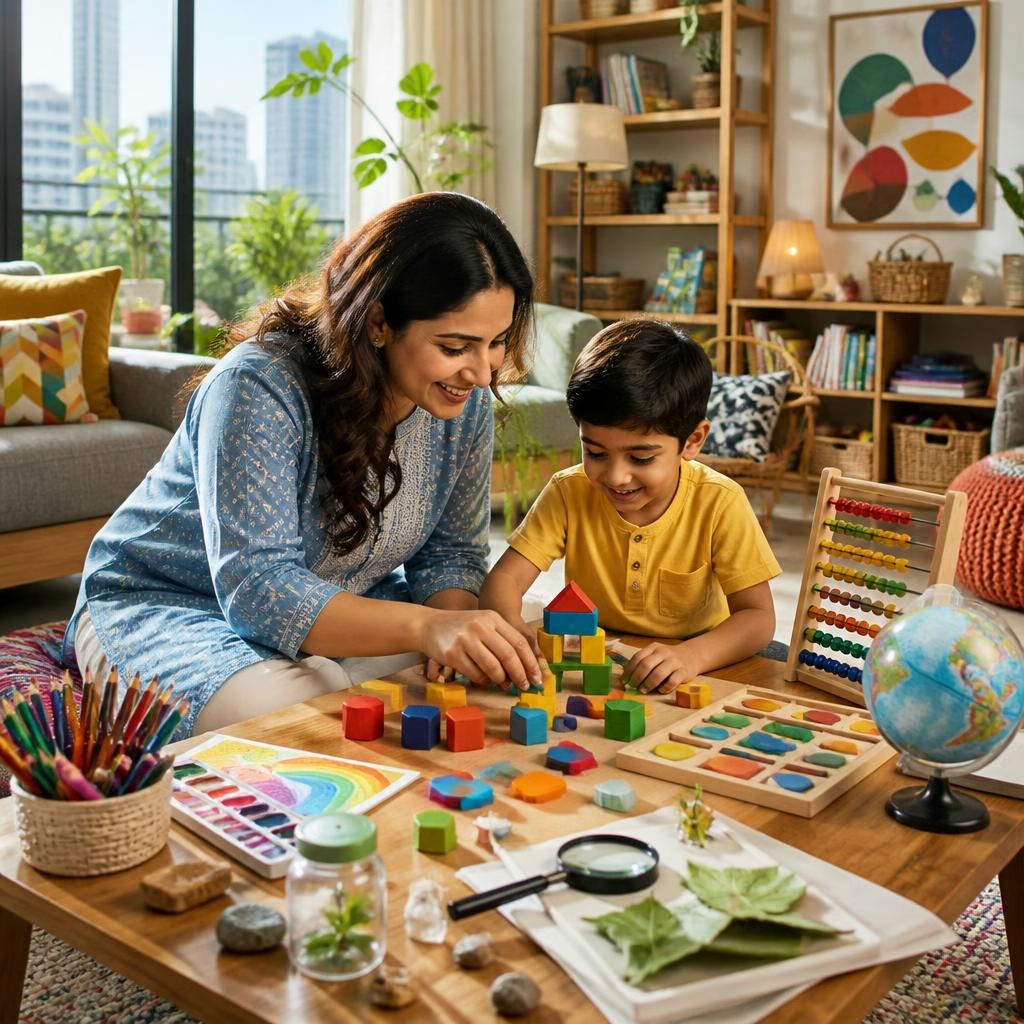
Activity-based learning turns abstract ideas into concrete experiences, so children internalize concepts through play, movement and hands-on exploration. This approach supports early literacy, numeracy, motor skills and social development—areas many parents in Ghaziabad value when choosing a school. Parents and local school communities note that activity-focused lessons often make learning more engaging and memorable for pre-school and lower-primary children.
Create a simple home learning corner
You don’t need a lot of space or fancy materials. Choose a low table or a small mat, keep basic supplies (paper, crayons, glue, scissors, a few containers, and everyday objects) in labeled boxes, and rotate activities weekly. A visible routine chart (morning tasks, play, snack, reading time) helps children know what to expect and makes it easier for working parents to plan short activity blocks.
Hands-on literacy activities
Make reading and language active: turn favourite stories into puppet shows using socks or paper bags; create a letter hunt by hiding alphabet cards around the room; use magnetic letters on the fridge for simple word-building; and play ‘sound baskets’ where the child sorts objects by their beginning sound. Short, playful sessions (10–15 minutes) repeated a few times a week build phonemic awareness and vocabulary.
Everyday math with real objects
Use household items to teach counting, patterns and measurement. Count spoons, socks or mangoes; make patterns with colored beads or buttons; measure water using cups and talk about full/empty. For number sense, play hopscotch with chalk outside and have the child land on numbers in sequence, or ask them to set the table for a family meal to practice one-to-one correspondence and simple addition.
Simple science and sensory explorations
Sensory and observational play builds curiosity and scientific thinking. Try a basic sink-and-float tub with toys, mix baking soda and vinegar in a safe container for a fizzing reaction, or make a nature collage after a short walk. Sensory bins—filled with rice, lentils, or sand and small scoops—encourage fine-motor control and sustained focus. Local parks in Ghaziabad can be useful for collecting leaves, observing insects or practising descriptive language.
Creative, social and physical activities
Encourage pretend play (a grocery shop, clinic or kitchen), which strengthens language, empathy and problem-solving. Simple art projects—collage, finger painting, or cutting and pasting—build fine motor skills. Daily movement games like “freeze dance,” ball passing, or obstacle courses promote coordination and help children release energy before calmer learning times.
Keep activities short, repeat often, and connect with school
Young children learn through repetition. Opt for short, focused activities you can repeat and gradually increase complexity. If your child attends a school with an activity-based approach, share your home projects with their teacher; many local parents say teachers are supportive of home-school connections and can suggest ways to reinforce classroom themes. One parent specifically highlighted the value of activity-based learning as part of their child’s progress, which reflects how practical home activities can complement school lessons.
Practical tips for busy families and next steps
Schedule activity slots around predictable routines (after breakfast or before bedtime) and involve older siblings or caregivers to rotate responsibilities. Use items you already have to keep cost low, take photos of completed projects for a simple home portfolio, and celebrate small successes to build confidence. If you want more ideas tailored to your child’s class level, ask their school teacher for suggestions—teachers at local pre-schools often welcome brief updates and can recommend activities that match classroom learning goals.
Customer review


Article by
𝐒𝐢𝐥𝐯𝐞𝐫𝐥𝐢𝐧𝐞 𝐏𝐫𝐞𝐬𝐭𝐢𝐠𝐞 𝐒𝐜𝐡𝐨𝐨𝐥 - 𝐆𝐡𝐚𝐳𝐢𝐚𝐛𝐚𝐝
Silver Line Prestige School was founded in 1987 with a vision to build a haven for futuristic and scholastic education. With the motto of 'Education Beyond Tomorrow', our approach is to achieve the perfect balance between academic and extra-curricular activities to nurture the student in every domain of life. At SilverLine, we practise the most progressive methods for educating our global citizens. With world-class infrastructure, advanced technology labs, highly-educated and experienced educators, Silver Line Prestige School has been advancing education in Ghaziabad for the past three decades.