Parent’s Guide to Foundation Stage Skills: What Your 3–6-Year-Old Should Learn in Ghaziabad Schools
A practical guide for Ghaziabad parents outlining age-appropriate milestones for 3–6-year-olds—motor skills, early literacy and numeracy, self-help, and social-emotional development—plus gentle ways to track progress without pressure.
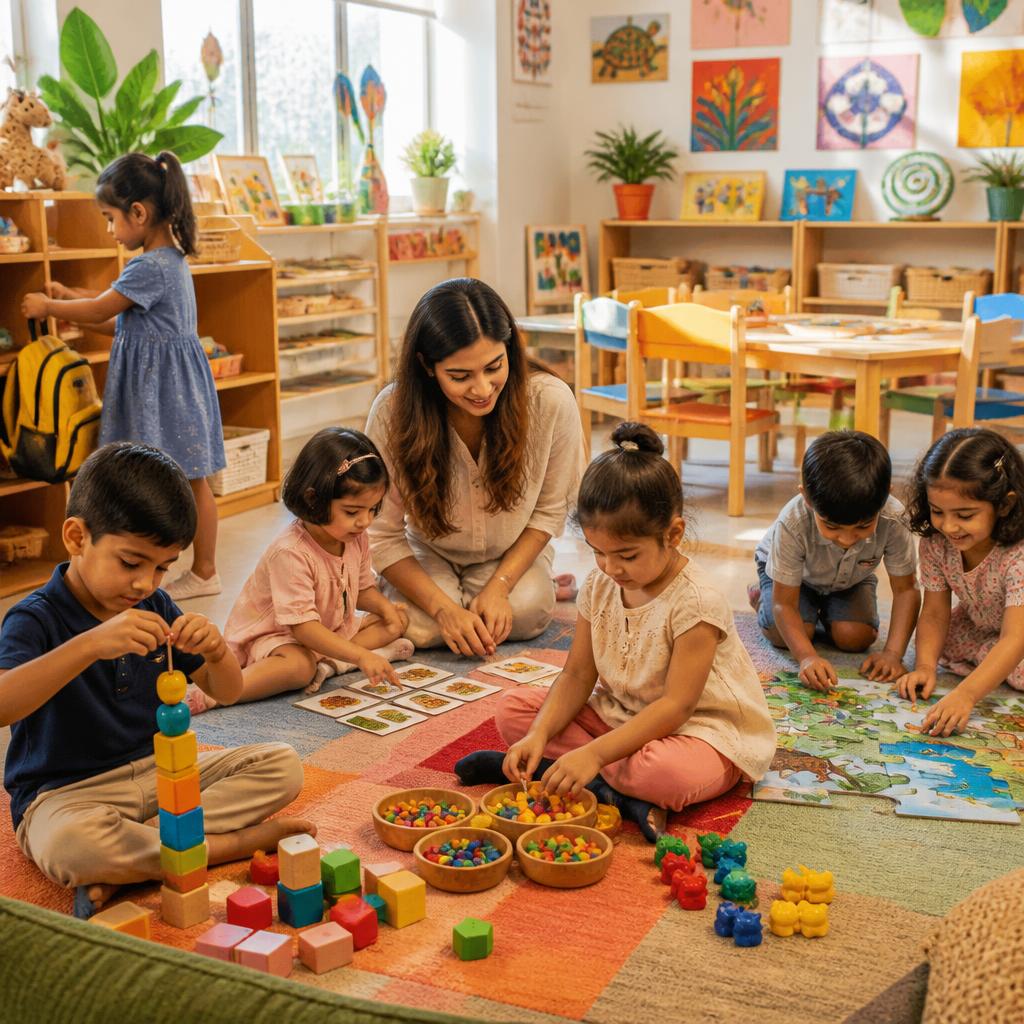
Why the Foundation Stage Matters
The ages of 3–6 are a period of rapid growth: children build the movement, language, thinking and social skills that shape later learning. A thoughtful foundation-stage program focuses on play-based, activity-led learning rather than rote drills. For parents in Ghaziabad, understanding these core areas helps you choose programs and support learning at home without creating undue stress.
Five Core Developmental Domains
Foundation programs typically address five overlapping domains: gross and fine motor skills, early literacy, early numeracy, self-help and independence, and social-emotional learning. Each domain develops at its own pace, and strong early-years settings aim for balance—mixing structured activities, free play, and repeated, hands-on practice so children build confidence and curiosity.
Motor Skills: What to Expect and How to Help
Gross motor milestones by age 3–6 include running, hopping, balancing on one foot briefly and basic ball skills; fine motor milestones include holding a pencil, threading beads, and cutting with safety scissors. Simple home activities—obstacle courses, playdough, block-building and drawing—support both. Many local parents appreciate teachers who integrate movement and hands-on tasks into daily routines, helping children gain coordination and classroom readiness.
Early Literacy: From Listening to Emergent Writing
Early literacy begins with listening, understanding stories, recognising sounds and enjoying rhymes. By ages 4–6, children begin identifying letters, matching sounds to symbols and attempting emergent writing (scribbles that become letters and words). Encourage nightly shared reading, talk about pictures, sing rhymes, and provide materials for drawing and scribbling—these low-pressure habits build vocabulary and a positive attitude toward reading.
Early Numeracy: Number Sense Through Play
Numeracy at the foundation stage focuses on counting reliably, recognising basic shapes, sorting by properties, comparing sizes and noticing simple patterns. Play-based counting—using snacks, toys, or steps—teaches number concepts more effectively than worksheets. Parents should look for activities that connect numbers to everyday life (setting the table, grouping toys) and celebrate small discoveries rather than pushing for speed or accuracy.
Self-Help Skills and Independence
Self-help skills—dressing, handwashing, feeding, managing belongings and following simple routines—are essential for a child’s confidence in school. Support your child at home with consistent routines and opportunities to try tasks independently, even if it takes longer. Parents have noted that schools where teachers patiently encourage independence see steady improvements in behaviour and classroom participation.
Social-Emotional Growth: Sharing, Speaking and Managing Feelings
Emotional and social skills are as important as academics at this age. Look for evidence that teachers coach turn-taking, empathy, simple problem-solving and expression of feelings. When conflicts arise, adults can model words for emotions and guide children to solutions. Regular, positive communication between parents and teachers helps address temperament differences and keeps support consistent across home and school.
Tracking Progress Without Pressure — Practical Tips
Keep assessment gentle and growth-focused: observe play, celebrate attempts, and note new skills rather than comparing to peers. Ask schools specific, practical questions—Do you use play-based activities for literacy and numeracy? How do teachers communicate progress? What daily routines build self-help skills?—and request examples of classroom activities. Many Ghaziabad parents value schools that combine clear communication, patient teachers and a safe, nurturing environment; these are the practical signs that your child is getting the balanced start they need.
Article by
𝐒𝐢𝐥𝐯𝐞𝐫𝐥𝐢𝐧𝐞 𝐏𝐫𝐞𝐬𝐭𝐢𝐠𝐞 𝐒𝐜𝐡𝐨𝐨𝐥 - 𝐆𝐡𝐚𝐳𝐢𝐚𝐛𝐚𝐝
Silver Line Prestige School was founded in 1987 with a vision to build a haven for futuristic and scholastic education. With the motto of 'Education Beyond Tomorrow', our approach is to achieve the perfect balance between academic and extra-curricular activities to nurture the student in every domain of life. At SilverLine, we practise the most progressive methods for educating our global citizens. With world-class infrastructure, advanced technology labs, highly-educated and experienced educators, Silver Line Prestige School has been advancing education in Ghaziabad for the past three decades.