Understanding the Foundation Stage in CBSE Schools: A Ghaziabad Parent’s Guide
A clear, practical guide explaining what the Foundation Stage is in CBSE schools, how it differs from pre-nursery and KG, what skills it develops, and what parents should look for—using Silver Line Prestige School’s Foundation classes as local context.
What the Foundation Stage means
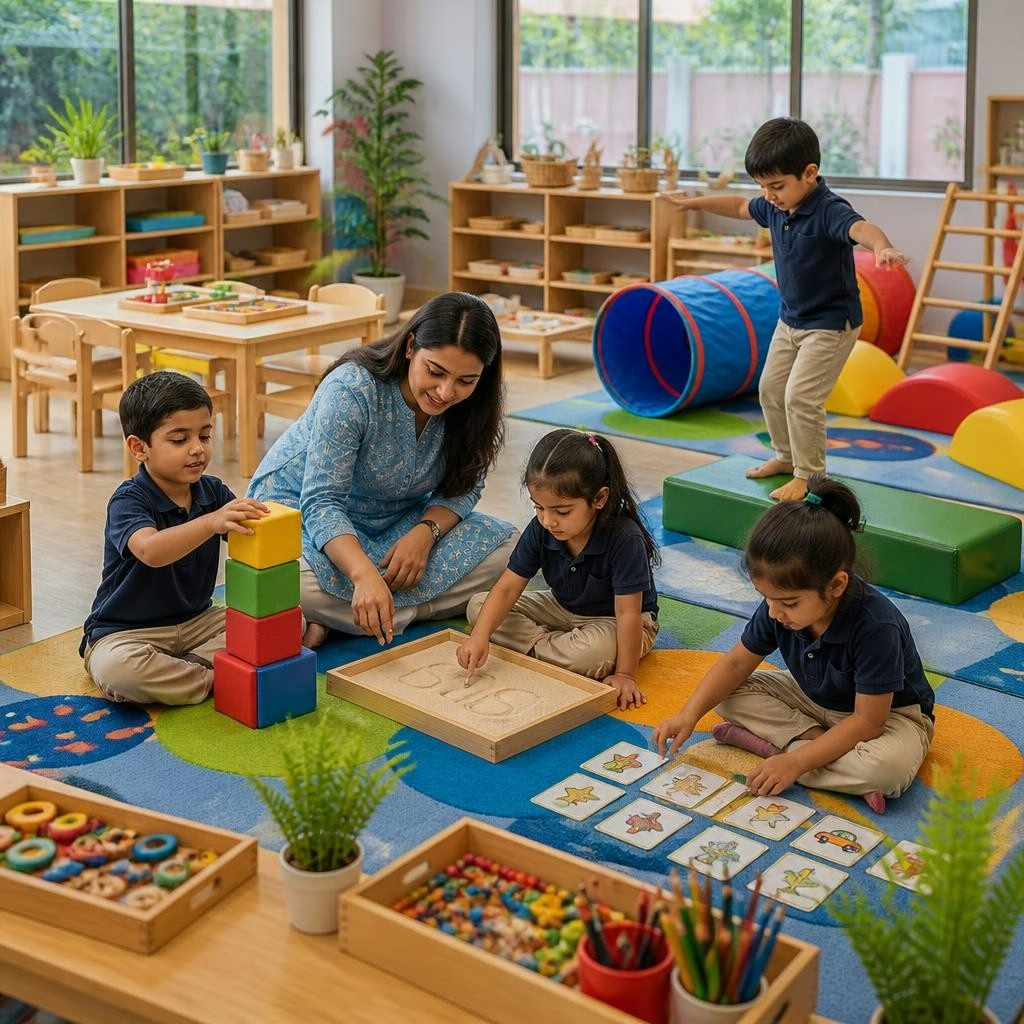
The Foundation Stage is the early years program that bridges informal play and the more structured learning of primary school. In CBSE-aligned settings it focuses on age-appropriate, developmentally suitable activities that lay the groundwork for literacy, numeracy, motor skills and social behaviour. Rather than concentrating on formal textbooks, the Foundation Stage prioritises exploration, guided play and repeated, hands-on experiences that help young children build confidence and curiosity.
How it differs from pre-nursery and KG
Families often ask how Foundation is different from pre-nursery or kindergarten (KG). Pre-nursery tends to be about initial socialisation: settling into a school routine, learning to follow simple instructions and building comfort with caregivers and classmates. The Foundation Stage takes those social and emotional gains and adds planned experiences to develop early literacy, counting sense and both fine and gross motor control. KG generally shifts further toward school-readiness with more guided practice in reading, writing and maths, but Foundation is the crucial, play-centered step that prepares children for that progression.
Core learning areas in Foundation
A well-designed Foundation program targets a few interconnected domains: language and early literacy (listening, speaking, vocabulary, pre-reading skills), emergent numeracy (counting, sorting, pattern recognition), fine motor skills (cutting, drawing, buttoning) and gross motor skills (running, jumping, ball play). Social and emotional development — taking turns, following routines, expressing needs — is equally important. Reviews from local parents highlight noticeable gains in communication and confidence while emphasising that much of this growth comes through play-based activities rather than direct instruction.
What a typical Foundation day looks like
Foundation classrooms blend short teacher-led moments with longer activity blocks. A typical day might include circle time (songs and stories), activity centres for hands-on learning (puzzles, sensory trays, blocks), fine-motor stations (drawing, bead-stringing), outdoor play for gross-motor practice, and short group activities to build social skills. The emphasis is on repeated exposure, gentle routines and varied experiences so each child can learn at their own pace. Parents at local schools report that variety and a predictable routine help their children settle and make steady progress.
The teacher’s role: guide, observer and communicator
In Foundation classes teachers act as facilitators: they design playful experiences, observe each child’s progress, and scaffold learning moments when needed. Good teachers also communicate regularly with parents about learning goals and daily progress. One parent noted that the school took time to explain Foundation learning outcomes — including motor skills and early literacy — and praised the teacher’s patient, caring approach. That combination of skilled facilitation plus clear communication is what helps parents see consistent improvements at home and at school.
How parents can support learning at home
Supportive home routines make Foundation learning stick. Simple activities — reading aloud daily, talking about pictures, counting objects during play, offering crayons and play-dough for fine-motor practice, and setting short outdoor play sessions — reinforce classroom experiences. Keep activities short and engaging, praise effort, and follow the teacher’s suggestions so learning feels continuous rather than separate. Parents who stay involved and receive clear updates from school often notice quicker gains in language, confidence and social interaction.
Choosing a Foundation program in Ghaziabad
When evaluating local CBSE Foundation programs look for a play-based curriculum that explains expected learning outcomes, caring and observant teachers who give individual attention, a safe and welcoming environment, and a balance of indoor and outdoor activities. Also consider how the school communicates with parents — regular updates, demonstrations or explained learning milestones help families support progress. Many parents in Ghaziabad emphasise the importance of teachers who are patient, attentive and able to make learning enjoyable.
How Silver Line Prestige School approaches Foundation learning
Silver Line Prestige School emphasises a progressive, play-centred Foundation Stage supported by experienced educators and modern facilities. Parents of children in Foundation classes such as Foundation Blue report strong improvements in speaking, social interaction and confidence, and they appreciate teachers who create a warm, nurturing classroom atmosphere while explaining the curriculum and outcomes clearly. If you are comparing Foundation programs, look for the same combination of structured play, individual attention and transparent communication that parents at Silver Line have highlighted.
Customer review


Article by
𝐒𝐢𝐥𝐯𝐞𝐫𝐥𝐢𝐧𝐞 𝐏𝐫𝐞𝐬𝐭𝐢𝐠𝐞 𝐒𝐜𝐡𝐨𝐨𝐥 - 𝐆𝐡𝐚𝐳𝐢𝐚𝐛𝐚𝐝
Silver Line Prestige School was founded in 1987 with a vision to build a haven for futuristic and scholastic education. With the motto of 'Education Beyond Tomorrow', our approach is to achieve the perfect balance between academic and extra-curricular activities to nurture the student in every domain of life. At SilverLine, we practise the most progressive methods for educating our global citizens. With world-class infrastructure, advanced technology labs, highly-educated and experienced educators, Silver Line Prestige School has been advancing education in Ghaziabad for the past three decades.