Ayurvedic Immunity-Building for Delhi’s Changing Seasons: Daily Practices You Can Start at Home
Practical, safe Ayurvedic habits—morning rituals, simple herbal drinks, diet adjustments and breathing exercises—tailored to Delhi’s seasonal shifts and pollution, plus guidance on warning signs and when to seek clinical therapies.

Why season-aware immunity matters in Delhi
Delhi’s weather swings and high pollution levels place extra demands on the respiratory and digestive systems that underpin everyday immunity. Minor imbalances can make you more prone to colds, allergies or low energy. An approach that adjusts daily habits with the season — rather than a one-size-fits-all routine — helps maintain steadier digestion, clearer breathing and more resilient recovery from common infections.
A simple Ayurvedic morning routine to begin each day
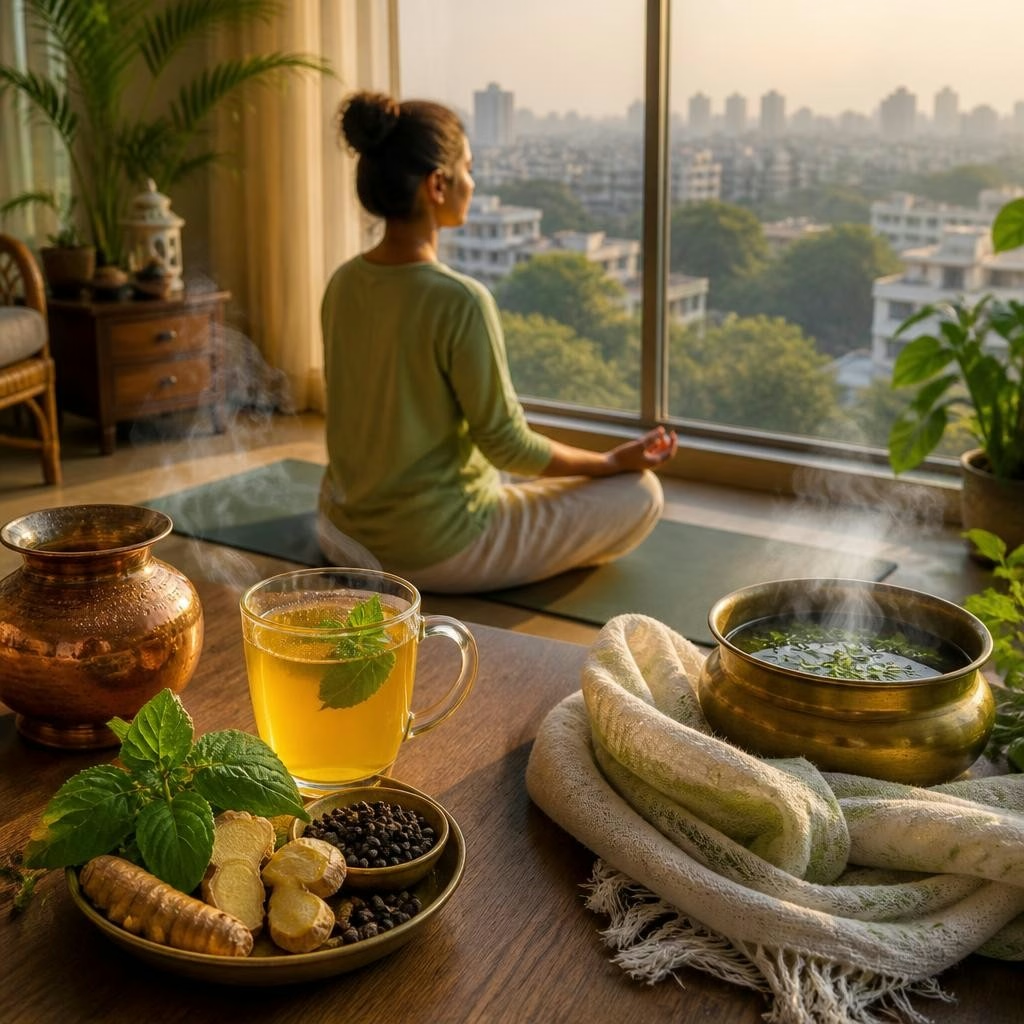
A few gentle practices each morning support natural immunity: on waking, drink a glass of warm water to stimulate digestion and elimination; practice gentle nasal hygiene (a saline rinse is safe and widely used) and perform a short session of mindful breathing or alternate-nostril breathing to clear the nasal passages and calm the nervous system. Consider a brief self-massage (abhyanga) with warm oil followed by a warm shower — this improves circulation and calms the mind. Check with your Ayurvedic physician about which oil best suits your constitution and current season.
Herbal drinks and diet adjustments for each season
Small, season-appropriate diet changes can make a big difference. In winter, favour warm, cooked foods and spices such as mild ginger and turmeric in teas to support digestion and circulation. During summer choose lighter meals, include cooling fruits and hydrating fluids, and avoid heavy, oily plates in extreme heat. In the monsoon, prefer well-cooked, easily digestible meals and avoid raw street foods. Simple home drinks—warm water with a slice of ginger, or a mild herbal decoction tailored by your practitioner—can help, but always consult before starting any herbal preparation if you are pregnant, nursing, or on medication.
Breathing practices and movement to strengthen respiratory resilience
Daily breathing exercises (pranayama) and moderate movement support lung capacity and overall immunity. Start with slow diaphragmatic breathing and alternate-nostril breathing for 5–10 minutes to improve ventilation and reduce stress. Regular brisk walking, light yoga or gentle stretching for 20–30 minutes most days helps maintain circulation and metabolic balance. Avoid exercising outdoors during extreme pollution hours; instead choose early morning or indoor sessions with filtered air when air quality is poor.
Practical hygiene and household habits to reduce exposure
Simple measures lower your daily exposure to pollutants and pathogens: keep windows closed on high-pollution days, use an indoor air purifier if feasible, wash hands frequently after going out, and change clothing after prolonged outdoor exposure. For families with young children, ensure adequate rest, regular fluids, and avoid crowded places during spikes in seasonal illnesses. These habits support the day-to-day resilience that Ayurveda emphasises—maintaining clear channels of digestion and respiration.
When home care is enough — and when to consult a doctor
Many seasonal colds or mild digestive upsets respond well to the home practices above. However, seek clinical attention if symptoms persist or worsen: persistent fever, cough lasting more than a week, breathlessness, severe throat pain, repeated infections, unexplained weight loss, or prolonged fatigue warrant professional assessment. One parent, for example, reported that after a month-long cold the child improved significantly within a week after following a physician’s personalized plan, illustrating how timely clinical guidance can accelerate recovery.
When clinical Ayurvedic therapies may be recommended
If seasonal patterns become recurring or chronic, targeted clinical therapies can be considered. At a Panchakarma centre these may include Nasya (medicated nasal therapies) for stubborn nasal or sinus congestion, Panchakarma detox programmes for deeper purification, or supportive therapies such as Abhyanga (therapeutic oil massage) and Shirodhara for stress-related immune imbalance. These are best prescribed after a full consultation and assessment of your constitution and current health, particularly for chronic respiratory issues, recurrent infections or systemic imbalance.
How Swastiyastu Ayurvaidyalaya can help and next steps
Swastiyastu Ayurvaidyalaya, located in Chittaranjan Park, New Delhi, offers personalized consultations with Dr. Supriya Sharma and a range of classical Ayurvedic therapies for seasonal and chronic concerns. If you experience repeated seasonal illness, prolonged symptoms, or wish to develop a season-specific immunity plan, schedule a consultation so treatments and home practices can be tailored to your needs. Many patients note careful, root-cause focused consultations and improvement after following clinic guidance; when unsure, seek a professional assessment rather than self-prescribing.
Customer review


Article by
Swastiyastu Ayurvaidyalaya
Swastiyastu Ayurvaidyalaya is a dedicated Holistic Ayurvedic Panchakarma Wellness Centre located in Chittaranjan Park, New Delhi. We offer authentic, personalized Ayurvedic treatments to heal the body, mind, and soul with an unmatched experience of over 20+ years of clinical expertise. Led by experienced Ayurveda Physician Dr. Supriya Sharma, our clinic provides specialized care including Panchakarma detox, classical Ayurvedic therapies, Keraleeya treatments, and targeted therapies for pain relief, stress management, women's wellness, and skin rejuvenation. We focus on restoring natural health and harmony for long-term well-being.