Ayurvedic Pain Management for Neck, Back and Knee Problems in New Delhi’s Desk Workers
Practical guidance for IT and corporate professionals on posture-related causes of cervical, lumbar and knee pain, simple home corrections, and how targeted Ayurvedic therapies — such as Griva Basti, Kati Basti, Janu Basti and Elakizhi — fit into a structured treatment plan at a CR Park Panchakarma centre.
Why desk work commonly leads to neck, back and knee complaints
Long hours at a desk, repetitive movements and static postures create mechanical strain that often shows up as neck stiffness, lower back pain and knee discomfort in office professionals. From an Ayurvedic viewpoint, prolonged immobility and poor posture tend to aggravate Vata-related qualities — dryness, coldness and movement imbalance — which can express as stiffness, pain and reduced joint lubrication. Common clinical patterns seen in busy professionals include features of cervical spondylosis, lumbar strain and early degenerative or stiffening changes in the knee joint.
Everyday posture fixes to reduce strain
Small ergonomic adjustments at the workstation can reduce ongoing stress on spinal discs and joints. Key practical steps: set your monitor at eye level to avoid forward head posture; choose a chair with lumbar support and sit with hips slightly higher than knees; keep feet flat on the floor or on a footrest; position the keyboard and mouse close to the body to avoid reaching; and alternate sitting with brief standing or walking breaks every 30–60 minutes. Pay attention to sleep posture: a supportive pillow for the neck and a mattress that supports spinal alignment help recovery. These measures provide an immediate, low-cost way to limit further aggravation before or during formal therapy.
Simple self-care you can do at home
Incorporate gentle, safe practices to soothe stiffness between clinic visits. Regular mobility exercises — neck rotations, shoulder rolls, gentle lumbar stretches, and straight-leg knee bends — reduce stiffness when performed carefully. Warmth is often helpful: a warm shower or localized application of a warm compress increases tissue pliability. Traditional self-massage with warm sesame or medicated oil (a light Abhyanga-style rub) can nourish muscles and improve comfort; massage gently along the neck, lower back and around the knees. Maintain hydration, avoid prolonged cold exposure, and favour warm, easily digestible meals if you experience significant stiffness, in line with Ayurvedic supportive measures.
When to seek professional Ayurvedic care
If pain persists despite ergonomic changes and home care, limits daily activities, causes sleep disturbance, or is associated with numbness or progressive weakness, consult a qualified Ayurvedic physician for a clinical assessment. At a dedicated Panchakarma centre, the consultation aims to identify underlying imbalances and design a personalized plan rather than only treating symptoms. Many patients report meaningful improvement after individualized treatment that combines hands-on therapies, internal medicines and lifestyle guidance.
Targeted Ayurvedic therapies used for neck, back and knee issues
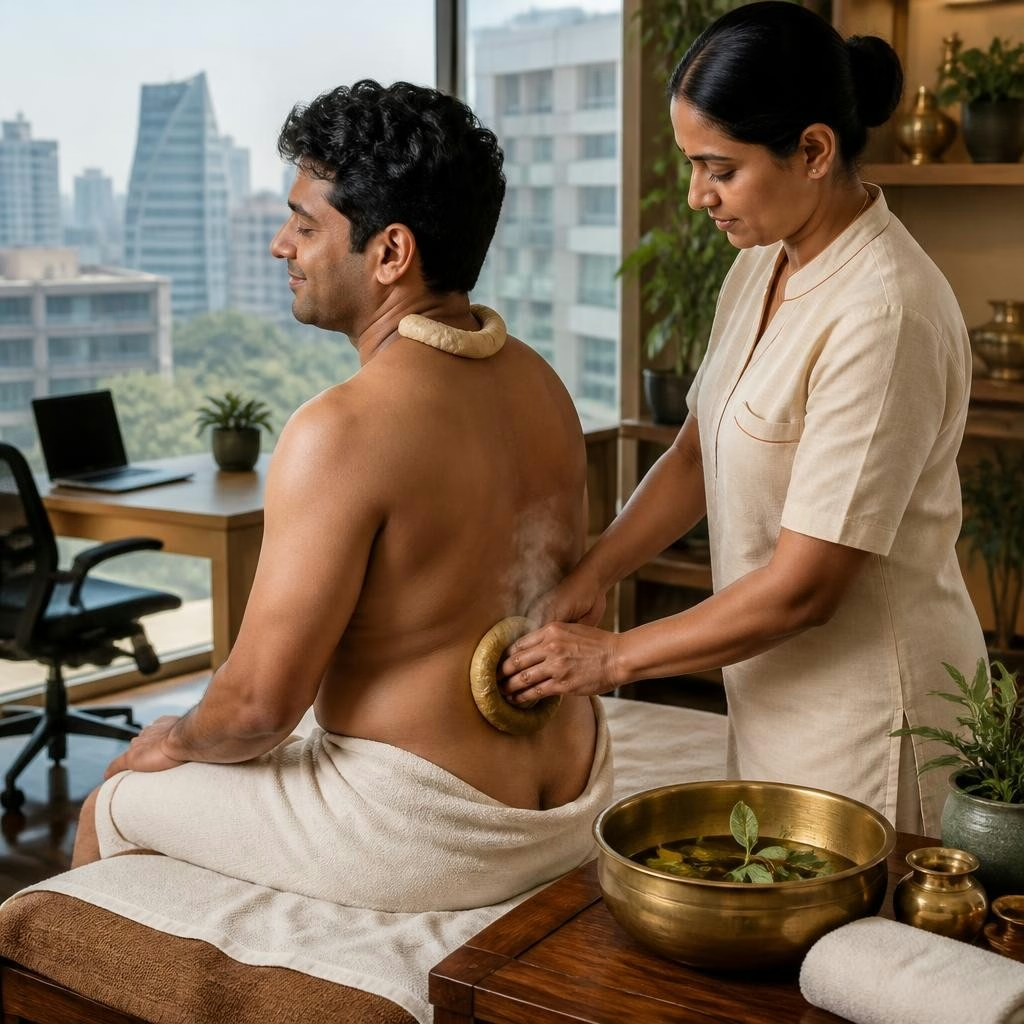
Several classical therapies are especially relevant for desk-related musculoskeletal complaints: Griva Basti — warm medicated oil pooled over the cervical region — is targeted for neck pain and cervical spondylosis symptoms; Kati Basti uses a warm oil pool on the lower back to relieve lumbar stiffness and sciatica-related discomfort; Janu Basti concentrates warm medicated oil on the knee to nourish joint tissues and ease stiffness; Elakizhi (herbal leaf bolus massage) and Njavarakizhi (herbal rice bolus) provide deep fomentation and are useful for chronic joint pain and muscular stiffness. Abhyanga (full-body oil massage) supports general circulation and tissue nourishment, while Keraleeya therapies such as Pizhichil combine continuous warm oil pouring with therapeutic massage for systemic rejuvenation and muscle relaxation. For selected chronic mechanical pain conditions, para-surgical options such as Agnikarma may be considered under expert supervision. All therapies are chosen based on an individualized assessment and aimed at reducing pain, improving mobility and restoring tissue balance.
How a structured treatment plan typically unfolds
A pragmatic plan begins with a thorough consultation to identify constitutional factors, pain patterns and any red flags. Treatment may include a combination of targeted local therapies (Griva, Kati, Janu Basti), supportive full-body treatments (Abhyanga, Pizhichil), and internal herbal formulations to address dosha imbalance. In cases with systemic imbalance or long-standing symptoms, a supervised Panchakarma detoxification course may be recommended to deepen the response. Therapy frequency and duration are individualized; clinicians also prescribe specific posture corrections, therapeutic exercises and dietary pointers to support recovery and prevent relapse. Progress is monitored clinically, and the plan adjusted according to response.
What to expect at Swastiyastu Ayurvaidyalaya and how to prepare
Swastiyastu Ayurvaidyalaya in Chittaranjan Park is a Panchakarma-focused clinic where experienced clinicians provide personalized care combining classical therapies and lifestyle guidance. Patients commonly report appreciation for attentive consultations and skilled therapists, and the clinic emphasizes root-cause assessment prior to selecting treatments. For your first visit bring any imaging reports or prior medical notes, a list of current medications, and wear comfortable clothing. Be prepared to discuss daily work habits and sleep patterns so your physician can tailor ergonomic and therapeutic recommendations. If you are a desk worker with persistent neck, back or knee issues, an informed Ayurvedic evaluation can clarify options and create a sensible, personalized plan to restore function and reduce pain.
Article by
Swastiyastu Ayurvaidyalaya
Swastiyastu Ayurvaidyalaya is a dedicated Holistic Ayurvedic Panchakarma Wellness Centre located in Chittaranjan Park, New Delhi. We offer authentic, personalized Ayurvedic treatments to heal the body, mind, and soul with an unmatched experience of over 20+ years of clinical expertise. Led by experienced Ayurveda Physician Dr. Supriya Sharma, our clinic provides specialized care including Panchakarma detox, classical Ayurvedic therapies, Keraleeya treatments, and targeted therapies for pain relief, stress management, women's wellness, and skin rejuvenation. We focus on restoring natural health and harmony for long-term well-being.