From Surgery Advice to Natural Options: When to Seek an Ayurvedic Second Opinion in Delhi
A practical guide for patients advised major operations on when an Ayurvedic second opinion can be appropriate, what to bring to the consultation, realistic expectations, and example situations where classical Ayurvedic care may help reduce symptoms or better prepare you for surgery.

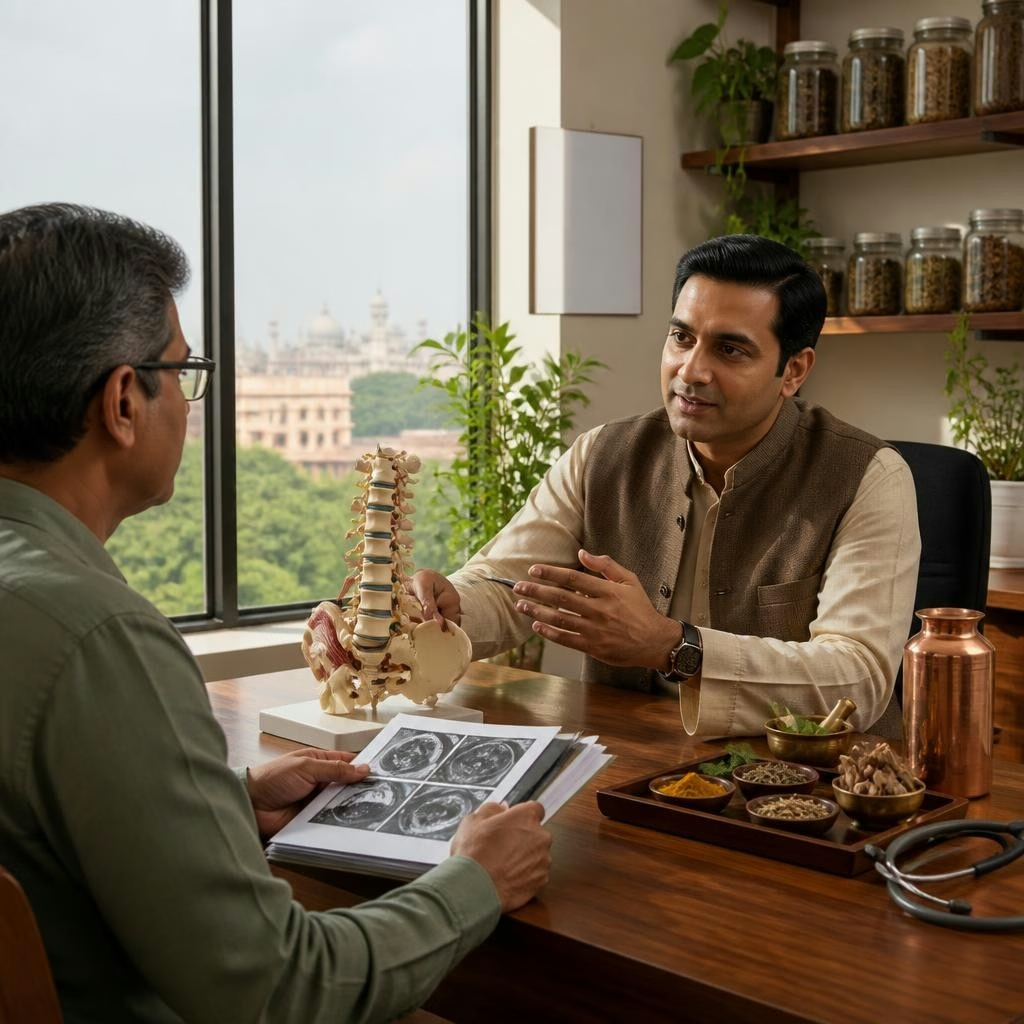
Why consider an Ayurvedic second opinion?
Being told you need major surgery is stressful. An Ayurvedic second opinion does not promise to replace conventional care, but it can offer a different diagnostic perspective focused on constitutional assessment, root-cause correction, and conservative therapies. Many patients seek a second opinion to explore non-surgical avenues, to prepare better for an operation, or to manage symptoms when conventional treatments are incomplete. Swastiyastu Ayurvaidyalaya’s approach—grounded in classical assessment and 20+ years of clinical experience—aims to give patients clearer choices and a personalised plan.
When it makes sense to ask for a second opinion
Consider an Ayurvedic consultation if: (a) you were advised elective or major surgery and wish to know conservative alternatives; (b) your symptoms are chronic (for example, long-standing back or joint pain) and you prefer to try constitutional therapy first; (c) you want to optimise your body and immunity before a planned operation; or (d) previous treatments relieved symptoms only temporarily. An Ayurvedic opinion can be especially useful when the diagnosis involves functional or degenerative conditions where multi-modal, non-surgical care may change the course of symptoms.
What happens during an Ayurvedic consultation
Expect a detailed, time‑rich initial assessment that looks beyond symptoms to constitutional type, digestion, sleep, stress and lifestyle. Classical methods such as pulse and tongue evaluation are combined with careful medical history-taking and review of existing reports. At Swastiyastu Ayurvaidyalaya, consultations emphasise personalised plans—combining internal herbal formulations, external therapies and lifestyle measures—rather than quick symptom suppression. Reviews from patients highlight thoroughness and a focus on root causes as distinguishing features of this approach.
Documents and information to bring
To make the second opinion clinically useful, bring: the surgical recommendation letter or note; recent imaging (X-rays, MRI, CT) and lab reports; a list of current medications and supplements; records of prior treatments or procedures; details of allergies and chronic conditions; and a clear statement of your health goals and timeline. If you are able, bring contact details of your surgeon or primary physician so care can be coordinated when needed.
Realistic expectations: what Ayurveda can and cannot do
Ayurveda can often reduce pain, improve function, address metabolic or hormonal imbalances, and enhance recovery readiness through detoxification and strengthening therapies. However, it is important to be realistic: whether surgery can be avoided depends on the underlying diagnosis, severity, duration of disease and objective findings on imaging or tests. In urgent, life‑threatening, or structurally advanced conditions, surgery may remain the safest option. An honest assessment—sometimes involving collaboration with your surgeon—determines the best path.
Typical scenarios where Ayurvedic care may help
Examples where classical Ayurvedic treatment can be helpful include chronic lower back pain or sciatica (supportive therapies such as Kati Basti and targeted internal medicines), degenerative knee pain or stiffness (Janu Basti and joint nourishing therapies), hormonal and fertility-related issues in women (specialised gynaecological therapies, dietary and lifestyle measures), persistent sinus or upper‑airway problems (Nasya therapy), and metabolic or weight-related concerns addressed through constitutional planning. These approaches may reduce symptoms, delay or obviate surgery in some cases, or improve surgical outcomes when operative care becomes necessary.
Preparing for surgery—how Ayurveda can support the process
If surgery is unavoidable, Ayurveda can still play a supportive role. Preparatory measures—detoxification programmes, strengthening therapies like Abhyanga, and adjustments to diet and sleep—can improve resilience and recovery potential. Post‑operative Ayurvedic rehabilitation (appropriate external therapies and nourishing regimens) may also aid healing and reduce complications when coordinated with your surgical team. Any perioperative herbal medicines should be discussed with both your surgeon and Ayurvedic physician to avoid interactions.
Taking the next step at Swastiyastu Ayurvaidyalaya
If you are in New Delhi and would like an Ayurvedic second opinion, Swastiyastu Ayurvaidyalaya in Chittaranjan Park offers personalised consultations and classical Panchakarma and targeted therapies. Bring your medical documents, be prepared to discuss your goals and timelines, and expect a treatment plan that emphasises safety, root-cause assessment and realistic outcomes. Patients report receiving compassionate, thorough guidance that helped them make informed decisions—whether that meant pursuing conservative care, preparing for surgery more effectively, or combining both approaches under professional coordination.
Article by
Swastiyastu Ayurvaidyalaya
Swastiyastu Ayurvaidyalaya is a dedicated Holistic Ayurvedic Panchakarma Wellness Centre located in Chittaranjan Park, New Delhi. We offer authentic, personalized Ayurvedic treatments to heal the body, mind, and soul with an unmatched experience of over 20+ years of clinical expertise. Led by experienced Ayurveda Physician Dr. Supriya Sharma, our clinic provides specialized care including Panchakarma detox, classical Ayurvedic therapies, Keraleeya treatments, and targeted therapies for pain relief, stress management, women's wellness, and skin rejuvenation. We focus on restoring natural health and harmony for long-term well-being.