Stress, Burnout, and Urban Life: Ayurvedic Stress-Management Options Near C.R. Park
A practical guide for working professionals and caregivers around C.R. Park, Okhla, Nehru Place and Greater Kailash describing Ayurvedic perspectives on the mind, daily routine and diet changes, and clinic therapies—such as Abhyanga, Shirodhara and Hridaya Basti—that can help restore emotional balance and improve sleep.

Why stress management matters in city life
Long commutes, irregular hours, constant screen exposure and the emotional load of caregiving combine to make stress, fatigue and poor sleep common among urban professionals. These symptoms not only reduce daily functioning but also affect long‑term wellbeing. Ayurveda treats stress as an imbalance of the mind (manas) together with disturbances in the body's regulatory systems; addressing both layers is the most sustainable approach.
An Ayurvedic view of the mind (manas) and stress
In classical Ayurvedic thinking, mental balance depends on clear communication between mind, digestion (agni), and the nervous system. When this inner coordination is disturbed, people experience anxiety, irritability, sleeplessness and low energy. Ayurveda therefore emphasizes calming the nervous system, strengthening digestion, and restoring rhythmic daily patterns rather than only masking symptoms.
Simple daily routine changes that help (dinacharya)
Small, consistent routine changes can reduce the day‑to‑day load on body and mind. Key, practical suggestions include: keep a more regular sleep–wake schedule; start the day with a few minutes of gentle breath awareness or stretching; take short mindful breaks during work to reset the breath; avoid heavy meals and screens within an hour of bedtime; and prioritize light evening activity rather than late‑night stimulation. These steps support circadian balance and make therapeutic work more effective.
Diet and digestion: small shifts for big effects
Ayurveda links mental clarity to good digestive fire (agni). For urban professionals this often means choosing warm, freshly cooked meals, avoiding excess stimulants late in the day (such as strong coffee), and eating at regular intervals. Favor simple, nourishing breakfasts and easily digestible dinners. If digestion is weak, targeted dietary guidance based on an individual assessment can make restorative therapies more effective.
Clinic therapies that support emotional balance
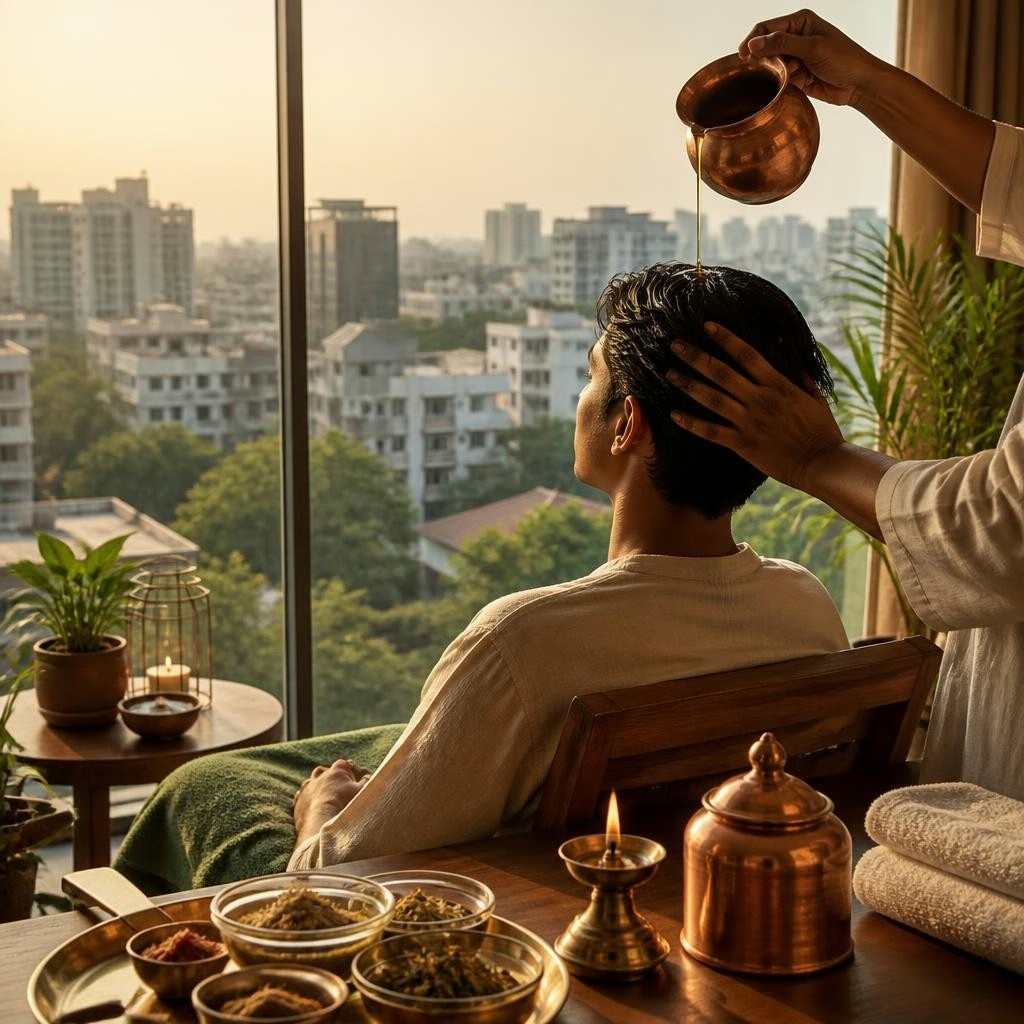
Several classical therapies are particularly well suited to stress, anxiety and insomnia. Abhyanga (full‑body oil massage) promotes circulation, calms the nervous system and induces relaxation. Shirodhara—continuous, gentle pouring of medicated oil on the forehead—has a long tradition for calming the mind and improving sleep quality. Hridaya Basti, where medicated oil is retained over the chest area, is used to soothe anxiety and emotional disturbance. Takradhara (buttermilk shirodhara) and Nasya (medicated nasal drops) are further options for stress‑related sleep and headache issues. For those with deeper systemic imbalance, a supervised Panchakarma detox program restores physiological equilibrium over several days under physician guidance.
What to expect at a personalized consultation
At a thorough consultation you can expect a root‑cause focused assessment that considers your lifestyle, digestion, sleep patterns and emotional triggers. Treatments and home guidance are personalized rather than one‑size‑fits‑all; plans commonly combine therapy sessions (for example Abhyanga or Shirodhara), diet and sleep recommendations, simple daily practices and follow‑up. Reviews from local clients highlight careful listening by the physician and sustained symptom improvements after tailored plans.
Real experiences from local clients
People who have sought Ayurvedic care locally report noticeable reductions in stress and improved relaxation after combined treatment and lifestyle changes. Many clients describe the clinic environment and therapies—particularly massage and Shirodhara—as deeply calming and restorative. Testimonials emphasize relief in sleep quality and a sense of renewed energy when clinical care is coupled with consistent daily routines.
Next steps: how to begin and what to bring
If you live or work near Chittaranjan Park, Okhla, Nehru Place or Greater Kailash and are considering Ayurvedic support for stress, start with a consultation to discuss your symptoms and current medications. Bring a brief medical history and a summary of sleep, diet and work patterns. From there, a physician can recommend appropriate therapies—such as Abhyanga, Shirodhara or Hridaya Basti—alongside practical routine and dietary changes to restore balance over time. Swastiyastu Ayurvaidyalaya at O‑1, Ground Floor, Chittaranjan Park, provides these classical, personalized options for urban professionals seeking natural, long‑term stress management.
Article by
Swastiyastu Ayurvaidyalaya
Swastiyastu Ayurvaidyalaya is a dedicated Holistic Ayurvedic Panchakarma Wellness Centre located in Chittaranjan Park, New Delhi. We offer authentic, personalized Ayurvedic treatments to heal the body, mind, and soul with an unmatched experience of over 20+ years of clinical expertise. Led by experienced Ayurveda Physician Dr. Supriya Sharma, our clinic provides specialized care including Panchakarma detox, classical Ayurvedic therapies, Keraleeya treatments, and targeted therapies for pain relief, stress management, women's wellness, and skin rejuvenation. We focus on restoring natural health and harmony for long-term well-being.