Cold Storage Solutions for Cloud Kitchens in Dubai and Ajman
Practical guidance on combining upright chillers, freezers and table-top units to run multiple delivery brands from one cloud kitchen, with zoning, workflow and supplier tips for operators in Dubai and Ajman.

Why cold storage matters for cloud kitchens
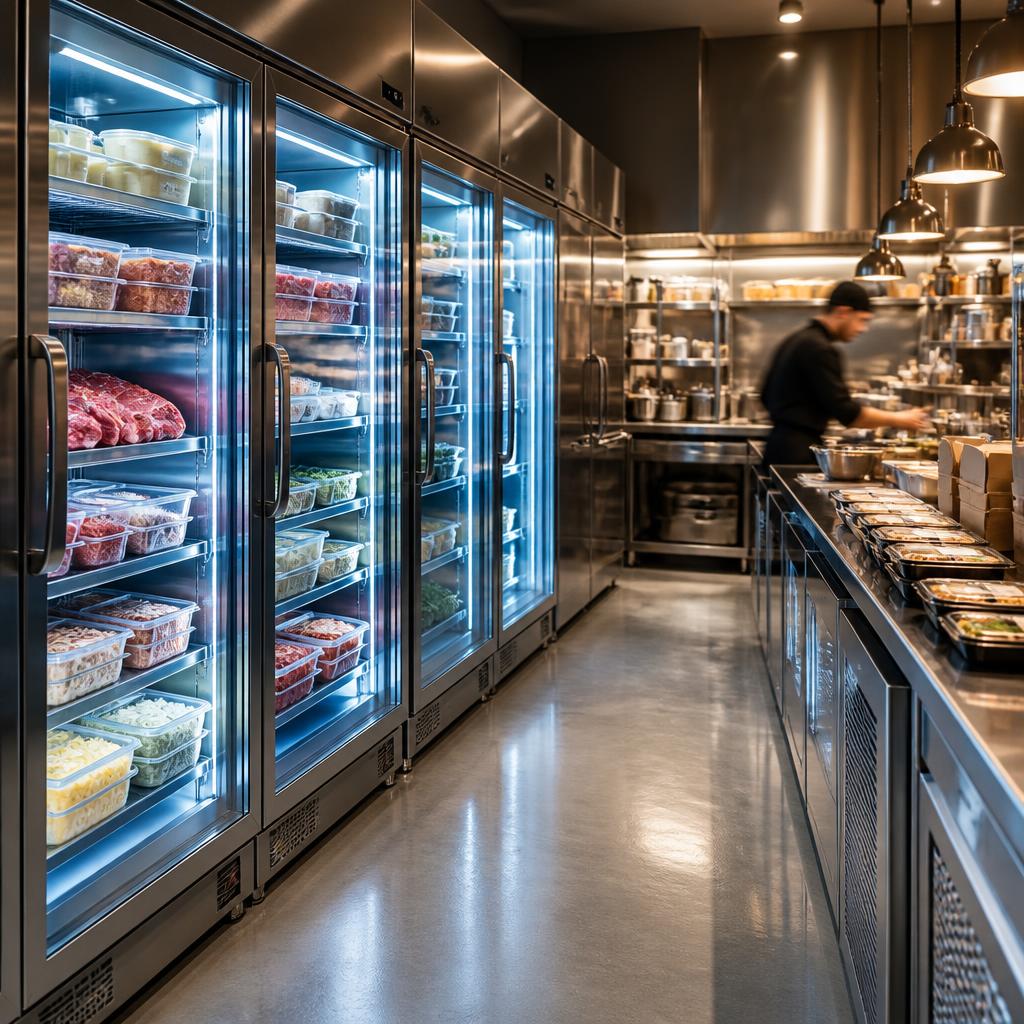
Cloud kitchens and delivery-only concepts concentrate several menus and brands into one footprint, which creates unique cold storage demands. Proper refrigeration protects food safety, ensures consistent dish quality during service windows, and reduces waste — all critical when one facility supports multiple concepts. Choosing the right mix of upright chillers, freezers and table-top units helps operators maintain separate product lines, speed up service, and scale brands without compromising hygiene or turnaround times.
Understand the main types of cold units
There are three practical categories most cloud kitchens use: upright chillers for bulk chilled storage, upright freezers for frozen stocks, and table-top units for immediate-access or small-quantity items. Upright chillers and freezers provide organized shelving, higher capacity and controlled temperature zones, while table-top units sit at prep stations to keep frequently used ingredients close at hand. Display chillers or merchandisers can also be useful for grab‑and‑go items or finished-product visibility when needed.
How to combine upright chillers and freezers effectively
Mix upright chillers and freezers to create dedicated cold zones rather than treating all refrigeration as interchangeable. Use upright chillers to store raw ingredients, delivered supplies and prepared refrigerated items; use upright freezers for long‑term frozen stock and bulk backing. When multiple brands share the kitchen, allocate whole units or clearly marked shelving blocks inside upright units to reduce cross‑contamination and simplify inventory checks. This approach keeps items organized and speeds picking during busy service periods.
The role of table-top units in a fast-paced workflow
Table-top chillers and mini freezers are vital at prep lines and cook stations. They minimize trips to the main cold rooms and maintain safe holding temperatures for mise en place, sauces, garnishes and portioned proteins. Place table-top units next to workstations for high-turn ingredients while reserving upright units for backup stock. In multi-brand operations, use clearly labeled table-top drawers to keep brand-specific ingredients separate and reduce the chance of mis-picks or allergen mistakes.
Zoning: separating meat, dairy and prepared items
Effective zoning separates high‑risk items (raw meat, seafood), ready-to-eat foods (prepared meals, salads) and allergen-prone products (dairy). Ideally, raw proteins are stored in a distinct upright chiller or clearly marked low-shelf zone at the bottom of a unit to avoid drip contamination. Dairy and ready-to-eat items should never share shelves with raw proteins; assign separate shelves or separate units. Use color-coded labels or shelf tags and incorporate a simple zone map so all staff know where each category belongs.
Workflow and stock rotation best practices
Design cold storage workflows around minimizing handling and supporting first-in, first-out (FIFO) rotation. Keep incoming deliveries staged at a defined receiving chiller for inspection before moving to storage. Use transparent bins or clear labeling for brand-specific prep kits and portioned items to speed assembly. Schedule regular visual checks and daily temperature logs to catch problems early. These small operational habits reduce waste and keep multiple brand menus moving smoothly from storage to plate.
Planning capacity and layout for multiple brands
When sizing refrigeration, plan for recipe requirements, peak service volumes and staging buffers. Map each brand’s ingredient and finished-product needs, then allocate a share of upright and table-top space accordingly. Consider shelving layouts that allow adjustable shelves or removable bins so space can be reconfigured as menus shift. Aim to keep high‑turn ingredients closest to service lines and lower‑turn bulk supply deeper in upright units. This spatial planning reduces staff movement and shortens order assembly times.
Energy, temperature control and hygiene considerations
Consistent temperature control and hygienic surfaces are non‑negotiable. Choose units with reliable digital thermostats and alarms so temperature excursions are detected immediately. Maintain good airflow inside upright units by avoiding overpacking and using open wire shelving where possible. Implement a straightforward cleaning schedule — wipe spills immediately, deep‑clean shelving on a set cadence, and sanitize door handles and seals daily. These practices protect food quality and extend equipment life.
Maintenance, delivery and after‑sales support to look for
A supplier that offers delivery, installation and ongoing maintenance can reduce downtime for cloud kitchens. Look for partners who provide spare parts, on-site servicing and preventive check-ups to keep cold lines reliable. Customer reviews for local suppliers frequently highlight the value of professional delivery and trustworthy after‑sales support; many cloud kitchen operators choose vendors that combine quality equipment with dependable logistics and responsive service teams.
Choosing equipment and next steps for Dubai and Ajman operators
For operators in Dubai and Ajman sourcing commercial kitchen equipment dubai, focus on a practical mix: upright chillers and freezers for main storage, complemented by table-top units at prep stations, plus clear zoning for meat, dairy and prepared items. When evaluating vendors, consider product quality, clean condition of equipment, competitive pricing and the availability of installation and maintenance services. One recent customer specifically praised a supplier for quality and reasonable prices, which is the kind of assurance worth seeking. If you’re planning a cloud kitchen build or a retrofit, start by mapping your menu flows, quantify storage needs per brand, and consult a supplier who can advise on layout, supply and service options tailored to Dubai and Ajman operations.
Customer review


Article by
United Catering Equipment - Commercial Kitchen Equipment
Find The Right Cookware For Your Cooking Style ,Ask Our Experts . Start Free Chat For Advice ,Smart Tips ,For Your Business . GCC Delivery Available 🚛 . Cooking appliance for automatically cooking (Automatic mode) meat, poultry, fish, side dishes/vegetables, egg dishes/desserts, bakery products and for automatic finishing®. With an intelligent system for optimising mixed loads in production and in à la carte service as well as a fully automatic cleaning and care system.