Designing an Efficient Bakery Back‑of‑House Layout for Sharjah Shops
Practical guidance for Sharjah bakery owners on arranging mixers, rolling machines, ovens, chillers and work tables to reduce staff movement, speed production and keep prep, baking and packing areas distinct.

Why layout matters for small Sharjah bakeries
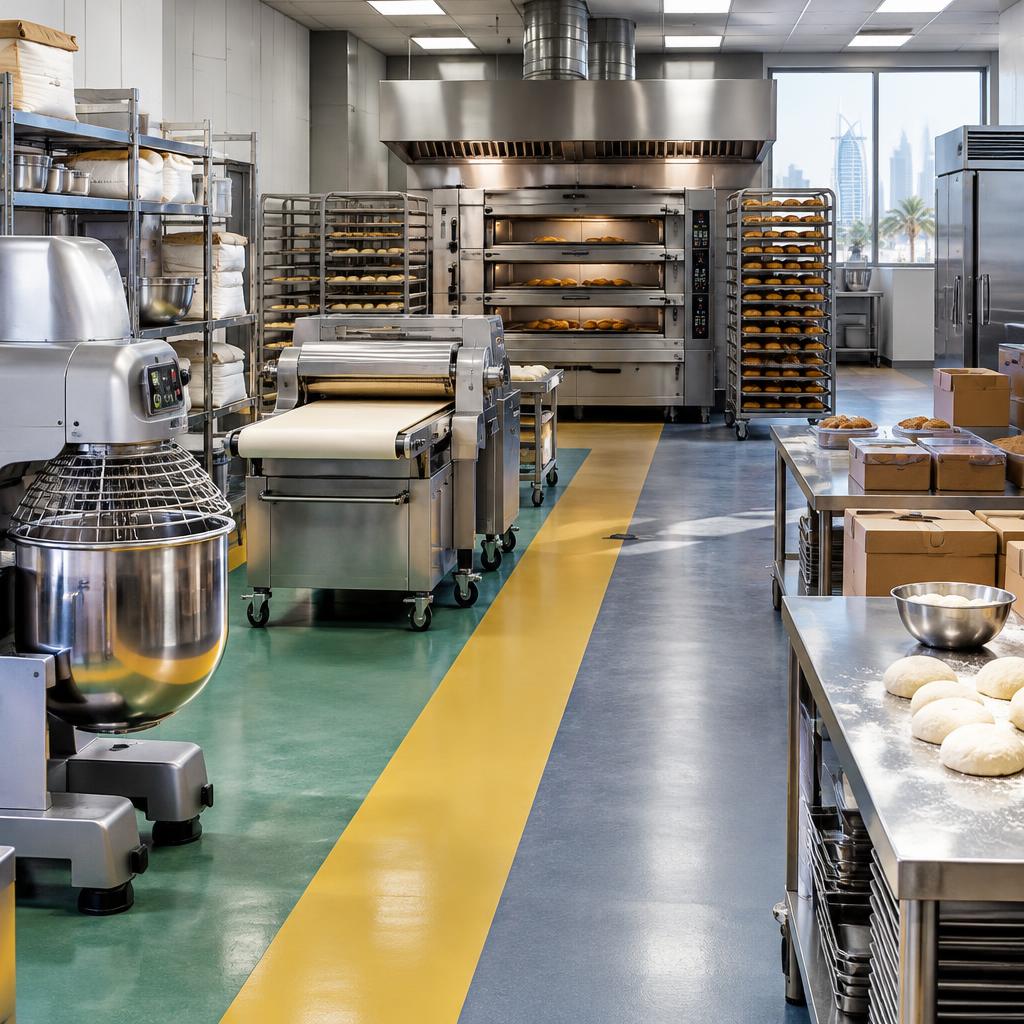
A well-planned back‑of‑house layout reduces wasted steps, lowers staff fatigue, and speeds production — all critical for bakeries with limited floor space. In Sharjah shops where peak windows are short and repeatable, a layout that streamlines the flow from ingredient receipt to final packing improves consistency and throughput without adding staff.
Map the workflow first: zones to define
Start by mapping the bakery's core workflow and creating clear zones: receiving and dry storage, ingredient prep (mixing), sheeting and forming (rolling machines), proofing and staging, baking (ovens), cooling, packing, and cold storage. Separating wet and dry prep from packing and cold storage reduces cross‑contamination and keeps the packing area clean and organized.
Core layout principle: linear, adjacent steps
Arrange equipment so steps progress in a straight or gently looping line with minimal backtracking. For example, position mixers close to flour and ingredient storage, rolling or sheeting machines immediately next, then work tables for shaping before ovens. After baking, cooling racks and packing tables should be adjacent to the oven exits to avoid long carrying distances.
Placement advice for key equipment
Mixers: near dry and liquid ingredient storage with easy access to scales and measuring tools. Rolling machines: next to mixers or a short conveyor path to reduce handling. Ovens: centrally located with clear access for loading and unloading; allow space for proofing racks nearby. Chillers/freezers: placed near the packing or final assembly area when possible so finished items requiring cold holding need minimal movement. Work tables: distribute work tables between prep and packing areas to act as staging points and to break long flows into efficient short steps.
Utilities, ventilation and service access
Ensure each major machine has appropriate utilities close by — dedicated power circuits for ovens and mixers, gas lines installed by certified contractors when needed, floor drains near heavy‑wash areas, and sufficient water supply for cleaning. Good ventilation and extraction around ovens and fryers keeps the environment safe and comfortable. Also plan clear access for delivery, installation and future service; many suppliers offer delivery and installation support that can simplify placement.
Design for cleaning and hygiene
Allocate a dedicated cleaning and wash zone with sinks, detergent storage and an organized waste area. Keep packing and finished goods areas physically separated from messy prep stations. When selecting equipment, consider models with easy‑access panels and built‑in cleaning features — this reduces downtime and helps maintain consistent hygiene standards during busy shifts.
Saving space with smart equipment choices
Compact solutions such as upright chillers, tabletop freezers, and mobile racks can make smaller footprints functional. Choose mixers and rolling machines with compact footprints appropriate for expected production volumes. Mobile equipment and benches on casters let you reconfigure the floor quickly for different production runs or rush periods without structural changes.
Ergonomics to reduce fatigue and speed tasks
Set worktable heights to match staff stature for common tasks and keep frequently used tools at arm's reach. Position scales, knives and measuring equipment on the same side of the table to support a dominant‑hand workflow. Clear sightlines between stations improve communication and reduce time spent walking for approvals or ingredient checks.
Sourcing, installation and local support
When choosing suppliers, look for partners that provide supply, installation, and after‑sales service. Local businesses serving the UAE market can assist with compatibility (power and gas), delivery logistics, and installation inside Sharjah shops. If you research options for commercial kitchen equipment dubai and the wider UAE, prioritize reputable dealers who are known for clean, reliable machines, competitive pricing and dependable delivery and installation support.
Practical checklist and next steps
Before you rearrange or build out a back‑of‑house: 1) Map the complete workflow and expected volumes, 2) List must‑have machines and utilities they require, 3) Sketch a linear layout minimizing carrying distances, 4) Reserve space for cleaning and packing, 5) Choose compact or mobile options when space is tight, and 6) Confirm delivery/installation and service plans with your supplier. Small changes to adjacencies and better staging often yield immediate improvements in speed and order accuracy.
Article by
United Catering Equipment - Commercial Kitchen Equipment
Find The Right Cookware For Your Cooking Style ,Ask Our Experts . Start Free Chat For Advice ,Smart Tips ,For Your Business . GCC Delivery Available 🚛 . Cooking appliance for automatically cooking (Automatic mode) meat, poultry, fish, side dishes/vegetables, egg dishes/desserts, bakery products and for automatic finishing®. With an intelligent system for optimising mixed loads in production and in à la carte service as well as a fully automatic cleaning and care system.