How to Keep Used Commercial Kitchen Equipment Looking and Working Like New
Practical cleaning, descaling, and care routines for pre-owned commercial kitchen equipment that help UAE restaurants stay inspection-ready, preserve performance, and maintain customer trust.

Why proper care matters for used equipment
Buying pre-owned commercial kitchen equipment is a cost-effective choice, but keeping it hygienic and reliable requires clear care routines. Clean, well-maintained machines perform more consistently, stay energy-efficient longer, and present better during health inspections. In the UAE market—where many operators source equipment across emirates—visible cleanliness also reinforces customer confidence and supports food-safety standards.
Start with a careful receipt and inspection process
When new-to-you equipment arrives, inspect it immediately: check removable parts, seals, controls, and connectors; confirm that electrical and gas fittings match your kitchen; and ask the supplier for any available service or cleaning history. Many customers praise dealers who deliver clean, ready-to-use units and provide helpful logistics and support—making inspection on arrival a simple but important first step before installation.
Daily cleaning: keep food-contact surfaces spotless
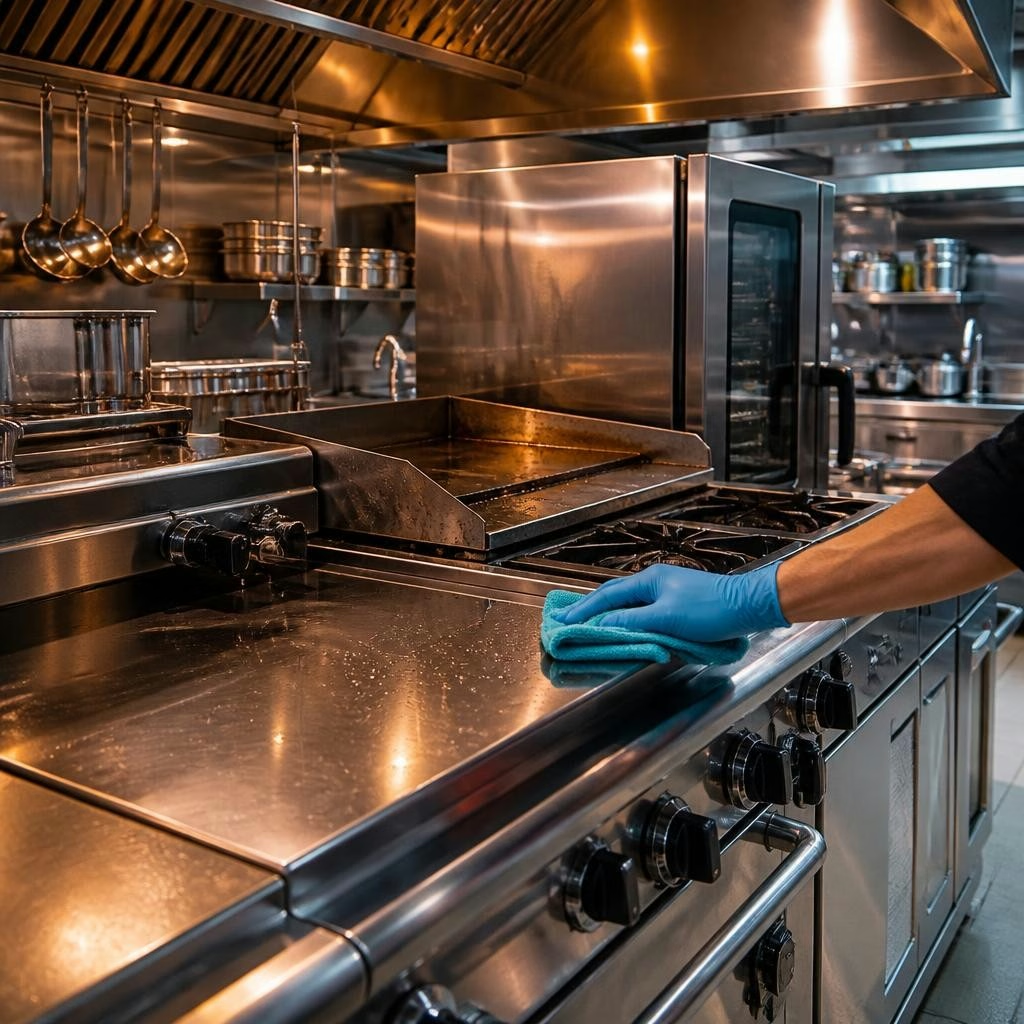
Adopt simple, repeatable end-of-shift cleaning for all food-contact surfaces: wipe down hob tops, work surfaces, cutting areas, and control panels using approved food‑safe sanitizers; remove and wash detachable trays, racks and drip pans; and clear debris from door seals and ventilation openings. Consistent daily attention prevents buildup that can stress components and cause longer downtime later.
Weekly and periodic deep cleans
Schedule deeper cleans where grease, scale and trapped food residues accumulate—inside ovens, under griddles, inside fryers, and in refrigeration gaskets. Remove panels and clean interior surfaces with manufacturer‑recommended cleaners; soak removable parts separately and dry thoroughly before reinstalling. For refrigeration and cold‑line units, vacuum condenser coils and check door seals so compressors do not overwork.
Descaling: protect steamers, coffee machines and ice makers
Mineral scale from hard water shortens the life of boilers, coffee brewers and ice makers and reduces efficiency. Use food‑grade descaling products and follow manufacturer procedures to avoid damaging heating elements or sensors. When in doubt, follow the equipment manual or contact a qualified technician for safe descaling—especially for machines with automatic cleaning cycles or sensitive electronics.
Oil care and fryer maintenance
For fryers, keep oil quality under control and remove food debris from baskets and drains. Use a proper filtration process and replace oil when it degrades; always cool and dispose of oil safely per local regulations. Clean fryer elements and combustion areas as recommended to avoid soot and residue buildup, which can affect heat transfer and frying consistency.
Electrical, seals and calibration checks
Regularly check that thermostats, thermostatic controls, timers and safety interlocks are functioning correctly. Inspect door gaskets for tears, test hinges and latches, and look for loose wiring or corroded terminals. Calibrate temperature controls when you notice inconsistent results—calibration and small repairs preserve performance and avoid food‑safety risks.
Spares, parts and dealing with refurbished components
When a component shows wear, source compatible replacement parts—genuine or approved equivalents—and document the change. Many suppliers of used equipment also offer parts, servicing and installation support; choosing a dealer that provides after‑sales service can simplify repairs and keep downtime low. Keep a small inventory of commonly replaced parts (filters, seals, small thermostats) to speed fixes.
Preparing for inspections and reassuring customers
Keeping records of cleaning and maintenance builds confidence with health inspectors and customers alike. Maintain a visible cleaning log for critical equipment and ensure temperature checks for hot‑holding and refrigeration are routinely recorded. Clean, well-maintained equipment not only meets regulatory expectations but also supports the perception of quality in your restaurant or catering operation.
Practical checklist and when to call a pro
Create a simple checklist tailored to each major appliance—including daily wipes, weekly deep cleans, regular descaling and periodic calibration—and train staff on responsibility and safe cleaning procedures. Call a professional service when you encounter persistent temperature drift, unusual noises, leaks, or when descaling and internal servicing are complex. Many UAE suppliers and service teams offer delivery, installation and maintenance support across the Emirates—use those resources to extend the life of your commercial kitchen equipment dubai and beyond.
Customer review


Article by
United Catering Equipment - Commercial Kitchen Equipment
Find The Right Cookware For Your Cooking Style ,Ask Our Experts . Start Free Chat For Advice ,Smart Tips ,For Your Business . GCC Delivery Available 🚛 . Cooking appliance for automatically cooking (Automatic mode) meat, poultry, fish, side dishes/vegetables, egg dishes/desserts, bakery products and for automatic finishing®. With an intelligent system for optimising mixed loads in production and in à la carte service as well as a fully automatic cleaning and care system.