How to Size and Choose a Commercial Fryer for Cafeterias in Dubai and Ajman
Practical guidance for cafeterias and small restaurants in Dubai and Ajman on selecting the right fryer—single vs double tank, gas vs electric, countertop vs floor models—plus oil-saving, safety, and service pointers to keep operations efficient and reliable.
Why the right fryer matters for cafeterias
Choosing the correct commercial fryer affects food quality, speed of service, operating costs and staff safety. For cafeterias that handle steady flows at peak times, the right fryer reduces wait times and helps maintain consistent product results—whether you serve fries, broast, samosas or other fried items. This article walks through the main decisions owners and kitchen managers should consider when buying or upgrading a fryer in Dubai or Ajman.
Understand your throughput and menu first
Start by mapping typical order patterns: number of fried portions at peak, variety of items, and expected growth. Cafeterias with a narrow menu focused on fries will have different needs than places offering mixed fried items (large pieces like broast, small items like samosas). Match fryer choice to real service volumes rather than ideal or future projections to avoid overspending or ending up with undersized equipment.
Single-tank vs double-tank fryers
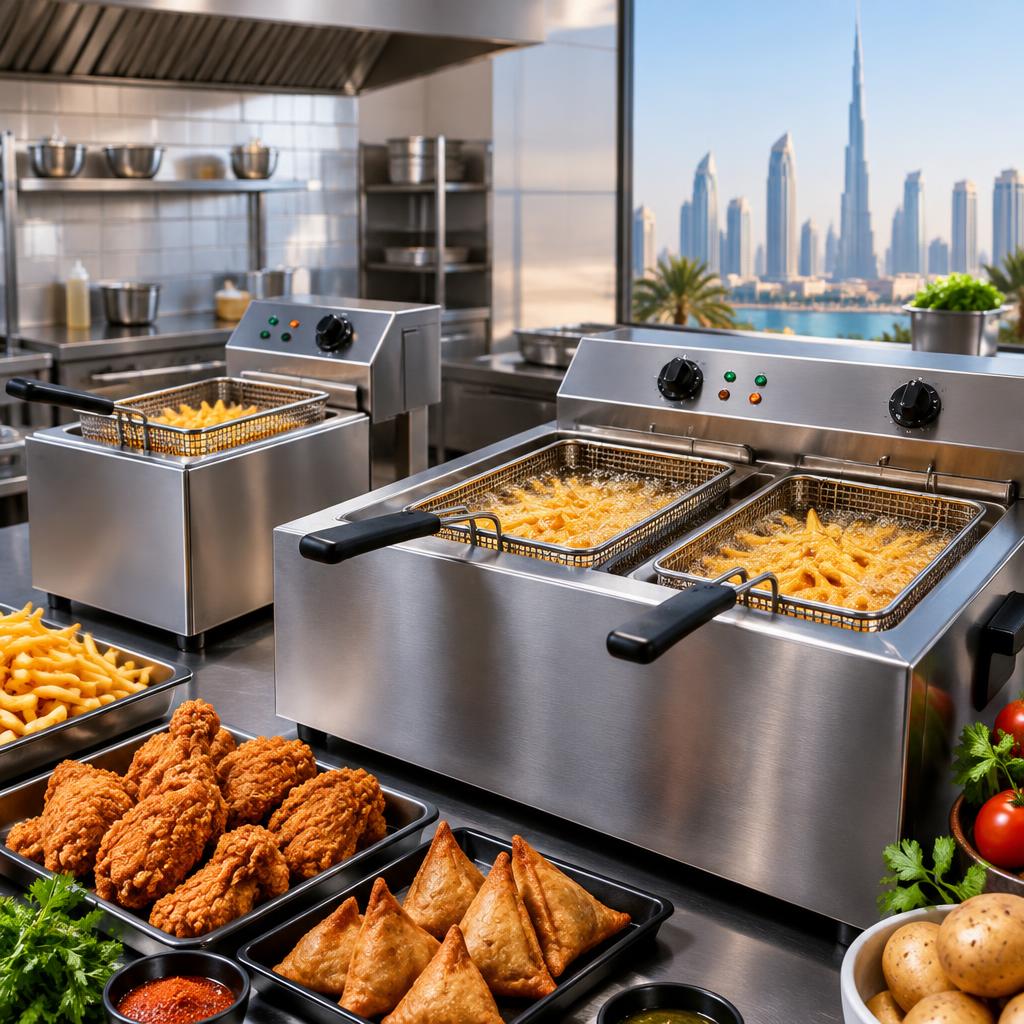
Single-tank fryers are compact and simpler to operate—good for low-to-moderate volumes or kitchens that fry one main product. Double-tank fryers provide separate oil baths and more flexibility for frying multiple items simultaneously without flavour transfer. If your cafeteria routinely cooks two distinct items at once (for example, fries and a battered protein), a double tank reduces cross-contamination risk and improves throughput.
Gas vs electric: benefits and trade-offs
Gas fryers usually heat quickly and can be more economical for continuous, high-volume frying when a reliable gas supply and proper ventilation exist. Electric fryers offer precise temperature control, easier installation where gas lines are impractical, and often simpler cleaning routines. Choose based on kitchen infrastructure (gas availability, electrical capacity), energy cost patterns in your location, and the types of items you fry most often.
Countertop vs floor models
Countertop fryers save floor space and work well for small-volume kitchens or satellite service lines. Floor models offer larger oil capacity, greater basket area and are better suited to sustained high-volume service. Consider kitchen footprint, staff ergonomics (loading and unloading baskets), and service access when deciding between a compact countertop unit and a larger floor-standing fryer.
Tank size, basket configuration and layout
Rather than focusing on exact numbers, think in practical terms: larger tanks and multiple baskets increase capacity and let you stage batches for continuous service. Basket shape and size should match your most common items; wide baskets are better for fries, while deeper baskets suit larger pieces. Also plan fryer placement near service lines to minimize transfer time and keep workflow efficient.
Oil‑saving and performance tips
Operational practices can reduce oil costs and keep product quality high. Filter oil regularly to remove debris, use appropriate frying temperatures to avoid excessive oil breakdown, and avoid overloading baskets which lowers oil temperature. When possible, use basket rotations and portion control to keep batches consistent. Following manufacturer-recommended oil types and maintenance schedules helps extend oil life and fryer performance.
Safety, ventilation and daily maintenance
Safe fryer operation includes proper ventilation, clear staff procedures for hot oil handling, and daily cleaning routines. Ensure staff are trained on hot-oil spills, correct basket handling, and safe draining procedures. Daily skimming, weekly filtration and periodic professional servicing keep the fryer running reliably and reduce fire risk. Good ventilation and an extractor hood are important for air quality and compliance with local kitchen regulations.
Service, installation and local support considerations
When sourcing equipment in this region, consider supplier support for delivery, installation and maintenance. Look for vendors experienced with commercial kitchens in the UAE who can advise on installation needs (gas lines, electrical load, ventilation) and provide timely after-sales service. Customers of local suppliers often highlight professionalism and reliable equipment as key factors in their purchasing decisions.
Making the final choice and next steps
Decide by matching your menu, throughput and kitchen constraints to fryer type, fuel and size. Test or see demo units where possible and confirm local service options for installation and maintenance. As one customer observed when buying from a local supplier, professional guidance and good-quality equipment make the selection and setup process smoother—an important consideration for cafeterias in Dubai, Ajman and nearby Emirates. If you need tailored recommendations, contact a reputable commercial kitchen equipment dubai supplier that serves Ajman and the UAE to discuss your specific menu and daily volumes.
Customer review


Article by
United Catering Equipment - Commercial Kitchen Equipment
Find The Right Cookware For Your Cooking Style ,Ask Our Experts . Start Free Chat For Advice ,Smart Tips ,For Your Business . GCC Delivery Available 🚛 . Cooking appliance for automatically cooking (Automatic mode) meat, poultry, fish, side dishes/vegetables, egg dishes/desserts, bakery products and for automatic finishing®. With an intelligent system for optimising mixed loads in production and in à la carte service as well as a fully automatic cleaning and care system.