Opening a Cloud Kitchen in Dubai or Sharjah: Essential Equipment, Layout and Scaling Tips
A practical guide for entrepreneurs starting a delivery-only kitchen in the UAE, covering must-have cooking, cold-line and hot-holding equipment, layout and ventilation priorities, and which items to add as your order volume grows.

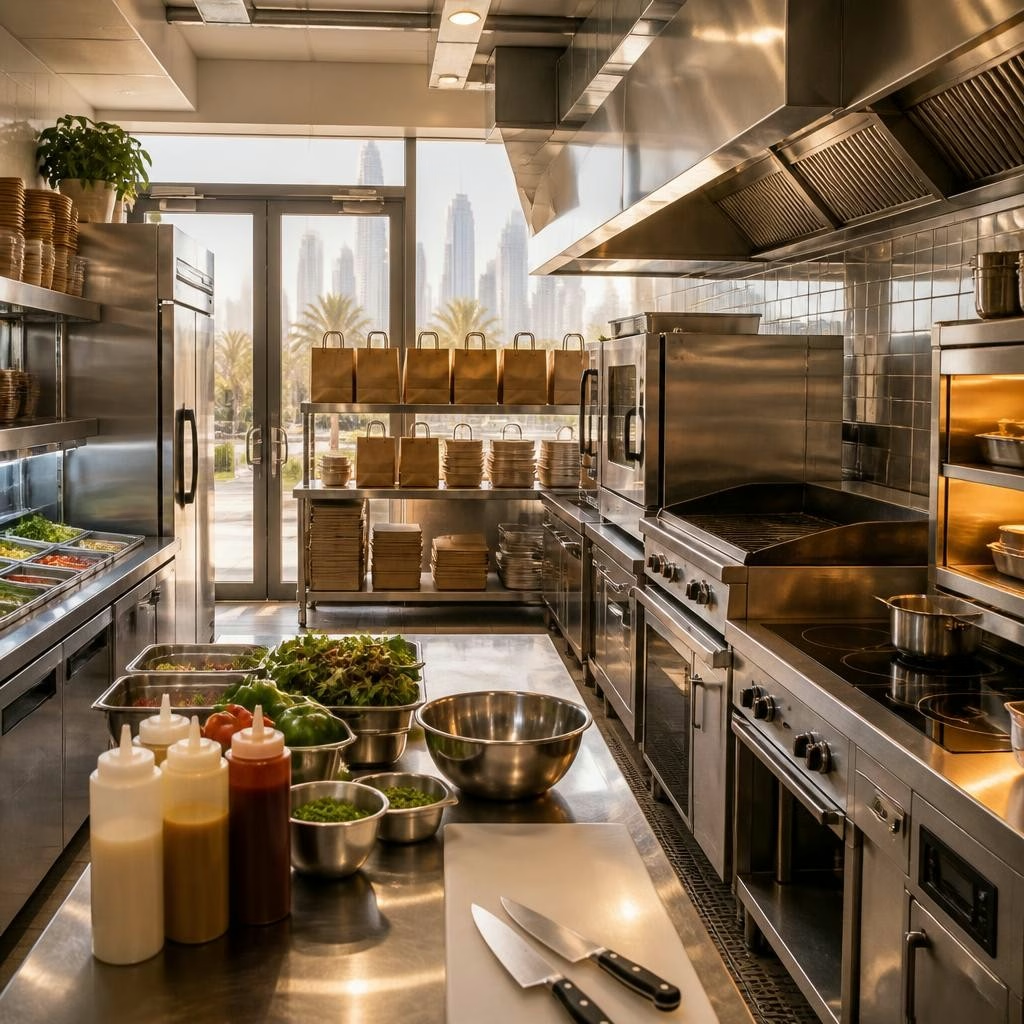
Why choose a cloud kitchen model in the UAE
Cloud kitchens minimise front-of-house costs and let you focus on efficient production and delivery. In Dubai and Sharjah, where demand for food delivery is strong, the right equipment and a compact, well-organised layout determine whether you can hit promised delivery times and maintain food quality. Planning equipment and workflow carefully up front reduces costly retrofits later.
Start with the core cooking zone
The heart of any cloud kitchen is the cooking line. For most delivery concepts you’ll need reliable cookers, ovens and fryers that deliver consistent results during busy service windows. Consider heavy-use items first: commercial cookers (gas or electric), commercial ovens for baking or roasting, fryers for high-volume fried items, and grills for proteins. United Catering Equipment lists these categories and can supply, install and service many of them—so look for units rated for commercial pace and easy maintenance.
Cold-line essentials: keep ingredients and prep fresh
A compact but effective cold line protects ingredient quality and speeds prep. Essentials include upright freezers or chillers for bulk storage, table-top chillers for immediate-access ingredients, and display chillers if you handle ready-to-go items. Refrigeration should be zoned: a cold storage area for raw stock, prep fridges at workstations, and short-term holding near the packing station to minimise transfer times. Reliable refrigeration is a common purchase when sourcing commercial kitchen equipment dubai businesses trust.
Hot holding and finishing to preserve quality en route
Food warmers and hot food storage units help keep orders at safe, service-ready temperatures between cooking and dispatch. Choose hot-holding equipment with even temperature distribution and accessible controls so packers can quickly drop in completed items. If your menu includes mixed loads—different items for the same order—plan finishing space where delicate items are lightly reheated or rested before packing to preserve texture.
Smallwares and supporting machines to streamline output
Beyond major appliances, small- and medium-sized machines make a big difference in speed and consistency. Commercial mixers, dough rollers, pasta cookers, commercial microwaves and reliable toasters cut prep time in high-volume kitchens. If you serve beverages or desserts, consider commercial coffee machines, grinders and ice makers. Prioritise items that reduce manual work in peak periods so staff can maintain throughput without compromising quality.
Layout, workflow and space priorities
Design your kitchen as a linear flow from inbound ingredients to packing and dispatch. Typical zones: receiving and storage, prep and cold-line, cooking line, finishing/hot-holding, packing and dispatch, and dishwashing. Place packing near the hot-holding zone to reduce transfer time, and reserve an uncluttered area for delivery staging. Keep circulation paths clear for staff and delivery riders. Where space is tight, stack functions vertically—e.g., prep above cold storage shelving—but avoid creating bottlenecks at the cooking line.
Ventilation, extraction and safety basics
A compliant ventilation system is essential for heat, smoke and grease control. Install adequately sized exhaust hoods above cooking equipment with make-up air to maintain kitchen pressure. Grease management, accessible filters and a regular cleaning schedule reduce fire risk and maintenance costs. Also plan for safe gas and electrical layouts and clear access for service technicians, since efficient servicing keeps equipment running and reduces downtime.
How to scale equipment as orders grow
Start with reliable, appropriately sized core pieces and add capacity as demand requires. Typical scaling steps: add an extra fryer or oven to increase throughput; expand refrigeration capacity with upright chillers; introduce dedicated finishing equipment (e.g., combi ovens or automated cooking appliances) to reduce cook time variability; and increase packing stations during peak windows. Many cloud kitchens keep modular equipment choices so upgrades or replacements are straightforward without major remodels.
Choosing suppliers and the value of after‑sale support
When sourcing commercial kitchen equipment dubai entrepreneurs rely on, prioritise vendors who offer installation, local logistics and ongoing maintenance. Reviews for local suppliers consistently highlight the difference made by responsive delivery, clean well-maintained machines, fair pricing and helpful after‑sale support. For example, customers note trustworthy, hands‑on guidance from staff and reliable logistics for delivery and installation—qualities that reduce setup friction and protect uptime. Confirm what servicing and spare-part support are available in your area before purchasing.
Customer review


Article by
United Catering Equipment - Commercial Kitchen Equipment
Find The Right Cookware For Your Cooking Style ,Ask Our Experts . Start Free Chat For Advice ,Smart Tips ,For Your Business . GCC Delivery Available 🚛 . Cooking appliance for automatically cooking (Automatic mode) meat, poultry, fish, side dishes/vegetables, egg dishes/desserts, bakery products and for automatic finishing®. With an intelligent system for optimising mixed loads in production and in à la carte service as well as a fully automatic cleaning and care system.