Planning Ice Capacity for UAE Cafés and Restaurants: Ice Makers, Crushers, and Storage
Practical guidance for coffee shops, juice bars and restaurants in the UAE to estimate daily ice needs, match ice makers to peak demand, and combine crushers and storage so you don’t run short during hot seasons.

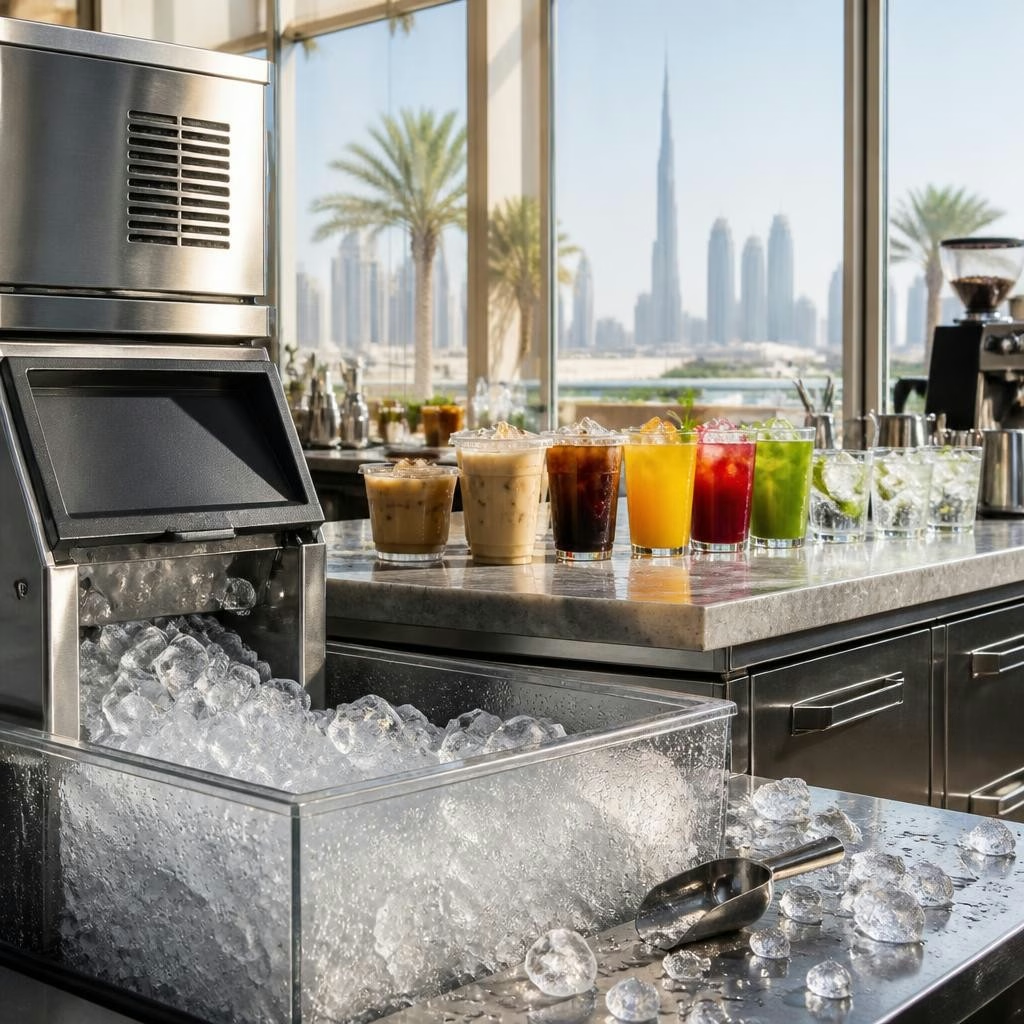
Why ice planning matters in the UAE
In the UAE climate, consistent access to ice is essential for beverage quality, food safety and smooth service—especially during peak summer months and busy weekend periods. Running short of ice can slow service, affect drink consistency and damage customer experience. Careful planning lets you balance investment in ice makers, crushers and storage with the everyday realities of a cafe or restaurant, while avoiding overbuying equipment you don’t need.
Start with real sales data to estimate demand
Begin by collecting your own sales figures: average daily number of iced drinks, cold food items that use ice, and expected busiest hours. Use actual point-of-sale (POS) reports and inventory movement rather than guesswork. From these figures you can calculate total drink counts per day and per peak hour, which form the basis for estimating how much ice you need to produce and store.
Convert menu items into ice volume
Translate menu recipes into ice per item by measuring how much ice you use for each beverage or dish (for example, a standard iced coffee, a juice, or a cocktail). Record the typical portion in grams or in standard scoop units. Multiply that portion by the number of items sold to get a daily ice requirement for each product category. Summing these gives a practical daily ice requirement for your business.
Plan for peak-hour production, not just daily totals
Daily totals can hide concentrated demand during short windows (morning rush, lunch, or evening service). Convert your peak-hour sales into ice volume and ensure your production and storage system can meet that peak. Ice maker output is typically rated per 24 hours and also by hourly production—match the hourly production capability (or combined capacity of multiple machines) to your peak-hour need so you don’t face shortages when service is busiest.
How to combine ice makers and storage
Think of ice makers as the production source and storage bins as the buffer that smooths production and consumption. A proper setup lets an ice maker run steadily and fill a well-insulated bin so staff can draw ice quickly during peaks. When selecting storage, consider bin insulation, access for staff, and how quickly stored ice is used or melts. The right balance depends on your peak demand profile and available floor space.
The role of ice crushers and portioning
Ice crushers let you convert block or cube ice into the form your menu requires and can speed service for certain drinks. If many of your menu items use crushed or pebble ice, plan for either an on-demand crusher at service stations or a workflow that crushes and stores ice in batches. Position crushers near service points to minimize handling and maintain speed during rush periods.
Redundancy, staging and resilience
Operational resilience reduces the chance that a single failure causes a service breakdown. Consider staging multiple smaller ice makers instead of one large unit so a backup can cover partial demand when one machine is offline for cleaning or repair. Similarly, remote storage or secondary bins can keep service running while primary bins are being cleaned or replenished.
Hygiene, water quality and maintenance
Ice hygiene is critical. Use food‑grade water filtration and a consistent cleaning schedule aligned with manufacturer guidance to prevent taste issues and biofilm. Choose equipment that is easy to clean and that your supplier can service. Many customers prioritize clean, reliable machines and prompt maintenance support when selecting commercial kitchen equipment dubai suppliers, which helps extend equipment life and safeguards food safety.
Practical considerations for equipment selection
When choosing ice makers, crushers and storage, compare real-world production specifications, footprint and serviceability. Check the manufacturer’s rated production and the size of compatible storage bins; evaluate power, water inlet and drain requirements; and confirm delivery, installation and after‑sales support. If you’ll ship equipment across the UAE, consider a supplier experienced with logistics and site installation to reduce setup delays.
How a supplier can help — next steps for your business
Work with a supplier who can review your sales data and suggest a tailored combination of ice makers, crushers and storage. Look for partners that provide delivery, installation and post‑sale support so you can focus on operations. Many local customers value clean, well-maintained machines, competitive pricing and reliable logistics—qualities to ask about when comparing commercial kitchen equipment dubai vendors. Gather your daily and peak-hour drink counts, note menu portion sizes, and contact a specialist to get a practical equipment layout and service plan.
Article by
United Catering Equipment - Commercial Kitchen Equipment
Find The Right Cookware For Your Cooking Style ,Ask Our Experts . Start Free Chat For Advice ,Smart Tips ,For Your Business . GCC Delivery Available 🚛 . Cooking appliance for automatically cooking (Automatic mode) meat, poultry, fish, side dishes/vegetables, egg dishes/desserts, bakery products and for automatic finishing®. With an intelligent system for optimising mixed loads in production and in à la carte service as well as a fully automatic cleaning and care system.