Preventive Maintenance Checklist for Commercial Ovens and Cookers in the UAE
A practical weekly and monthly maintenance checklist for gas and electric commercial ovens and cookers used in restaurants and bakeries across Dubai, Sharjah, and Abu Dhabi to reduce downtime and extend equipment life.

Why preventive maintenance matters
Regular preventive maintenance keeps ovens and cookers performing reliably, reduces unexpected downtime, and helps maintain consistent food quality. For commercial kitchens—whether a restaurant, bakery, or catering operation—small routine checks prevent bigger repairs later and protect health and safety. Business owners across Dubai, Sharjah and Abu Dhabi often report that dependable equipment and prompt after‑sales support make a measurable difference in day‑to‑day operations.
Scope of this checklist
This checklist covers common gas and electric commercial ovens and cookers used in professional kitchens. It separates quick daily/before‑service checks from weekly and monthly tasks and highlights items that should only be handled by a qualified technician (for example, gas valve servicing or electrical repairs). It’s intended to complement manufacturer instructions and any warranties or service agreements you have for your commercial kitchen equipment dubai.
Safety first: precautions to always follow
Always isolate power sources before performing maintenance: turn off electrical supply at the breaker for electric units and shut off the gas supply and pilot light for gas equipment when required. Use appropriate personal protective equipment—heat‑resistant gloves, goggles, and non‑slip footwear. Never attempt repairs on gas controls, safety valves, or internal electrical components unless you are a certified technician. If you detect a gas smell, evacuate the area and contact a qualified service provider immediately.
Daily / before‑service quick checks
Before each service period, perform quick visual and functional checks: confirm controls and timers respond correctly; inspect oven doors and hinges for proper sealing; check burner flames on gas cookers for steady, blue flames; verify that indicator lights and pilot lights are working; ensure ventilation and hood systems are running; clear any food debris from trays and racks. Addressing small problems early reduces the risk of service interruptions during busy shifts.
Weekly checklist — cleaning and basic inspections
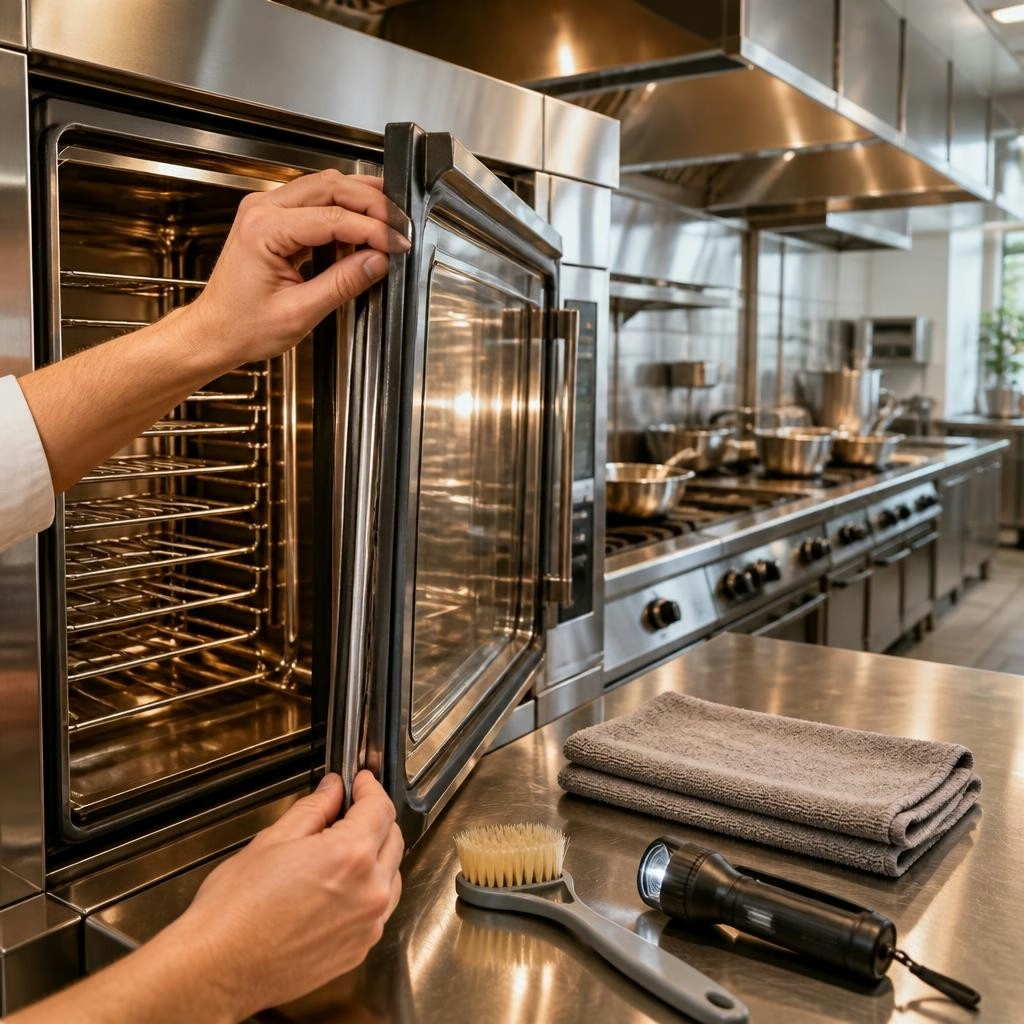
Weekly tasks should be thorough but can be completed by trained kitchen staff: deep clean oven interiors to remove carbon buildup and food residue (use manufacturer‑approved cleaners); remove and clean racks, trays and filters; inspect door gaskets for cracks or compression loss and replace if worn; check burner caps, ports and ignition electrodes on gas units for clogs; inspect visible wiring and cable connections for wear or overheating; confirm thermostats and timers read consistently using a thermometer where applicable.
Monthly checklist — functional checks and adjustments
On a monthly basis, perform slightly deeper functional checks: test temperature accuracy across multiple points with a calibrated probe and note any variance; inspect and clean ventilation ducts and exhaust connections; verify safety interlocks and automatic shutoffs; lubricate door hinges and moving parts with food‑safe lubricant; check condensate drains and drip trays for blockages; for gas cookers, visually inspect gas hoses and connections for signs of wear or leaks (use approved leak test methods, not open flame). Record readings and any adjustments.
Gas‑specific items to watch
Gas ovens and cookers need special attention to combustion and fuel delivery systems. Watch for yellow or flickering flames, soot or unusual odors—these indicate incomplete combustion and require immediate attention. Do not attempt internal gas valve repairs unless certified. Keep external burner ports clear and ensure proper ventilation to avoid carbon monoxide buildup. Schedule qualified inspections of gas regulators and pressure settings at least semi‑annually or per manufacturer guidance.
Electric‑specific items to watch
Electric ovens and elements should be checked for hot spots and uneven heating. Inspect heating elements for visible damage, discoloration, or loose connections. Test door switches and safety thermostats and verify that control panels are free from condensation and grease. Ensure that power cords and plugs are intact and that breakers are appropriately rated for the equipment load. Any signs of electrical arcing, burning smell, or repeated tripping should prompt an immediate service call.
When to call a professional and after‑sales support
Some tasks must be handled by qualified technicians: gas regulator adjustments, internal gas valve replacement, major electrical repairs, control board replacement, and any work that affects safety systems. Customers regularly cite after‑sales service and timely maintenance as critical—good service providers offer scheduled maintenance visits, troubleshooting, and parts support. If you have a service agreement, follow that schedule; otherwise, plan for at least a biannual professional inspection for busy commercial kitchens.
Record keeping, calibration and continuous improvement
Keep a maintenance log for each oven and cooker: list dates, checks performed, temperature readings, parts replaced, and technician notes. Use that record to spot recurring issues and to plan preventive part replacements. Regular calibration of thermostats and probes ensures menu consistency and reduces product waste. For kitchens in Dubai, Sharjah and Abu Dhabi, using local suppliers who provide installation and maintenance can shorten response times and simplify parts sourcing.
Practical tips to extend equipment life
Train staff on correct loading limits, avoid overfilling ovens, and establish cleaning routines that remove grease before it hardens. Match cookware sizes to oven racks and pans to avoid uneven wear. Replace worn door gaskets promptly to prevent heat loss and longer run times. Finally, choose equipment from suppliers who stand behind their products with service, spare parts, and trustworthy advice—many customers value suppliers who provide reliable maintenance and after‑sales care as part of the package.
Next steps and contacting local service
Use this checklist as a starting point tailored to your equipment and operational tempo. For gas‑safety checks, complex electrical issues, or to arrange professional preventive servicing across the UAE, contact an experienced commercial kitchen equipment dubai supplier or certified technician who serves Dubai, Sharjah, Abu Dhabi and the wider Emirates. A proactive maintenance plan reduces downtime and helps keep your kitchen running efficiently.
Customer review


Article by
United Catering Equipment - Commercial Kitchen Equipment
Find The Right Cookware For Your Cooking Style ,Ask Our Experts . Start Free Chat For Advice ,Smart Tips ,For Your Business . GCC Delivery Available 🚛 . Cooking appliance for automatically cooking (Automatic mode) meat, poultry, fish, side dishes/vegetables, egg dishes/desserts, bakery products and for automatic finishing®. With an intelligent system for optimising mixed loads in production and in à la carte service as well as a fully automatic cleaning and care system.