Budgeting a Full Villa Build vs. Major Renovation in Dubai: What Owners Should Know
A practical guide comparing the main cost drivers of building a new villa versus undertaking a major renovation in Dubai—covering design, approvals, structural and MEP work, interiors, landscaping, contingencies, and a clear checklist to help owners decide which route fits their budget and goals.

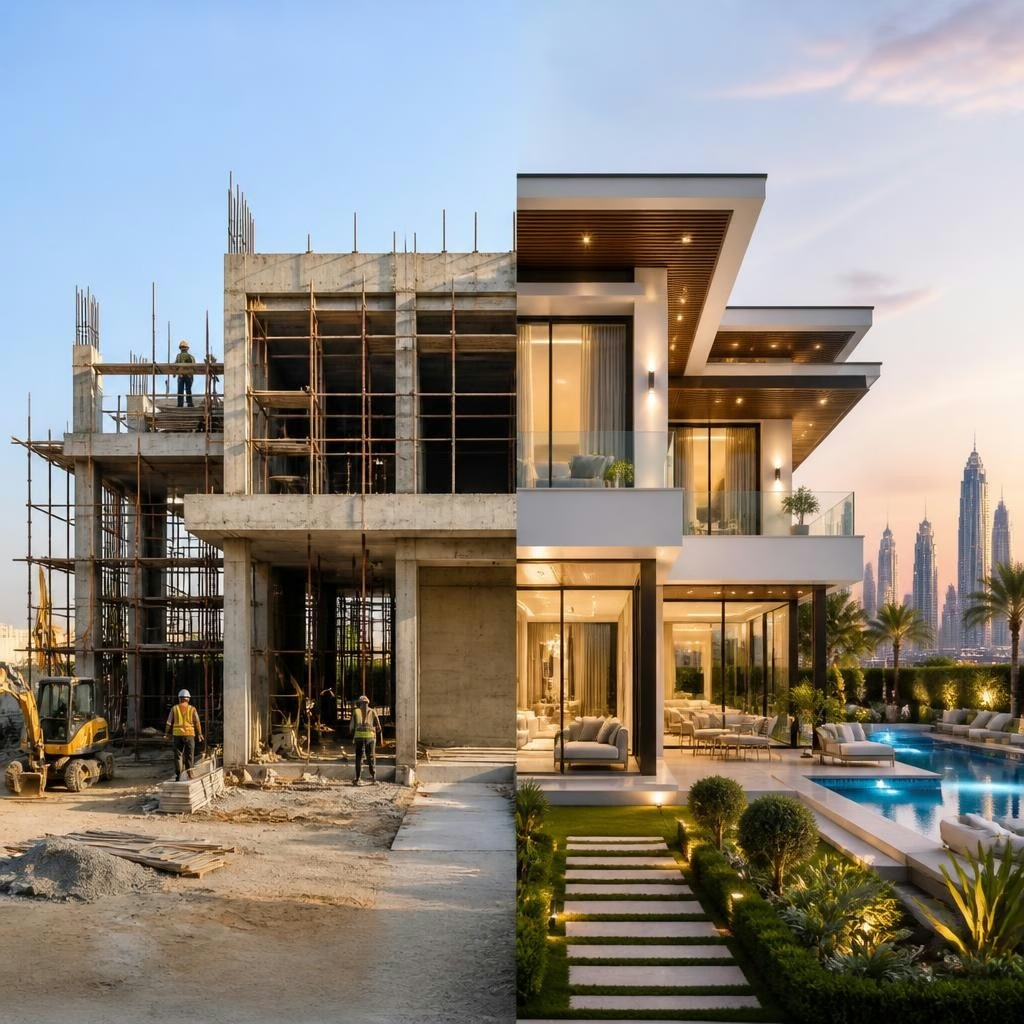
Overview: Build or Renovate — the core question
Deciding between constructing a new villa and carrying out a major renovation is about more than upfront cost. It’s about site constraints, zoning and approvals, how much of the existing structure is reusable, the desired quality of finishes, and long-term value. In Dubai and neighboring emirates, both options can deliver high-quality results, but the balance of cost drivers differs: new builds concentrate cost in foundation, structure and services; renovations concentrate cost in diagnostics, remedial works and careful integration of new systems into an existing shell.
Why a local, end‑to‑end contractor matters
When evaluating budgets in Dubai, working with a contractor that handles design, engineering, approvals and execution reduces coordination risk. Customers of full-service firms frequently point to smoother approvals and clearer accountability when one team oversees everything from concept to handover. For owners in locations such as Palm Jumeirah, Emirates Hills or Damac Hills, where site rules and municipal requirements can affect scope, a single team that understands local submissions, contractors and specialist trades makes budgeting more predictable.
Primary cost drivers of a new villa build
A full build concentrates costs on site preparation and civil works: excavation, foundations, structural concrete and load-bearing elements. Architectural design and detailed structural engineering are essential early costs. MEP systems (electrical, plumbing, HVAC) are installed from scratch and sized for the whole house, which increases initial spend but can deliver modern efficiency. External works—driveways, landscaping and a swimming pool—are often integrated into the construction schedule and can be specified to match the overall design, avoiding costly retrofits later.
Primary cost drivers of a major renovation
Major renovations shift costs toward careful assessment, remedial works and interfacing new systems with old. A thorough condition survey and structural inspection are the first expenses: identifying hidden defects, waterproofing issues, or structural elements that must be reinforced. Remedial MEP work—re-routing ducts, replacing piping, upgrading electrical distribution—can be intensive because it often involves breaking into finished surfaces. High-quality finishes and bespoke interiors also drive cost if layouts are changed or bespoke cabinetry and fixtures are added.
Approvals, permits and site limitations
Both new builds and major renovations require government approvals, but the type and complexity differ. New villas typically need full planning and building permits; renovations may need structural approvals, trade permits and specialist clearances. Site limitations—setbacks, existing landscaping, shared utilities or neighborhood covenant rules—can add cost through redesign or compliance measures. Working with experienced engineers and permit coordinators helps anticipate these expenses early and reduces surprises in the schedule and budget.
MEP systems: a major budget component
Mechanical, electrical and plumbing systems are among the highest-value elements in both routes. For a new build you plan and install efficient HVAC, distribution, and smart-home infrastructure from the outset. In a renovation, upgrading or replacing legacy systems can be complex and expensive because of access and compatibility challenges. Owners should budget for modern standards—improved insulation, energy-efficient AC, upgraded electrical panels and integrated smart controls—especially in Dubai’s climate where cooling performance affects long-term running costs.
Interiors and finishes: how choices affect cost
Finishes—flooring, joinery, bathroom fixtures, kitchen appliances and lighting—are where budgets can vary dramatically. A new build allows integrated choices that align with structural and MEP planning; renovations may require trade-offs to fit new finishes into existing constraints. Custom joinery, luxury sanitaryware, and high‑end tiles or stone increase budget substantially. Owners can manage cost by agreeing a finish schedule early, prioritizing high-impact rooms (kitchen, master bathroom, living area), and choosing standardised products for secondary spaces.
Outdoor works: landscaping, pools and hardscape
Outdoor elements are often decisive for villa living and a significant cost factor. Building a pool or installing major landscaping is usually more straightforward with a new build because access and drainage can be designed in from day one. In renovation projects, pool upgrades, crack repairs, resurfacing or tile replacement and revised grading can be more intrusive and expensive. Including irrigation, outdoor lighting and paved areas in the early scope helps control costs and ensures coordinated finishes between inside and outside spaces.
Contingencies and ‘unknowns’ — planning for the unexpected
Unexpected discoveries—hidden water damage, structural defects, or mismatched services—are more common during renovations and can impact budgets and timelines. New builds have fewer unknowns but still require contingency for site surprises or specification changes. A practical budgeting approach includes a contingency buffer and staged decision points so owners can choose where to upgrade or economise. Early and thorough surveys, plus professional engineering oversight, reduce the likelihood and impact of surprises.
Practical budgeting steps and how to proceed
Start with a clear brief: desired layout, must‑have features (pool, smart home, bespoke kitchen), and target quality. Commission a condition survey and feasibility study for renovations, or a site assessment for builds. Ask for scope‑based estimates that separate design fees, permit costs, structural works, MEP, interiors, landscaping and contingencies. Use milestone-based pricing and an agreed change-order process to limit budget creep. Working with a contractor that provides end‑to‑end project management—covering design, approvals, MEP, smart-home integration and landscaping—helps keep costs aligned and responsibilities clear. As one recent customer observed, having a single team manage design through execution, including approvals and specialist works like pools, reduces coordination risk and supports predictable outcomes.
Deciding which route is right for you
If your villa’s structure is sound and you want to retain the footprint while modernising systems and finishes, a major renovation can be cost-effective and faster than a full rebuild. If the layout, foundations or long-term performance goals require fundamental change, a new build can be a better investment because it avoids repeated retrofitting and can be optimised for energy performance and modern systems. The right choice follows a careful technical assessment, a realistic budget that includes contingencies, and a partner who understands local approvals and the full scope—from engineering supervision to final finishes.
Next steps with VHC
If you’re planning either route in Dubai or Abu Dhabi, start by requesting a feasibility assessment and scope-based estimate. Ask the contractor to identify likely permit requirements and to provide a preliminary schedule. Choose a team that can coordinate MEP, structural engineering, smart-home systems and landscape works under one contract to reduce hidden coordination costs. A professional, experienced team that has handled full renovations and custom villa builds will help you compare realistic budgets for each option and make a confident decision.
Customer review


Article by
VHC | Virtual Home Contracting LLC
Virtual Home Contracting (VHC) is a leading construction and interior design company in the Dubai, UAE specializing in residential and commercial projects. We offer end-to-end services including contracting, MEP works, interior design, smart home automation, and pool & landscape solutions. Our team focuses on modern architecture, quality finishes, and innovative concepts to bring your dream home to life. Trusted by homeowners and developers across Dubai and Abu Dhabi.