Creating a Productive Home Office in Dubai Villas and Apartments
Practical guidance for planning and fitting a productive home office in Dubai homes — covering space selection, power and data, lighting, acoustics, storage, ergonomics, smart controls and working with a contractor.

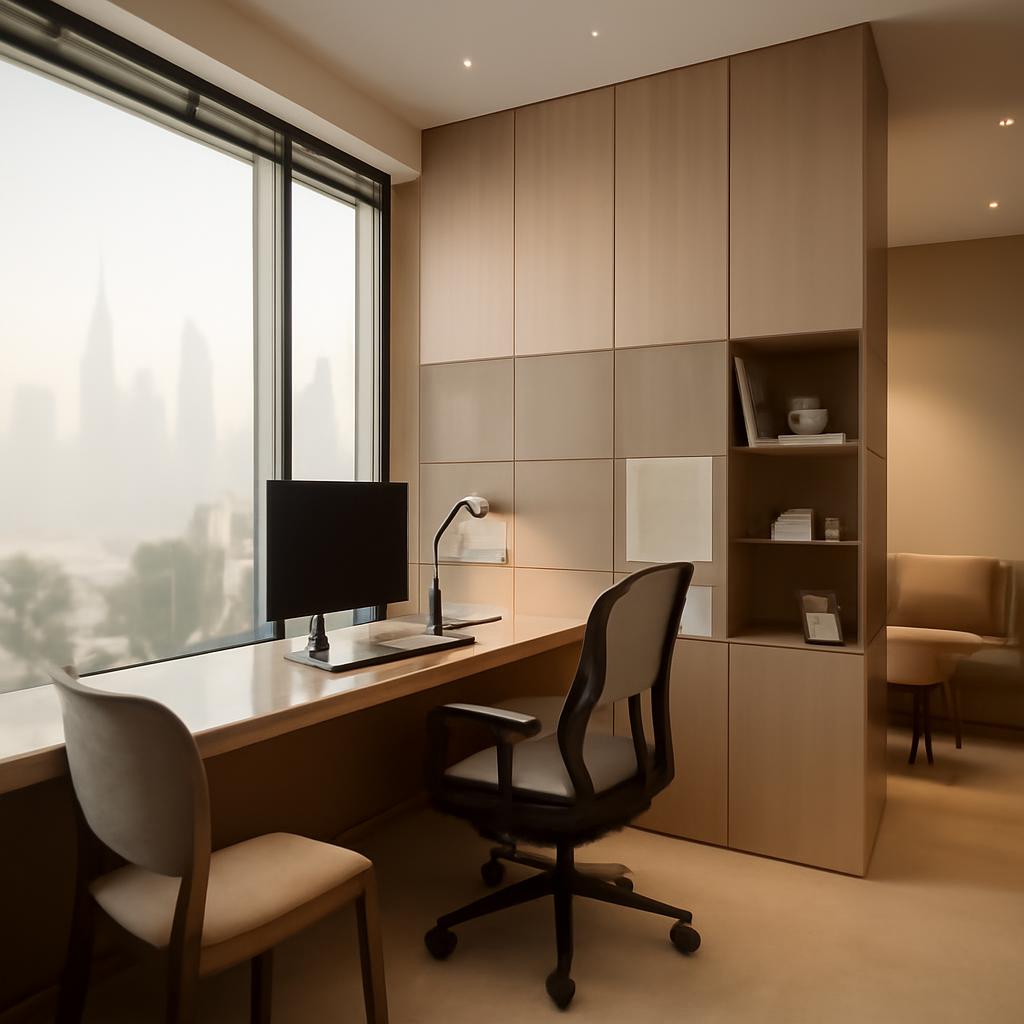
Why a purpose-designed home office matters in Dubai homes
Whether you live in a villa on Palm Jumeirah or an apartment in Al Sufouh, a well-planned home office affects comfort, efficiency and long-term use of your property. A dedicated workspace reduces distractions, supports healthier working posture and helps separate work from home life — benefits that matter if you frequently host online meetings, run a business from home, or need long periods of focused work.
Begin with a clear brief and the right location
Start by defining how you work: do you need a quiet focus room, video-call background, storage for documents, or occasional desk space? Choose a location that matches that brief: a spare bedroom or annex for privacy, a corner of the living room for open-plan work, or an underused study or closet for a compact setup. In villas, annexes or small accessory buildings can be converted into permanent offices — but any structural changes should be checked for approvals and MEP impacts early in the planning stage.
Plan power, data and HVAC from the start
A productive office depends on reliable power, data and climate control. Plan dedicated electrical points for your desk area (PC, monitors, chargers), plus separate circuits or surge protection for sensitive equipment. Include wired data points or plan placement of a Wi‑Fi access point to avoid dead zones. Consider thermostat placement and sufficient ventilation: smart AC integration and proper ducting help maintain consistent comfort during long workdays and are normal parts of a thorough MEP plan.
Layered lighting: combine daylight with task lighting
Maximise natural light while controlling glare — position desks perpendicular to windows when possible, and use blinds or automated curtains to reduce screen reflections. Add task lighting for work surfaces and adjustable ambient lighting for evening hours. Lighting design that balances ambient, task and accent layers improves visibility and reduces eye strain; integrating lighting control scenes makes it easy to switch from focused work to video-call or relaxation modes.
Acoustic treatments for privacy and concentration
Sound control is often overlooked but crucial. Soft finishes like rugs, upholstered furniture and curtains reduce reverberation; strategically placed bookcases or acoustic panels help absorb noise in busy homes. For noisy apartments or ground-floor rooms, consider higher-performance glazing and tighter door seals to reduce external noise. Engineering and interior architectural changes — from partition walls to specialized acoustic panels — can be included in a renovation scope when required.
Ergonomics and furniture layout that support daily use
Design the desk zone with ergonomics in mind: adequate legroom, monitor at eye level, keyboard and mouse within easy reach, and a comfortable adjustable chair. If space allows, create a small meeting nook or secondary seating for informal discussions. For compact offices, use fold-away or wall-mounted desks to free circulation. Work with an interior architect or furniture specialist to ensure dimensions, clearance and circulation are planned around real equipment and daily routines.
Smart storage, cable management and finish choices
Efficient storage keeps a workspace tidy and functional. Use a mix of closed cupboards for confidential files and open shelving for frequently used items. Concealed cable trays, under-desk channels and tidy power hubs reduce clutter and improve safety. Choose durable finishes that withstand daily use — flooring with good wear characteristics, washable paints and easy‑clean worktop surfaces — while matching the home’s broader interior style.
Use smart home features to boost convenience and productivity
Automation can simplify routines: schedule lighting scenes, control curtains for glare protection, and set AC temperatures for comfort during working hours. Voice systems and app-controlled scenes let you start meetings, dim lights or close blinds without leaving your desk. Thoughtful smart integration supports energy efficiency and reduces friction in daily workflows, especially when combined with professionally installed lighting control, thermostats and curtain automation.
Ideas for converting annexes, spare rooms and underused corners
Not every home needs a full renovation to create an effective office. Convert a guest room into a dual-purpose office/guest suite with a Murphy bed or smart storage; turn an under-stair void or alcove into a compact workstation; or add a small annex for a private studio office in a villa plot. For larger conversions or new accessory buildings, plan for foundations, access and approvals early and involve construction and MEP planning to integrate utilities and insulation correctly.
Working with a contractor: coordination, timelines and practical tips
A contractor who provides end-to-end project management can coordinate design, MEP, approvals and installations to reduce delays. Share a clear brief, reference images and a prioritized wish list so the team can propose practical solutions and cost-effective phasing. Ask about sequencing (electrical and data before finishes), testing of systems (AC, Wi‑Fi, automation) and a practical handover that includes documentation and user guidance for smart systems. One client reported that the team was responsive, attentive to their vision, offered practical solutions and completed the work on time — a helpful reminder that clear communication and experienced supervision make a big difference in delivering a functional home office.
Customer review


Article by
VHC | Virtual Home Contracting LLC
Virtual Home Contracting (VHC) is a leading construction and interior design company in the Dubai, UAE specializing in residential and commercial projects. We offer end-to-end services including contracting, MEP works, interior design, smart home automation, and pool & landscape solutions. Our team focuses on modern architecture, quality finishes, and innovative concepts to bring your dream home to life. Trusted by homeowners and developers across Dubai and Abu Dhabi.