Designing Low‑Water, Heat‑Resistant Landscapes for Dubai Villas
Practical guidance for planning a low‑water, heat‑resistant landscape for Dubai villas — balancing hardscape and planting, efficient irrigation, plant and turf choices, pool considerations, and what to discuss with your contractor.

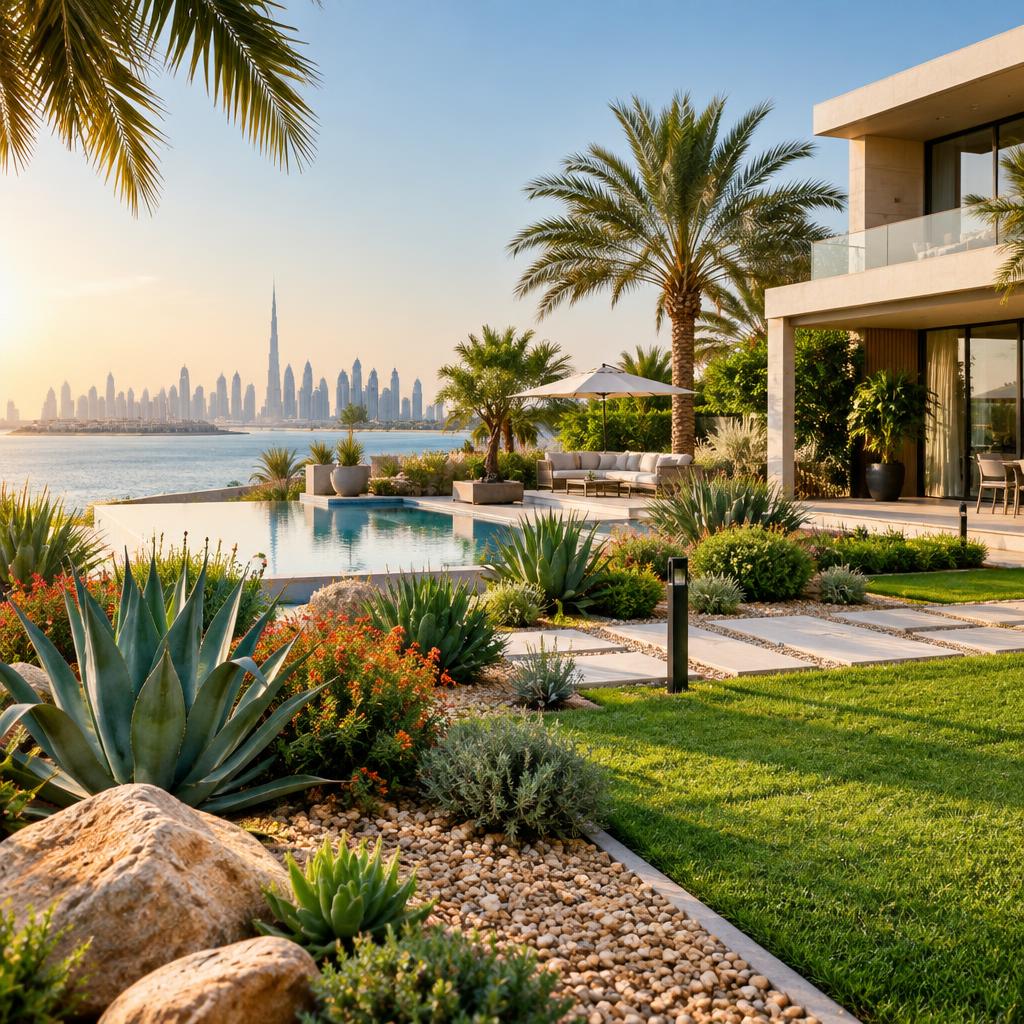
Why a climate‑aware landscape matters in Dubai
Dubai’s hot, dry climate and intense sun make traditional, water‑hungry gardens impractical for many villa owners. A landscape designed for low water use and heat resilience reduces ongoing maintenance, cuts irrigation costs, and keeps outdoor spaces usable year‑round. It also protects outdoor finishes and pool equipment from overheating and premature wear when paired with the right materials and detailing.
Begin with a focused site assessment
Start by reviewing sun orientation, prevailing winds, soil type, existing trees, and how you use outdoor areas. Identify parts of the garden that need shade, privacy, or play space, and note hard surfaces that create heat islands. This assessment informs choices about where to locate hardscape, where planting will thrive, and how to route irrigation and drainage for efficient performance.
Hardscape versus softscape: create functional balance
In Dubai villas, hardscape often forms the backbone of a resilient landscape: shaded seating courts, pergolas, paved paths, and durable pool decks. Softscape — planted areas and lawns — should be used strategically as cooling pockets, not entire lawns. Use paving and gravel to define circulation and reduce thirsty turf, while reserving planting beds for shaded, mulched zones that shelter roots from heat and reduce water loss.
Plant choices that thrive on low water and heat
Select drought‑tolerant species adapted to hot climates and salt spray where relevant. Focus on plants that deliver structure and year‑round interest: palms or native trees for vertical shade, flowering shrubs and climbers for color, and succulents or ornamental grasses for low care borders. Group plants by water need so irrigation can be targeted rather than applied uniformly across the site.
Grass or artificial turf — pros and practical tradeoffs
Natural grass looks cool and soft underfoot but needs regular irrigation and maintenance in Dubai’s heat. Artificial turf eliminates irrigation and mowing but can become hot in direct sun and requires proper underlay, drainage, and higher‑quality infill to stay comfortable. Consider hybrid approaches — small swathes of natural turf in shaded areas or synthetic turf for play zones — and choose lighter, ventilated products to reduce heat buildup.
Irrigation that conserves water and targets need
Efficient irrigation is key: use drip systems for planting beds and micro‑emitters for trees to deliver water to roots with minimal evaporation. For lawns or larger planted areas, consider zoned, low‑flow sprinklers and smart controllers that adjust schedules based on weather. Integrate irrigation design with landscape grading to avoid runoff and make maintenance easier.
Soil preparation, mulching and microclimates
Improving soil with organic matter helps it retain moisture and supports plant health. Apply a layer of mulch to planting beds to reduce evaporation and moderate root temperatures. Use porous paving and permeable surfaces where possible to allow water infiltration, and design microclimates — shaded niches under trees, trellises, or pergolas — to support plants that need cooler conditions.
Pool and water feature strategies for hot climates
Pools are a focal point for many Dubai villas, but they influence landscape design. Minimise water loss from splashing and evaporation through shading, wind screening, and smart positioning. If adding water features, select low‑flow designs and durable finishes. VHC’s pool design and water‑feature services can be coordinated with landscaping so circulation, filtration, and finishes are planned together for durability in the heat.
Lighting, materials and smart controls
Choose light‑colored hardscape materials to reflect heat and reduce surface temperatures. Integrate layered lighting and lighting controls to extend usable hours without excessive energy use—VHC offers lighting design and smart home integration that can automate schedules and scenes. Where possible, combine smart irrigation controls with home automation to optimise water use and respond to seasonal changes.
Working with a contractor: what to ask and expect
When hiring a contractor for a villa landscape, ask about experience with Dubai’s climate, irrigation systems, and pool landscaping. Discuss end‑to‑end coordination: design, approvals, grading, irrigation, lighting, and handover. Customers frequently praise teams that manage permits, pool integration and complete project delivery, and many value professional project management and clear communication throughout construction. A coordinated approach reduces surprises and helps your garden perform reliably in the local environment.
Customer review


Article by
VHC | Virtual Home Contracting LLC
Virtual Home Contracting (VHC) is a leading construction and interior design company in the Dubai, UAE specializing in residential and commercial projects. We offer end-to-end services including contracting, MEP works, interior design, smart home automation, and pool & landscape solutions. Our team focuses on modern architecture, quality finishes, and innovative concepts to bring your dream home to life. Trusted by homeowners and developers across Dubai and Abu Dhabi.