Smart AC & Thermostat Upgrades to Lower Cooling Costs in Dubai Villas
Practical guidance for Dubai homeowners on retrofitting smart thermostats, zoning, and controls to reduce AC energy use, plus when duct or equipment upgrades make sense and how a contractor can help.

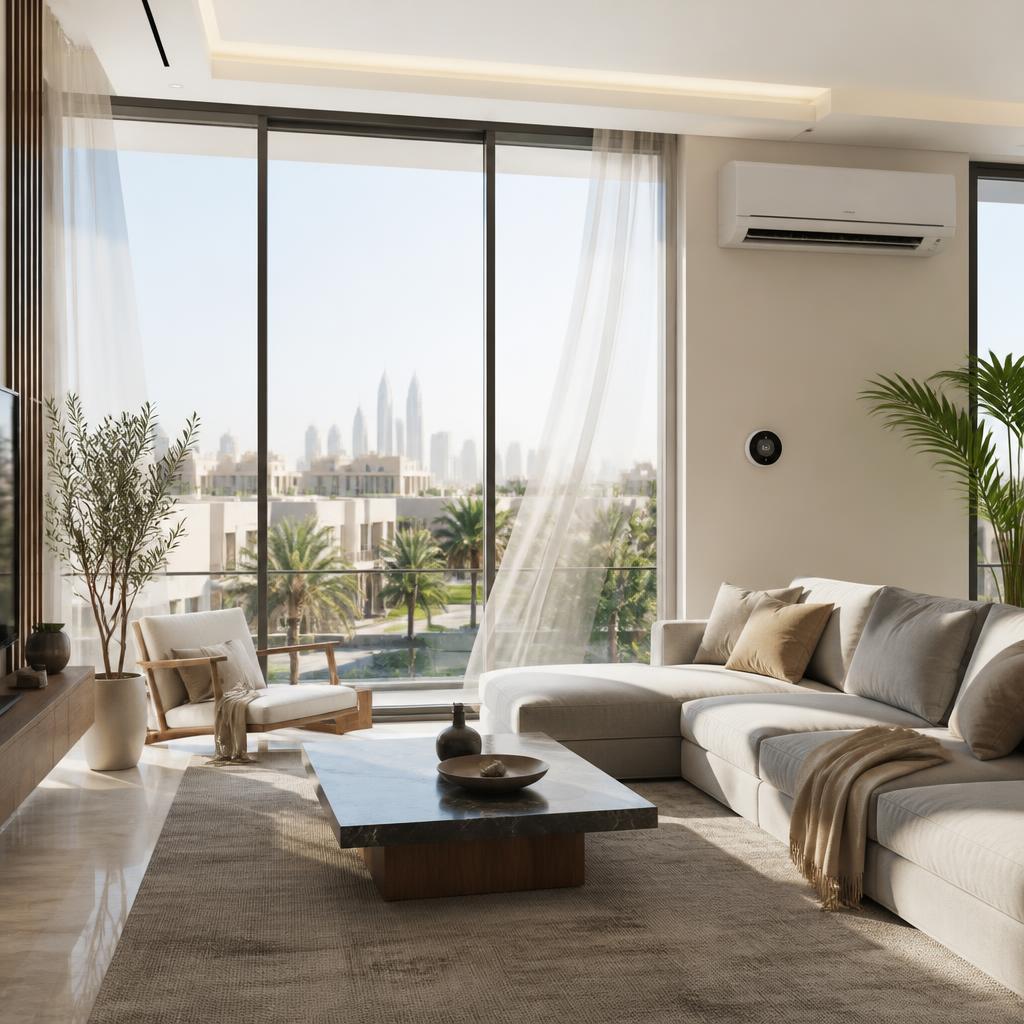
Why cooling efficiency matters in Dubai homes
Cooling is a primary energy cost in Dubai villas and townhouses. Even modest improvements in control and system efficiency can noticeably reduce consumption and improve comfort. This article explains practical retrofit options — smart thermostats, zoning, controls and targeted HVAC work — and helps you decide which investments are likely to pay off for an existing home.
Know your existing system before you upgrade
Start with a clear picture of the current setup: split wall units, ducted central systems, fan coil units (FCUs) or packaged systems with an AHU. Each system has different retrofit pathways. For example, many ducted systems accept a wired smart thermostat and motorized dampers, while split units may be controlled with dedicated smart AC modules. A professional assessment identifies compatibility, weak points and simple fixes that deliver the biggest savings.
Smart thermostats: what they do and what can be retrofitted
A smart thermostat gives you schedule-based control, remote adjustments, basic learning, and integration with home automation. In Dubai homes a smart thermostat can be installed where there’s a central thermostat connection or paired with a smart AC controller for split units. VHC’s services include thermostat installation and HVAC integration, so retrofits are typically possible without ripping out existing equipment — provided the wiring and control interfaces are compatible.
Zoning: targeted cooling for real savings
Zoning separates a home into independently controlled areas, preventing unnecessary cooling of empty rooms. Zoning is achieved by adding motorized dampers in ductwork and installing multiple thermostats or sensors. For retrofit projects, key considerations are existing duct layout, sufficient airflow per zone, and space for damper installation. When well executed, zoning reduces runtime on compressors and increases occupant comfort by directing cooling where it’s needed.
Smart controls and integration with your home
Modern controls let you coordinate thermostats with occupancy sensors, lighting scenes and voice systems. Integrations — such as linking thermostat schedules to smart panels or voice assistants — make efficient habits easier to maintain. VHC lists smart home and lighting-control services, which means you can combine thermostat upgrades with broader home automation to create temperature scenes, away modes and timed setback schedules that reduce wasted cooling automatically.
Scheduling and everyday best practices
Small changes to how you use cooling yield consistent savings. Use scheduled setbacks when the home is empty, take advantage of night-time temperature drift for pre-cooling, and reduce reliance on very low setpoints. Combine thermostat schedules with curtain control and shading to limit solar gain during peak hours. Regularly replacing filters and keeping vents clear also improves system efficiency and should be part of routine maintenance.
When ducts or equipment need upgrading
Some homes need more than smarter controls. Warning signs that point to duct or equipment upgrades include uneven room temperatures despite balanced controls, frequent breakdowns or repair cycles, and poor airflow even after filter and fan checks. In such cases, targeted duct repairs, sealing, insulation, or equipment replacement can be more cost-effective than incremental control fixes because they restore basic system efficiency and extend component life.
Practical retrofit pathway and timeline
A typical retrofit proceeds in stages: site assessment and measurements, a compatibility report and proposal, scheduled installation of controllers, thermostats and any dampers or sensors, followed by commissioning and occupant training. For more complex changes—duct modifications or equipment swaps—approvals and coordination may be needed. VHC’s end-to-end project approach, which customers note for its thoroughness and engineering oversight, can simplify permissions and coordination for larger retrofits.
Useful add-ons: filters, sensors and smart AC modules
Don’t overlook low-cost measures that improve results: timely filter replacement, vent and duct cleaning, and targeted sensors in problem rooms. For split systems, smart AC modules or infrared-based controllers can add remote scheduling and energy tracking without full system replacement. Pairing these add-ons with proper maintenance (filter and vent cleaning, performance checks) maximizes the benefit of any control upgrade.
How a contractor can help and next steps
If you’re evaluating smart-AC upgrades, start with a professional assessment that measures airflow, inspects ducts and confirms control compatibility. VHC provides thermostat installation, AC maintenance, duct services and smart-home integration, and is positioned to manage assessments through to commissioning. To move forward: schedule an on-site evaluation, request a retrofit proposal that compares control-only versus duct/equipment options, and choose a plan that balances upfront cost with expected energy savings and comfort improvements.
Article by
VHC | Virtual Home Contracting LLC
Virtual Home Contracting (VHC) is a leading construction and interior design company in the Dubai, UAE specializing in residential and commercial projects. We offer end-to-end services including contracting, MEP works, interior design, smart home automation, and pool & landscape solutions. Our team focuses on modern architecture, quality finishes, and innovative concepts to bring your dream home to life. Trusted by homeowners and developers across Dubai and Abu Dhabi.