Smart Home Retrofits for Existing Dubai Villas: What’s Easy and What’s Not
A practical guide to which smart upgrades can be added to an existing Dubai villa with minimal disruption, which typically require wiring or ceiling work, and how to phase the project to limit downtime and cost.

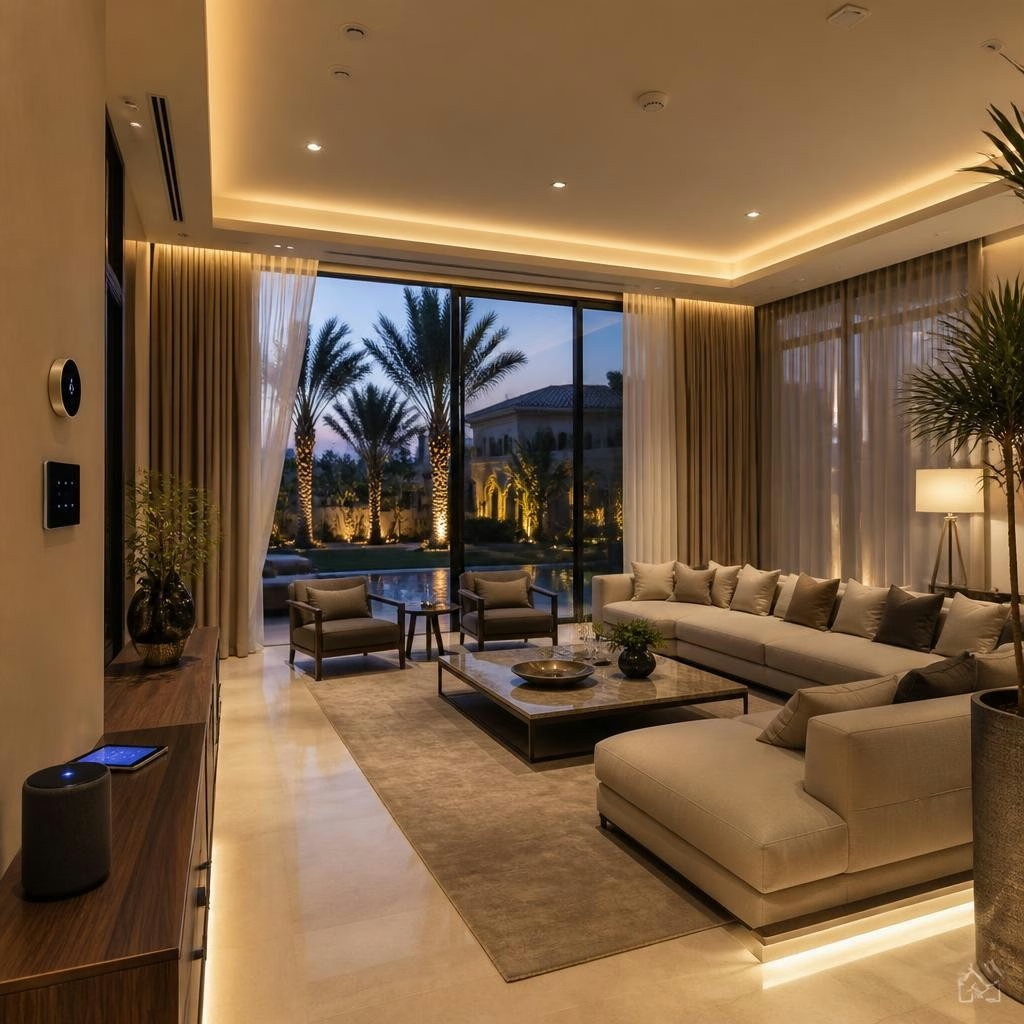
Why a careful plan matters for villa retrofits
Retrofitting smart home features into an existing villa can transform comfort and convenience, but success depends on a clear plan. A good retrofit balances minimal disruption with reliable performance: it preserves finishes, avoids unnecessary chasing, and maintains MEP and structural safety. For Dubai villas where finishes, pool systems, and AC plant matter, planning up front reduces surprises during installation.
Begin with a site survey and system audit
Start by having a qualified team inspect your villa’s electrical distribution, HVAC type (split units vs. centralized systems), ceiling space, and existing home network. The survey should identify access to conduits, switchboard capacity, and any decorative finishes that would be disturbed by cabling or ceiling work. This step also establishes where approvals or coordination with MEP trades will be needed.
Low-disruption upgrades: quick wins
Some smart features can be added with almost no construction: smart bulbs and smart switches that fit existing switch plates, plug-in smart plugs for appliances, Wi‑Fi or infrared-based AC controllers for wall-mounted split units, and voice assistants that rely on existing Wi‑Fi. These wireless-first devices let you add basic automation and voice control quickly and are a good first phase for testing user preferences.
Moderate work: replacing switches and adding motors
Replacing traditional wall switches with smart, hardwired switch modules is often a moderate intervention—it requires short power-off windows and careful wiring but usually avoids chasing walls. Motorising curtains and blinds can be medium scope: retrofit motors can sometimes attach to existing tracks, but they need convenient power sources and clearance for tracks and pelmets. If tracks are inadequate or power points are distant, installers may need to open small access zones to run cabling.
When rewiring, chasing, or ceiling work becomes necessary
Some upgrades typically require more invasive work. Whole-house wired automation platforms (wired lighting buses, KNX, or dedicated control cabling) usually need new conduits and chase work to conceal cabling. Recessed downlights or in-ceiling speakers often require opening ceilings or false-ceiling adjustments. Centralised control panels or new HVAC control wiring to AHUs/FCUs can also require MEP coordination and wall or ceiling access for routing.
Smart AC in Dubai villas: compatibility and common approaches
Smart AC integration ranges from simple to complex depending on the system. For individual wall-mounted split units, Wi‑Fi or IR controllers and smart thermostats are low-impact options. For centralized plant or multiple FCUs/AHUs, reliable control may require connection to existing MEP controls and possibly fieldwork at the unit—this is where HVAC expertise and coordination matter. An audit will reveal whether a wireless gateway can provide the needed control or whether hardwired connections are recommended.
Curtain control: power, tracks, and ceiling finishes
Motorised curtain systems are a popular comfort upgrade but have three practical considerations: the physical track, the motor and its mounting, and power. If the existing track is sturdy and there is a nearby power point, a retrofit motor can be installed with little disruption. If tracks must be replaced, or if the motor’s cabling needs to be hidden behind a pelmet or within a false ceiling, expect additional carpentry or ceiling work.
Lighting control and voice systems: choose a flexible backbone
To minimise future rework, adopt a flexible backbone strategy: strengthen Wi‑Fi, add a reliable mesh, and deploy a gateway or hub that supports both wireless devices and legacy wired switches. This lets you combine low-disruption wireless devices with phased hardwired upgrades later. Voice systems that interface with hubs bring immediate benefits without new wiring, while properly planned lighting scenes can evolve from smart bulbs to full hardwired scene controllers as budgets and schedules allow.
How to phase smart upgrades over time
Phasing keeps disruption manageable and spreads cost. A common roadmap: Phase 1 — improve network and add wireless devices (bulbs, plugs, voice assistants) to build familiarity; Phase 2 — upgrade climate control and key hardwired switches, add curtain motors where simple; Phase 3 — implement wired automation, in-ceiling systems, and full integration with HVAC or security if desired. Coordinate any heavy work with other planned renovations to avoid repeated access to the same areas.
Working with a contractor in Dubai: approvals, timelines, and practical tips
Choose a contractor who handles both design and execution and can coordinate approvals and MEP trades when needed. Customers have praised end-to-end teams that manage licences and technical coordination, which is especially helpful for larger retrofits involving HVAC or structural changes. Practical tips: schedule installations outside peak summer months if possible, prioritise network reliability before automation, and request a staged plan with clear milestones and inspection points so each phase is tested before moving to the next.
Customer review


Article by
VHC | Virtual Home Contracting LLC
Virtual Home Contracting (VHC) is a leading construction and interior design company in the Dubai, UAE specializing in residential and commercial projects. We offer end-to-end services including contracting, MEP works, interior design, smart home automation, and pool & landscape solutions. Our team focuses on modern architecture, quality finishes, and innovative concepts to bring your dream home to life. Trusted by homeowners and developers across Dubai and Abu Dhabi.