Turning a Dubai Villa Bedroom into a Calm Retreat: Layout, Lighting, and Storage
Practical guidance for redesigning master and guest bedrooms in Dubai—covering bed placement with AC and windows, blackout and privacy solutions, hidden storage ideas, and quiet, dimmable lighting plans to improve sleep and everyday comfort.

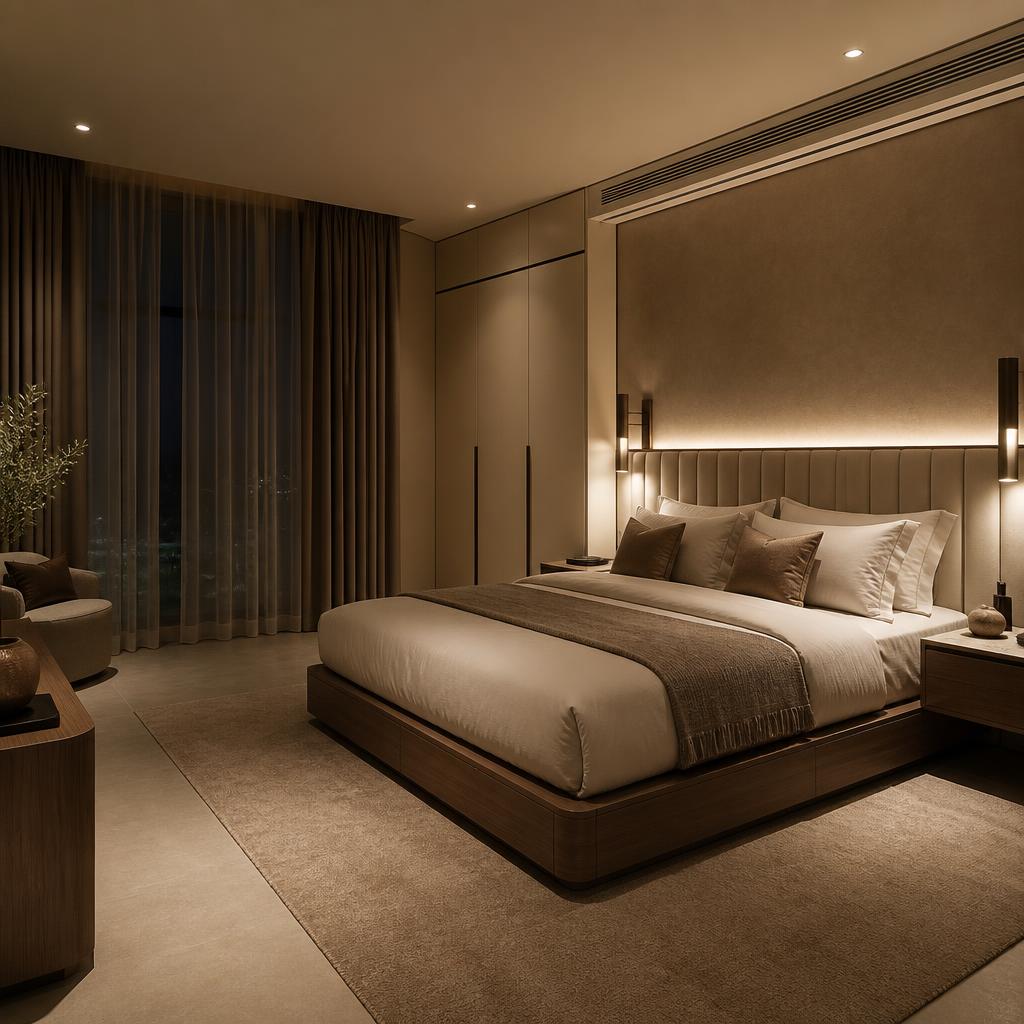
Why a thoughtful bedroom redesign matters in Dubai
In Dubai's climate and lifestyle, bedrooms must do more than look good: they need to stay cool, quiet, private, and easy to maintain. Whether you’re updating a master bedroom or preparing a guest room, small layout and systems choices—bed placement, window treatments, storage planning, and lighting—have an outsize effect on sleep quality and daily comfort. This article outlines practical design decisions and local considerations that help turn a villa bedroom into a calm retreat.
Start by assessing the room
Before any physical changes, make a short audit: note the room’s orientation (which walls get direct sun), window and door locations, AC vents and return-air positions, noise sources (street, pool equipment, or neighbours), and available floor area. Measure ceiling height and clearances so furniture fits without blocking airflow or circulation. This basic information guides bed placement, storage options, and the best type of window covering.
Bed placement: balance airflow, light, and circulation
Place the bed on a wall that provides a clear path from the door and avoids direct airflow from AC vents or ducts. In villas where AC is used year-round, avoid positioning the headboard directly under a supply vent or a powerful split‑unit outlet to prevent cold drafts on the sleeper. If the most practical headwall faces windows, allow at least 60–80 cm of space for bedside circulation and to accommodate blinds or motorised curtains without crowding the bed.
Controlling AC comfort without disrupting design
Because cooling is central in Dubai, integrate HVAC planning into the bedroom redesign. Opt for adjustable diffusers, directional grilles, or positioning that distributes cool air without blowing straight across the bed. Smart AC integration or thermostat zoning can reduce temperature swings between bedrooms and common areas. If air movement is still a concern, a well-placed ceiling fan or an airflow baffle can diffuse direct drafts while maintaining comfort.
Window solutions for blackout and privacy
For daytime naps and complete darkness at night, use layered window treatments: a blackout layer for light control plus a sheer or translucent layer for daylight privacy. Motorised curtains or automated blinds are especially useful in high or hard-to-reach windows and they work seamlessly with smart-home systems for scheduled scenes. Consider the window design itself—double glazing and well-sealed frames reduce heat gain and outside noise, improving both comfort and energy use.
Storage that hides clutter and preserves calm
Clutter undermines a restful room. Choose built-in wardrobes and recessed storage where possible to keep visual lines clean. Integrated nightstand drawers, under-bed storage drawers, and dedicated zones for laundry and luggage in guest rooms help reduce daily clutter. Use tall, narrow cabinets or full-height closets to maximise vertical space without shrinking the usable floor area. Keep surfaces minimal—limited bedside items and hidden charging stations reduce visual distraction.
Acoustic strategies for a quieter night
Bedrooms benefit from soft surfaces and well-sealed openings. Thick curtains, rugs, and upholstered headboards absorb sound, while door sweeps and properly sealed window frames limit noise transmission. Where external noise is an issue, consider upgrading glazing or adding an additional inner window layer. These measures are practical for villa bedrooms that face busy streets, pool areas, or service yards.
Layered, dimmable lighting that supports relaxation
Plan lighting in layers: ambient overhead lighting for general use, task lighting for reading or dressing, and accent lighting for atmosphere. Use warm color temperatures and dimmers so the room can shift from bright and functional to soft and calming. Bedside wall lights, adjustable reading lamps, and indirect cove lighting create comfortable scenes. Lighting-control systems or smart switches let you program ‘sleep’ and ‘wake’ scenes that make the bedroom routine simpler.
Material and finish choices for comfort and maintenance
Select breathable bedding materials and finishes that are durable in a warm climate. Hard flooring with an area rug offers both cooling and a soft underfoot feel, while light, neutral wall colours reflect daylight without glare. For durability, pick paints and finishes made for easy cleaning in humid or dusty conditions. When specifying materials, coordinate with flooring and interior-design options to ensure the overall palette contributes to a calm, uncluttered feel.
A practical project approach and what to expect
A successful bedroom redesign coordinates multiple trades: carpentry for built-in storage, HVAC adjustments, window treatments, electrical and lighting work, and smart‑home integration. Customers frequently appreciate contractors who offer end-to-end management—handling design, approvals, and trade coordination—so that changes are implemented cleanly and on schedule. Start with a site survey and a concise brief (desired layout, storage needs, light scenes, and any smart features). From there, a staged plan—design options, materials selection, and a phased installation—keeps disruption minimal and the project accountable.
Next steps checklist
If you’re ready to redesign a master or guest bedroom: 1) take the room audit measurements and note AC and window positions, 2) decide on the level of automation (motorised curtains, smart AC, lighting scenes), 3) prioritise storage types (built-in vs freestanding), 4) select layered window treatments and dimmable lighting, and 5) arrange a site visit with your design/build team to confirm details and timelines. Thoughtful choices in these areas will create a bedroom that stays cool, quiet, private, and uncluttered—an effective retreat in Dubai’s climate and lifestyle.
Article by
VHC | Virtual Home Contracting LLC
Virtual Home Contracting (VHC) is a leading construction and interior design company in the Dubai, UAE specializing in residential and commercial projects. We offer end-to-end services including contracting, MEP works, interior design, smart home automation, and pool & landscape solutions. Our team focuses on modern architecture, quality finishes, and innovative concepts to bring your dream home to life. Trusted by homeowners and developers across Dubai and Abu Dhabi.