Budgeting for a Turnkey Commercial Kitchen in Sharjah’s Industrial Area
A practical guide to estimating equipment categories, prioritising purchases, and phasing costs when building a turnkey commercial kitchen in Sharjah’s Industrial Area, with supplier and after‑sales considerations.
Why a clear budget matters for a turnkey kitchen
A turnkey commercial kitchen brings together equipment, installation, commissioning and initial support into a single project. A clear budget helps you align equipment choices with your menu, output targets and long‑term operating costs. This article explains the equipment categories you should plan for, how to prioritise purchases, and practical ways to control costs while keeping reliability and hygiene standards high.
What a turnkey package typically includes
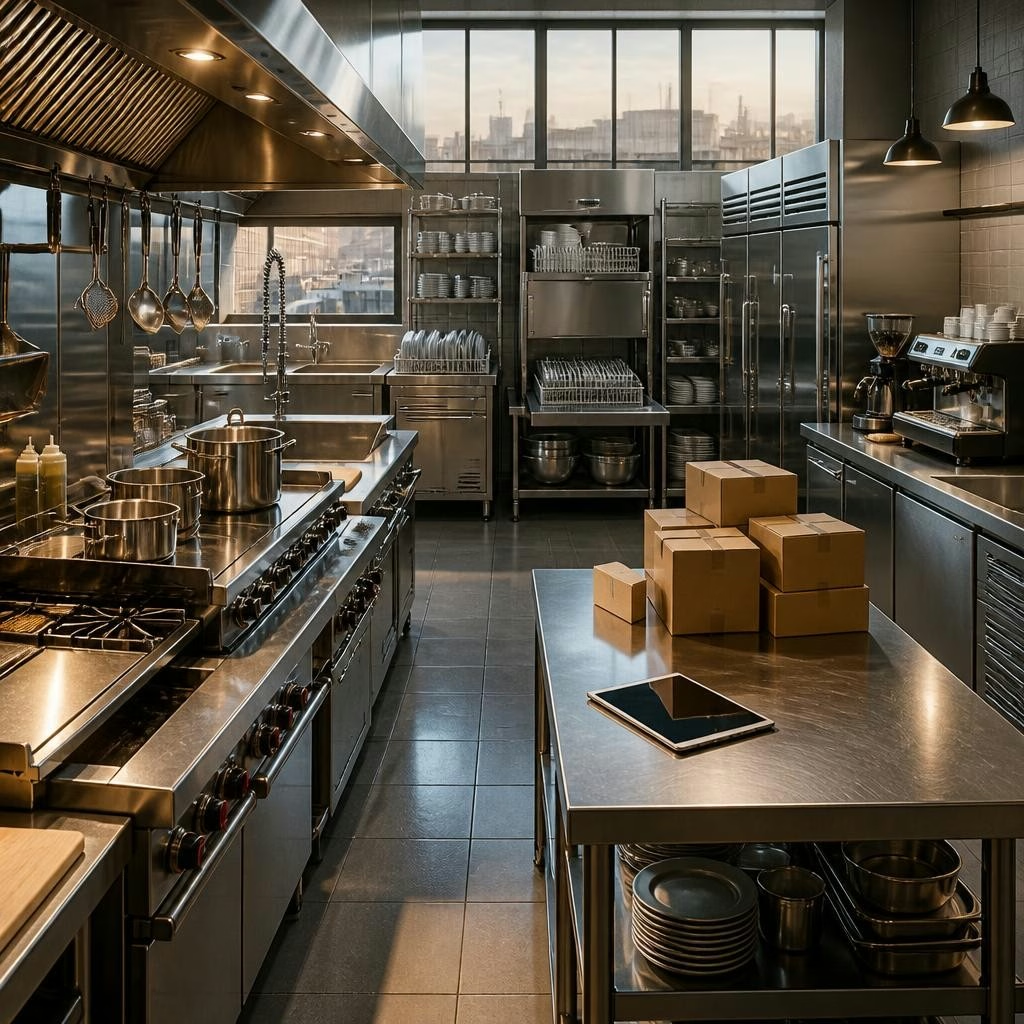
Turnkey kitchen projects normally cover core cooking equipment, refrigeration and cold‑line units, washing systems and dishwashers, prep and bakery equipment, coffee and beverage stations, display chiller and bar equipment, ice‑making and beverage machines, and installation, testing and staff handover. Falcon Kitchens lists supply, installation, maintenance and repairs across these categories—so consider both equipment and the supporting services when you estimate budget needs.
Core equipment to prioritise first
Start your budget by covering items that directly enable cooking and service: ovens and cookers, fryers and grills, a reliable refrigeration bank (upright freezers/chillers), a commercial dishwasher or washing line, and basic prep equipment (mixers, mincers, worktables). For cafés and small food‑service outlets, a dependable coffee machine and grinder should be early priorities because they affect daily revenue and service flow.
Brand choice and new versus used equipment
Deciding between new and refurbished/used equipment affects both upfront cost and long‑term reliability. Customers frequently praise high‑brand units such as combi ovens and premium coffee machines for consistent performance; at the same time, several businesses report good results with well‑serviced used equipment. When budgeting, weigh the expected life, warranty or service package, and availability of spare parts—sometimes a slightly higher upfront cost for a proven brand can reduce repair and downtime costs over time.
How to phase purchases to spread cost
Phase purchases to match cashflow and operational ramp‑up. Phase 1: essentials required to open (cooking line, primary refrigeration, dishwashing, extraction and basic prep). Phase 2: production and efficiency upgrades once volumes stabilise (additional refrigeration, a second oven, bakery line or rolling machines). Phase 3: specialty or expansion items (ice cream or slush machines, display chillers, secondary coffee grinders, extra prep stations). Phasing reduces initial capital outlay while allowing operational testing to inform later investment.
Plan for installation, utilities and layout costs
Budget not only equipment cost but also installation-related expenses: gas and electrical distribution, ventilation and hood systems, drainage and water connections, and any structural work to support heavy machines. Early coordination between your designer/contractor and the equipment supplier ensures the layout matches equipment dimensions, utility requirements and service access—reducing surprises and costly rework during installation.
Factor in after‑sales service and maintenance
Reliable after‑sales service keeps downtime low. Reviewers consistently note the importance of strong service and honest, professional supplier relationships. When setting a budget, include routine maintenance, commissioning visits, possible spare parts and basic staff training. A maintenance plan negotiated up front can be easier to manage than ad‑hoc repairs later.
Cost‑saving strategies that preserve quality
To reduce capital expenditure without compromising function: consider multi‑function equipment (for example, combi ovens that combine steaming and baking), selectively buy certified used items that have been fully serviced, and seek package pricing that bundles installation and service. Negotiate payment terms or phased delivery with your supplier so payments align with delivery and commissioning milestones. Always prioritise equipment that directly supports menu items with the highest margins or most frequent use.
Local considerations in Sharjah’s Industrial Area
If your site is in Industrial Area 4 or nearby, factor in logistics for delivery and installation—large machines require vehicle access and on‑site handling. Falcon Kitchens is based on Al Wahda St in Industrial Area 4, Sharjah, and offers supply, installation and servicing across many commercial kitchen categories; this local presence can simplify coordination for delivery, installation and after‑sales support. Confirm lead times and on‑site availability with your supplier early in the planning stage.
Practical next steps and a simple checklist
1) Define your menu and expected daily covers to determine capacity; 2) List essential equipment and tag items as ‘open day required’, ‘phase 2’ or ‘later upgrade’; 3) Request site surveys and multiple quotations that include installation and maintenance terms; 4) Confirm utility requirements (gas, power, water, drainage, ventilation) with your contractor and supplier; 5) Schedule commissioning and operator training before opening. Contact your chosen supplier to arrange a site visit and a detailed, itemised quotation—this is the most reliable basis for finalising a budget.
Article by
𝐅𝐚𝐥𝐜𝐨𝐧 𝐊𝐢𝐭𝐜𝐡𝐞𝐧𝐬 𝐋𝐋𝐂 - Commercial Kitchen Equipment
Welcome to Falcon Kitchens At Falcon Kitchens, we pride ourselves on being one of the leading suppliers of high-quality commercial kitchen equipment. Our products are designed to meet the varied needs of the food service industry. Whether it is a small café, an up-and-running restaurant, or an industrial kitchen, our commercial kitchen appliances here at Falcon Kitchens will ensure that you have the best solutions for efficiency, reliability, and durability. We have been leading the industry for years now, with the latest technology coupled with craftsmanship in every appliance that leaves our manufacturing line. It’s not about selling kitchen equipment at Falcon Kitchens; it’s building a long-term relationship with clients through support