Cold Storage Zoning for UAE Commercial Kitchens: How Many Chillers and Freezers Do You Really Need?
A practical guide to planning upright and tabletop chillers and freezers for raw, cooked and dessert items in UAE commercial kitchens, with example layouts for a small café and a large restaurant and tips for choosing and maintaining equipment.
Why zoning cold storage matters in commercial kitchens
Separating cold storage by food type is one of the easiest ways to reduce cross-contamination, simplify stock rotation, and speed workflow. In commercial kitchens the common separation is raw proteins, prepared/cooked foods, and ready-to-eat items such as desserts and garnishes. Thoughtful zoning also helps kitchens comply with local food safety requirements and makes temperature monitoring and cleaning more manageable.
Upright vs tabletop units: roles and when to use each
Upright chillers and freezers are best for bulk storage: larger batches of raw ingredients, long-term frozen stock and high-volume refrigerated goods. Tabletop and undercounter chillers are designed for immediate access at the line — ideal for plated desserts, sauces, garnishes and frequently used items. Both types have a place: upright units for back-of-house organization and tabletop/undercounter units to speed service and reduce traffic across food zones.
Core zoning principles to follow
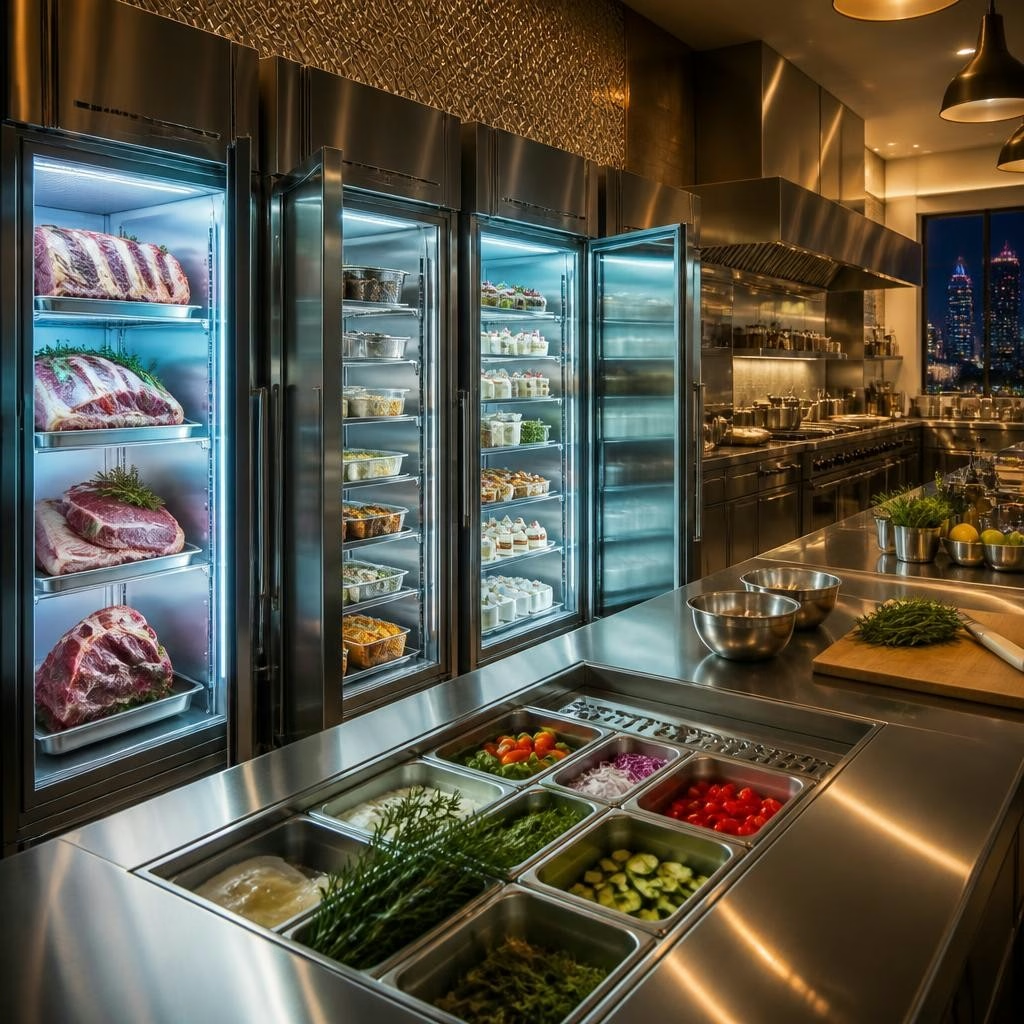
Keep raw proteins (meat, poultry, seafood) in a dedicated cold zone with separate shelving and ideally a dedicated upright chiller or freezer. Store cooked and ready-to-serve items in a different zone to prevent cross-contamination. Reserve a clean, easy-to-access tabletop or undercounter chiller near the service area for desserts and plated items. Wherever possible, place display chillers for grab-and-go items on the front-of-house side so those items never mix with preparation areas.
Assessing how many units you need: key factors
The number of chillers and freezers depends on menu complexity, daily throughput, storage turnaround, and kitchen footprint. Consider: how many different protein types you prepare daily, whether you need separate freezing for long-term stock, how many plated desserts you hold ready, and peak service volumes. Also factor in delivery frequency — more frequent deliveries reduce the need for large buffer storage, while infrequent deliveries increase capacity needs.
Example layout: small café (low to medium volume)
A typical compact setup for a café might include one upright refrigerator for general ingredients and dairy, one undercounter chiller at the service counter for grab-and-go sandwiches and desserts, and a small tabletop freezer for a limited number of frozen desserts or ice creams. If the café prepares raw protein in small amounts, it can use a clearly labelled compartment in the upright unit, but if volume grows, add a dedicated upright for raw items to keep zones separate.
Example layout: large restaurant (high volume)
A larger restaurant usually requires several dedicated units: at least one upright chiller for raw proteins (separated by shelf labelling), one or more upright chillers for prepared and plated items, a dedicated freezer for long-term frozen stock, and multiple tabletop or undercounter chillers positioned along the cooking and plating lines for quick access. Many high-volume kitchens also benefit from a cold room or a commercial cold-line setup to centralize bulk storage while keeping smaller upright and tabletop units for staging and service.
Placement, workflow and minimizing cross-traffic
Arrange units so the flow moves from delivery and receiving to storage to prep and then to service, minimizing staff crossing between raw and ready-to-eat zones. Place raw protein storage away from salad and dessert prep. Locate tabletop chillers immediately adjacent to plating stations or service counters to reduce the need to walk across the kitchen with plated food. Clear signage and shelf labelling are inexpensive measures that reduce mistakes in busy shifts.
Maintenance, monitoring and energy considerations
Regular servicing keeps chillers and freezers working efficiently and extends equipment life. Schedule routine cleaning of condensers and door gaskets, and check seals and thermostats. Consider energy-efficient models and proper ventilation to limit heat buildup. For food safety, pair your zoning plan with temperature monitoring and a record-keeping process that fits your kitchen’s HACCP or local municipality expectations.
Choosing the right equipment supplier in the UAE
When sourcing chillers and freezers, look for suppliers that offer supply, installation and after-sales maintenance for both tabletop and upright units. Falcon Kitchens provides a range of cold-line equipment including tabletop and upright chillers and freezers and support for installation and repairs — a useful option for UAE businesses that want a single partner for purchase and servicing. Customers regularly highlight reliable products and good service when evaluating suppliers.
Putting it into practice: start simple, scale with demand
Begin with a zoning plan that reflects your current menu and delivery schedule, then review capacity after a few weeks of operation. It’s common to start with one upright and one tabletop unit for a small operation and add units as volume increases. For larger kitchens, plan separate dedicated units from day one. If you’d like help sizing equipment for your layout in Sharjah or elsewhere in the UAE, work with suppliers who can assess your workflow and recommend upright and tabletop options that match your needs.
Customer review


Article by
𝐅𝐚𝐥𝐜𝐨𝐧 𝐊𝐢𝐭𝐜𝐡𝐞𝐧𝐬 𝐋𝐋𝐂 - Commercial Kitchen Equipment
Welcome to Falcon Kitchens At Falcon Kitchens, we pride ourselves on being one of the leading suppliers of high-quality commercial kitchen equipment. Our products are designed to meet the varied needs of the food service industry. Whether it is a small café, an up-and-running restaurant, or an industrial kitchen, our commercial kitchen appliances here at Falcon Kitchens will ensure that you have the best solutions for efficiency, reliability, and durability. We have been leading the industry for years now, with the latest technology coupled with craftsmanship in every appliance that leaves our manufacturing line. It’s not about selling kitchen equipment at Falcon Kitchens; it’s building a long-term relationship with clients through support