Combi Ovens in UAE Kitchens: When to Upgrade from a Standard Oven
A practical guide for UAE chefs and foodservice owners on when a combi oven makes sense, how it changes kitchen workflows, and what to consider when buying new or used from a local supplier.
Why this decision matters for UAE kitchens
Choosing between a standard oven and a combi oven is more than a purchase: it affects menu flexibility, labour, energy use and throughput. In the UAE market—where restaurants, hotels and catering operations often balance diverse menus and busy service periods—a thoughtful upgrade can save time and reduce waste. This article explains the core differences, the kinds of menu and volume demands that justify a combi, and practical buying and after-sales considerations for local operators.
What a combi oven does (and how it differs from a conventional oven)
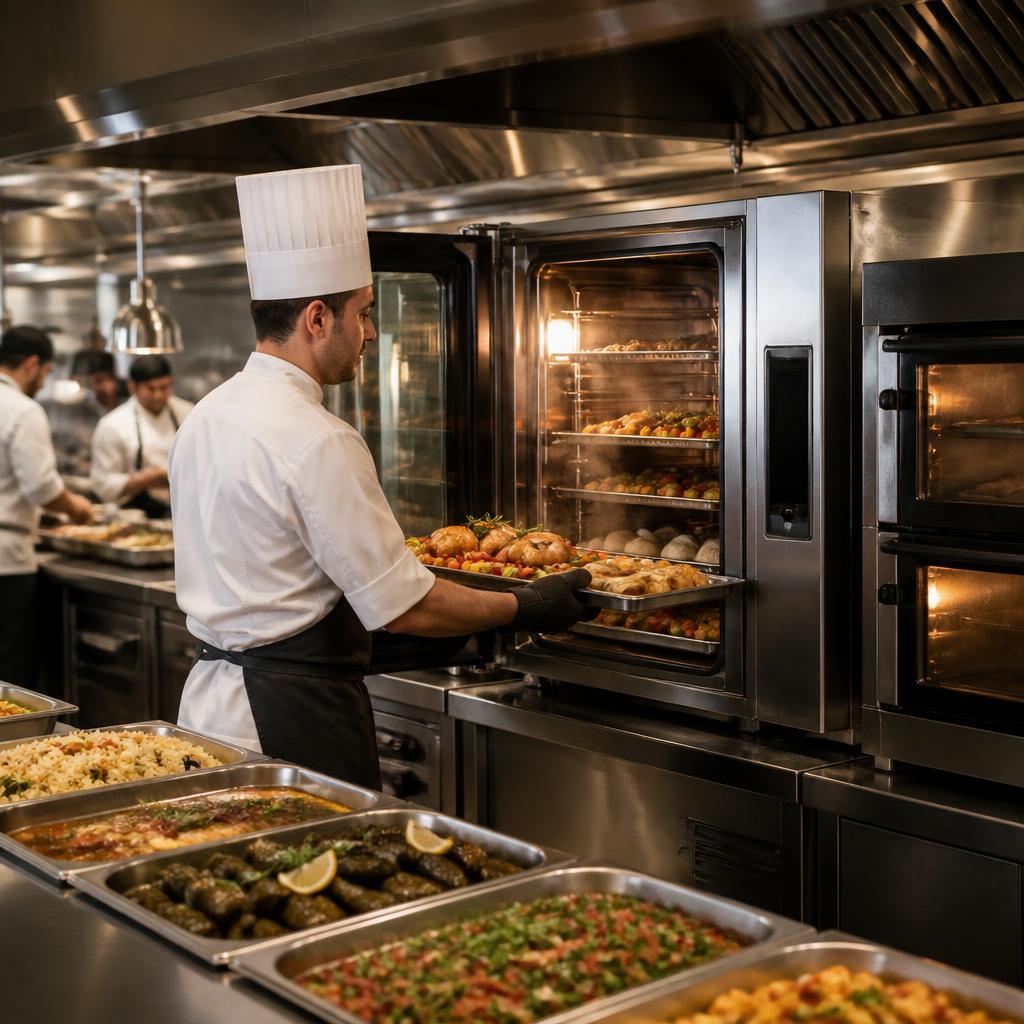
A combi oven combines dry heat (like a convection oven) with steam and a controlled mix of both. That combination allows one unit to roast, steam, bake and reheat with precise humidity control. Conventional ovens provide mainly dry heat with more limited humidity and often need separate equipment for steaming or rethermalisation. The combi’s multi-mode capability is what creates its operational advantages—consistency, faster recovery between loads, and fewer pieces of dedicated equipment in the kitchen.
Operational advantages that matter on busy service days
Combi ovens deliver several practical benefits for high-turn kitchens: they can shorten cook times for many items, improve yield and texture through humidity control, and run programmed cycles that reduce operator variability. They also allow simultaneous preparation of different items without flavour transfer when used correctly. For UAE operations that must serve large banquets, hotel breakfast buffets, or a high-volume restaurant lunch shift, those benefits translate into more predictable service and less last-minute scrambling.
Menu types and production volumes that justify a combi
Consider a combi oven if your menu includes a range of items—baked goods, roasted proteins, steamed vegetables, reheated prepared meals—or if you run frequent high-volume services such as banquets, room service or large catering orders. Kitchens that must hold consistent quality across many covers or execute multiple menu items simultaneously will gain the most. If your operation is small, single-focus (for example, only pizzas or only slow-roasted items) and low-volume, the investment may be harder to justify.
When a standard oven remains the better choice
A standard oven can be the right tool when your menu is narrow, volumes are modest, or capital is limited. Conventional ovens are simpler to operate, typically lower-cost up front, and may require less specialised maintenance. If your kitchen does not need precise humidity control, or if you already have separate dedicated steamers and proofers, a standard oven can continue to serve reliably.
Cost, ROI and practical budgeting points
A combi oven usually has a higher purchase price than a single-function oven, but potential savings come from reduced labour, fewer secondary appliances, better yields and faster service. When budgeting, factor in installation (water and drainage for steam models), energy use, routine maintenance and training. Calculate expected throughput increases and labour savings realistically for your service patterns to estimate payback—in many cases the combi’s versatility is where the financial case appears over time.
Capacity and features to match your kitchen
Choose capacity based on peak service demand rather than average use; the right rack/tray size and usable interior volume determine how many portions per cycle you can cook. Consider programmability, available presets, water quality requirements, cleaning modes (automatic cleaning cycles save labour), and whether you need features like probe-based core temperature control or low-temperature cooking. Also decide whether gas or electric models fit your utility setup—both options are commonly used in UAE kitchens depending on site infrastructure.
Maintenance, cleaning and local after-sales support
Combi ovens require regular maintenance—water filtration, descaling, gasket checks and periodic technical servicing—to preserve performance and food safety. When buying, prioritise suppliers who provide installation, commissioning and ongoing service. Falcon Kitchens, based in Sharjah Industrial Area 4 and serving clients across the UAE, is frequently mentioned by customers for supplying and servicing Rational combi ovens and other commercial equipment. At the same time, some recent feedback in the market flags that complex technical issues and after-sales communication need careful attention, so verify local service response times and parts availability before purchase.
Training and integrating a combi oven into your workflow
Successful use of a combi depends on staff familiarity with modes, humidity settings and cleaning routines. Allow time for initial training, and consider manufacturer or supplier training packages where available. Update prep plans, baking schedules and holding procedures to take advantage of the combi’s abilities—menus can be simplified by using the same unit for multiple tasks, which reduces cross-training needs and improves consistency across shifts.
New versus used units and next steps for UAE buyers
Both new and well-serviced used combi ovens can be appropriate depending on budget and risk tolerance. Reviews show that several operators in the UAE have had reliable experience with serviced Rational units and used equipment from local suppliers. If considering a used unit, confirm a full service history, cleaning and any warranty or support arrangements. For a site-specific recommendation, consult a supplier who can assess your peak volumes, menu mix and utility setup—Falcon Kitchens offers supply, installation and maintenance of ovens and related lines and can advise on capacity, programme setup and service options. Reach out for a site assessment and compare scenarios (standard oven retained versus combi upgrade) to make a decision that fits your operation and financial plan.
Article by
𝐅𝐚𝐥𝐜𝐨𝐧 𝐊𝐢𝐭𝐜𝐡𝐞𝐧𝐬 𝐋𝐋𝐂 - Commercial Kitchen Equipment
Welcome to Falcon Kitchens At Falcon Kitchens, we pride ourselves on being one of the leading suppliers of high-quality commercial kitchen equipment. Our products are designed to meet the varied needs of the food service industry. Whether it is a small café, an up-and-running restaurant, or an industrial kitchen, our commercial kitchen appliances here at Falcon Kitchens will ensure that you have the best solutions for efficiency, reliability, and durability. We have been leading the industry for years now, with the latest technology coupled with craftsmanship in every appliance that leaves our manufacturing line. It’s not about selling kitchen equipment at Falcon Kitchens; it’s building a long-term relationship with clients through support