Energy‑Efficient Commercial Kitchen Equipment for the UAE: Practical Choices to Cut Energy and Water Bills
A practical guide for UAE kitchens outlining energy‑aware choices for fryers, ovens, chillers and dishwashers, with feature checklists, selection tips and operational steps to reduce electricity and water use.
Why energy efficiency matters for UAE commercial kitchens
High ambient temperatures, long operating hours and the cost of utilities make energy and water consumption major operational expenses for restaurants, hotels and cafés in the UAE. Choosing equipment designed for energy and water efficiency reduces monthly bills, improves consistency in food production and lowers overall maintenance costs. For operators planning new builds or equipment upgrades, prioritising efficient models is a practical way to strengthen margins and improve sustainability without sacrificing performance.
How to read efficiency in equipment specifications
When comparing models, look beyond brand names to specific technical features: inverter compressors, high‑efficiency burners, advanced insulation, variable speed drives, heat recovery systems, and eco or low‑consumption modes. Pay attention to control precision (digital temperature control and programmable cycles), water consumption figures for dishwashers, and refrigeration performance at higher ambient temperatures. Request manufacturer datasheets and ask suppliers for measured performance under realistic kitchen loads so you can compare models on like‑for‑like criteria.
Selecting fryers: features that reduce fuel and oil waste
For frying operations, prioritise models with rapid heat recovery, insulated fry tanks and programmable thermostatic control. Look for fryers with automatic oil filtration systems or compatibility with filtration accessories to extend oil life. Electric fryers with precise digital controls can avoid temperature overshoot; gas fryers with efficient burners and good insulation reduce fuel use. Consider batch sizing and the number of wells: the right capacity avoids running oversized equipment at low loads, which wastes energy.
Ovens and combi ovens: where control saves energy
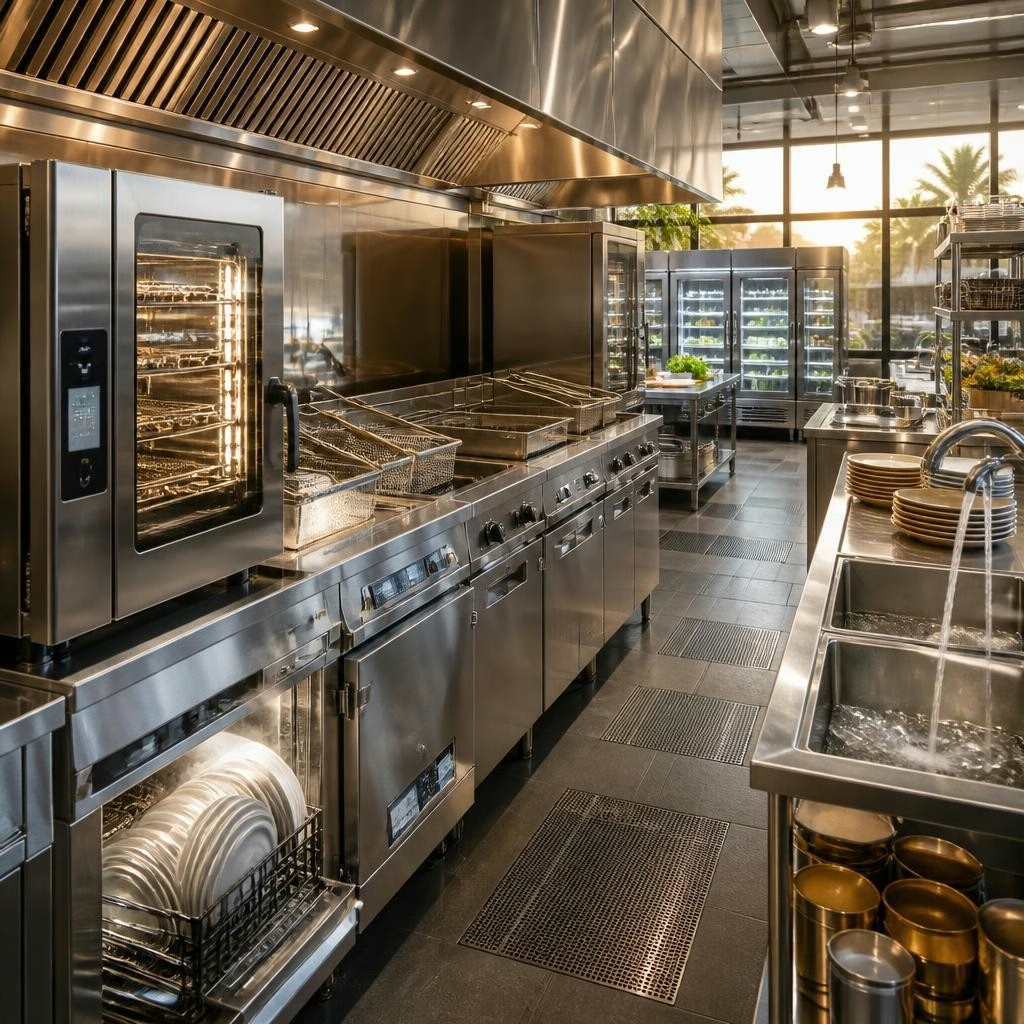
Modern combi ovens and convection ovens offer multiple energy‑saving advantages when chosen and used correctly. Key features to prioritise include tight door seals, rapid preheat and recovery modes, humidity control, and programmable multi‑stage cooking that reduces hold times and repeat cycles. Combi ovens that reuse residual steam or incorporate heat recovery reduce energy needed for subsequent cycles. For frequent high‑volume use, models with efficient airflow and precise temperature controls give consistent results with less energy.
Chillers and cold line equipment: cooling smarter in hot climates
Refrigeration is often the largest energy consumer in a commercial kitchen, especially in the UAE climate. Look for chillers and upright/freezer units with high‑efficiency compressors, inverter technology, low‑GWP refrigerants where available, enhanced insulation, and double‑glazed or well‑sealed doors. Properly sized cold storage avoids excessive run‑time. Consider display chillers and table‑top units with LED lighting and night‑set modes to limit compressor activity during off hours. Regular defrost controls and intelligent thermostats help reduce energy use while protecting food safety.
Dishwashers and washing lines: save water and cut cycle energy
Commercial dishwashers with water‑saving wash cycles, heat recovery on rinse systems, and efficient booster heaters can significantly reduce both water and energy use. Look for machines that offer variable cycle lengths, low water consumption per rack, and effective insulation to retain heat between cycles. When choosing a washing line or dishwasher, check recommended throughput versus your actual throughput: undersized machines force more cycles and oversizing wastes energy. Also consider soil‑sensing or eco cycles that adjust water and heat use to the load.
Sizing, controls and integration: match equipment to real kitchen demand
Efficiency gains depend heavily on correct sizing and intelligent controls. Right‑sizing means selecting capacity that matches peak and typical loads—oversized units run inefficiently at low loads; undersized units are overworked. Programmable controllers, timers and load‑based automation (for example, staggered start times for large appliances) reduce simultaneous peaks and lower demand charges. Integrating equipment onto clear schedules and simple control panels helps staff operate units in their most efficient modes.
Maintenance, servicing and supplier support
Sustained efficiency requires regular preventive maintenance: clean condensers and filters, calibrate thermostats, maintain seals, and perform oil filtration and vent cleaning. The supplier relationship matters—positive customer feedback for local suppliers often highlights reliable after‑sales support and timely service, which preserves efficiency over the machine lifecycle. When assessing suppliers, confirm their maintenance offerings and spare‑parts support so equipment continues to operate at rated efficiency.
Operational practices and staff training to reduce consumption
Even the most efficient equipment performs poorly if operated incorrectly. Train staff on efficient practices: preheat only when needed, load equipment to optimal capacity, use eco cycles for dishwashing when appropriate, close refrigeration doors promptly and avoid unnecessary holding times. Implement simple logs for cycle counts, filter changes and temperature checks so inefficiencies are spotted early. Small behavioral changes combined with efficient equipment yield measurable savings.
A checklist to take to suppliers and next steps
When you contact a supplier, bring a short brief of your kitchen’s peak and average covers, expected menu items, and operating hours. Use this checklist: request datasheets showing energy and water use, confirm compressor and burner types, ask about insulation and door seals, verify programmable control options and eco modes, check available heat‑recovery or waste‑heat reuse options, and confirm maintenance plans and spare parts availability. Falcon Kitchens, based in Sharjah and working with UAE operators, supplies fryers, combi and convection ovens, dishwashers, cold‑line equipment and coffee systems and can help match these technical considerations to practical choices. Reach out to discuss on‑site sizing, demo availability and service packages to ensure the installation performs as expected.
Article by
𝐅𝐚𝐥𝐜𝐨𝐧 𝐊𝐢𝐭𝐜𝐡𝐞𝐧𝐬 𝐋𝐋𝐂 - Commercial Kitchen Equipment
Welcome to Falcon Kitchens At Falcon Kitchens, we pride ourselves on being one of the leading suppliers of high-quality commercial kitchen equipment. Our products are designed to meet the varied needs of the food service industry. Whether it is a small café, an up-and-running restaurant, or an industrial kitchen, our commercial kitchen appliances here at Falcon Kitchens will ensure that you have the best solutions for efficiency, reliability, and durability. We have been leading the industry for years now, with the latest technology coupled with craftsmanship in every appliance that leaves our manufacturing line. It’s not about selling kitchen equipment at Falcon Kitchens; it’s building a long-term relationship with clients through support