From Street Food Stall to Small Restaurant in Dubai: A Step-by-Step Equipment Upgrade Plan
A practical, staged guide for food entrepreneurs in Dubai who want to expand from a basic street-food setup to a small restaurant, with clear priorities for which cookers, fryers, chillers, dishwashers and other commercial equipment to add as sales grow.
Why staging equipment upgrades matters
Growing from a street-food stall into a small restaurant is often a gradual process. Staging your equipment purchases protects cash flow, reduces downtime, and lets you match capacity to actual sales. Buying the right commercial-grade units at each stage — rather than over-investing too early — helps maintain consistent food quality and staff efficiency as volume increases.
Start: Essentials for a busy stall
At the street-stall stage, prioritise durable core appliances that directly support your menu. Typical essentials include a reliable fryer or grill, a dedicated cooker or shawarma machine if applicable, and a display chiller or countertop cooler for ingredients and ready-to-sell items. Compact coffee or blender equipment is useful if you serve beverages. Choose commercial-grade models designed for continuous use rather than household appliances to avoid frequent failures.
Stage two: Moving toward a small takeaway counter
When daily sales stabilize and you need faster throughput, add appliances that increase speed and consistency. Consider an upgraded fryer with greater capacity, a multi-function oven or combi oven for baked or roasted items, and a small undercounter dishwasher to speed service and maintain hygiene. Add a larger display chiller or upright chiller to expand cold storage and reduce restocking frequency. At this point, plan for simple installation needs such as a gas line or dedicated electrical circuit.
Stage three: Opening a small dine-in restaurant
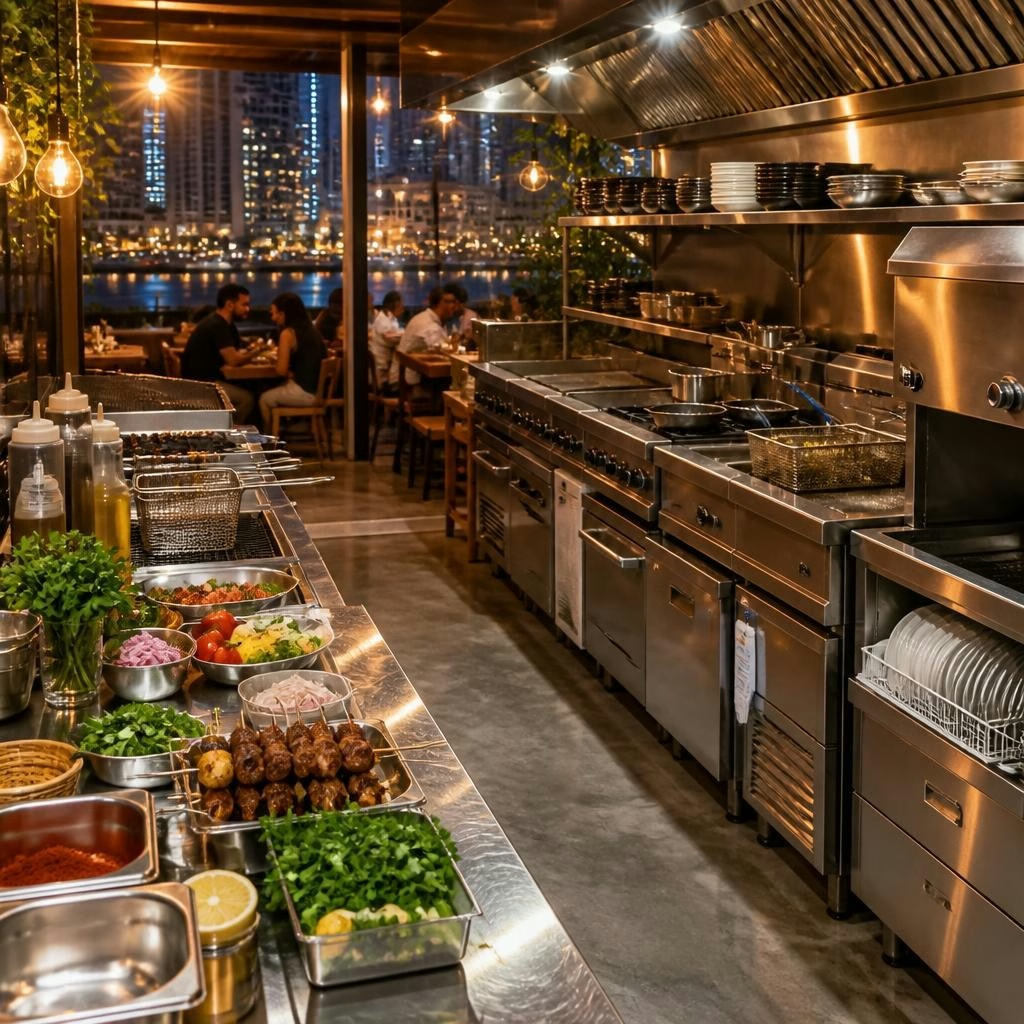
For full dine-in service, expand to a complete cooking line: larger cookers, a dedicated fryer bank, professional grills, and an oven bank or combi ovens to handle diverse menu items. Install a commercial dishwasher with appropriate capacity for peak service, and add hot-food storage or holding cabinets to manage service flow. Ensure refrigeration capacity grows with seating — full-size upright freezers and chillers or walk-in cold rooms are common upgrades at this stage.
Refrigeration planning and cold line priorities
Cold-line equipment is critical as you scale. Early on, a display chiller supports sales and merchandising. As volume grows, prioritise upright chillers and freezers to maintain inventory turnover and food safety. When preparing for a restaurant kitchen, plan the layout so chilled prep areas are close to cooking stations to reduce handling time. Reliable refrigeration reduces waste and helps meet hygiene expectations.
Dishwashing, hygiene and back-of-house flow
Dishwashing capacity should match your peak covers. Small operations may start with an undercounter unit; restaurants often require a hood-type or conveyor dishwasher for throughput. Design your back-of-house workflow so dirty and clean zones are separate, and include adequate drying and storage. Regular maintenance of dishwashers helps prevent service interruptions — schedule servicing and repairs from the supplier you choose.
Choosing equipment: capacity, footprint and maintenance
When selecting models, weigh five practical factors: actual production capacity, physical footprint, energy consumption, ease of cleaning, and availability of local servicing and spare parts. Opt for equipment with accessible service panels and straightforward controls. Many suppliers offer installation, maintenance and repairs — consider these services when deciding between similar models to reduce long-term downtime.
Sourcing options and used equipment
Sourcing can include new and well-maintained used equipment. Used commercial units often provide good value for early-stage expansion, while new units may be preferable for high-use cooking-line essentials. Several customers note positive experiences buying both new and used items from local suppliers — and many suppliers include installation and after-sales support, which can be decisive for reducing commissioning time.
Practical timeline and phased purchasing checklist
A typical six- to twelve-month timeline for scaling could look like: months 1–3 focus on upgrading core cookers and a reliable fryer; months 3–6 add expanded refrigeration and a dishwasher; months 6–12 install full cooking-line pieces and larger chillers/freezers. Checklist items by phase: cooking/frying equipment first, then refrigeration, then dishwashing and hot-holding. Build in lead time for delivery, installation and staff training.
Working with a local supplier and after-sales support
Selecting a supplier who provides supply, installation, maintenance and repairs in Dubai and the UAE can simplify expansion. Customers frequently praise suppliers that are professional, supportive and responsive — qualities that reduce risk during upgrades. Before purchase, confirm installation services, routine maintenance options and response times for repairs. Local suppliers can also advise on suitable models for Dubai operations and help coordinate delivery to areas such as Sharjah and Industrial Area 4.
Customer review


Article by
𝐅𝐚𝐥𝐜𝐨𝐧 𝐊𝐢𝐭𝐜𝐡𝐞𝐧𝐬 𝐋𝐋𝐂 - Commercial Kitchen Equipment
Welcome to Falcon Kitchens At Falcon Kitchens, we pride ourselves on being one of the leading suppliers of high-quality commercial kitchen equipment. Our products are designed to meet the varied needs of the food service industry. Whether it is a small café, an up-and-running restaurant, or an industrial kitchen, our commercial kitchen appliances here at Falcon Kitchens will ensure that you have the best solutions for efficiency, reliability, and durability. We have been leading the industry for years now, with the latest technology coupled with craftsmanship in every appliance that leaves our manufacturing line. It’s not about selling kitchen equipment at Falcon Kitchens; it’s building a long-term relationship with clients through support