How Professional Kitchen Equipment Improves Food Safety in UAE Restaurants
A practical guide showing how commercial dishwashers, chillers, hot-holding units and prep equipment support HACCP-style food safety in UAE kitchens, plus simple daily equipment checks managers can use to stay compliant.
Why equipment matters for food safety
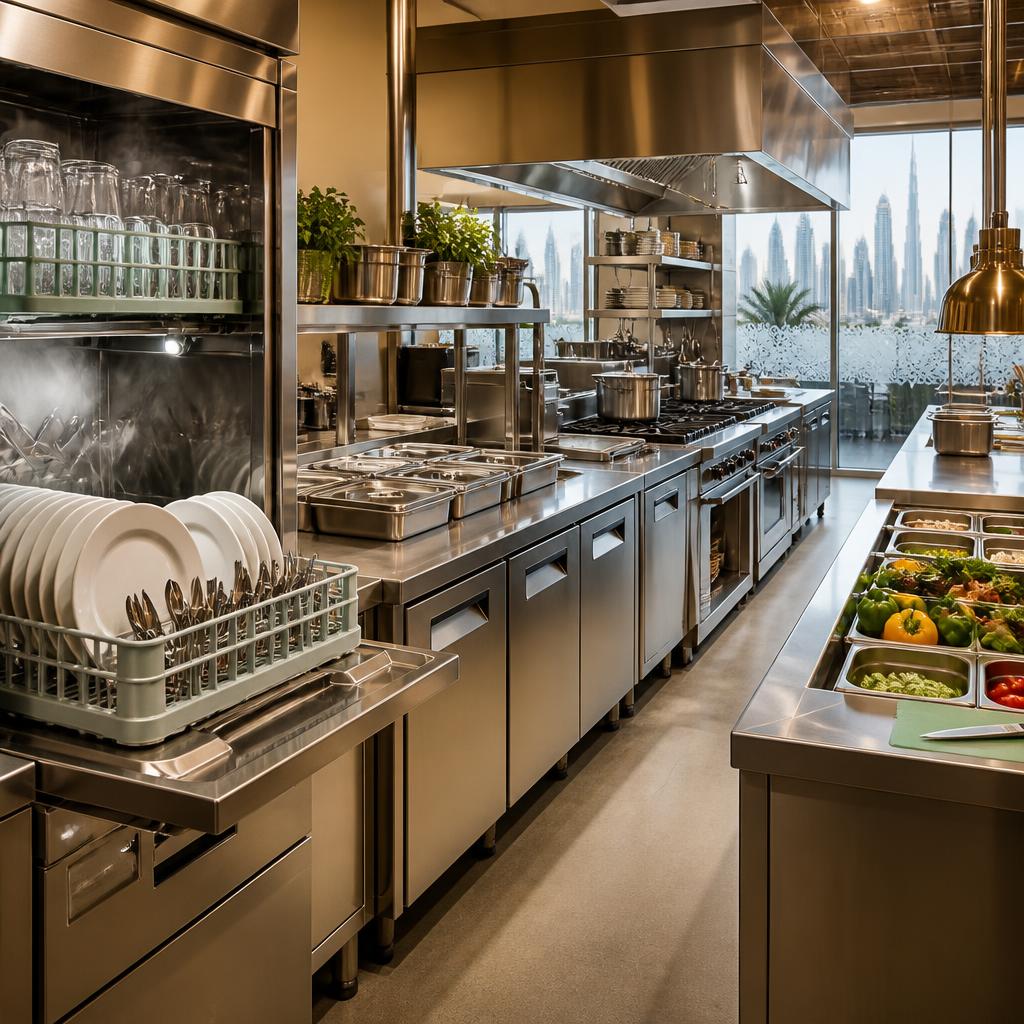
In a professional kitchen the right equipment is as important as good recipes: dishwashers, chillers, hot-holding units and prep machines directly affect whether food is stored, prepared and served safely. Well-designed commercial appliances help maintain correct temperatures, reduce cross-contamination risk, and make cleaning and verification simpler—core aims of any HACCP-style food safety system. For UAE restaurants operating in Sharjah, Dubai and other emirates, investing in reliable equipment reduces food-safety risks and supports consistent compliance with hygiene procedures.
Commercial dishwashers: hygiene and verification
Commercial dishwashers deliver consistent temperatures and chemical dosing that manual washing can rarely match. To support food safety managers should verify wash and rinse temperatures, check dispenser levels, and confirm rinse aid and sanitizer dosing are working. Daily checks: read and log the final rinse temperature, inspect spray arms and filters for blockages, and ensure dishwasher doors and seals close properly. Regular maintenance of pumps and heating elements keeps cycles effective; this is where a dependable supplier and timely servicing are important.
Chillers and cold storage: temperature control and layout
Cold line equipment—upright chillers, freezers, display units and cold rooms—protect food by keeping it at safe temperatures and slowing bacterial growth. Key controls include accurate thermostats, properly sealed doors, and regular defrosting where applicable. Daily checks: record ambient temperature in each unit (top, middle, bottom), inspect door gaskets for damage, clear drains and condensers of debris, and check alarm systems and lights. Separate storage zones and clear labelling help avoid cross-contamination between raw and ready-to-eat items.
Hot-holding and food warmer units: keeping food safe after cooking
Hot holding keeps prepared food out of the temperature danger zone until service. Hot food storage equipment must maintain stable holding temperatures without over-drying or overcooking. Managers should use calibrated thermometers to spot-check holding temperatures, confirm unit controls are accurate, and inspect seals and insulation. Simple daily checks include verifying target holding temperatures, recording any temperature deviations, and ensuring lids, doors or covers are used correctly to preserve heat and hygiene.
Prep equipment: preventing cross-contamination
Meat mincers, cutters, mixers and other prep machines are productivity tools but also potential contamination points if not properly cleaned. Equipment with smooth, accessible surfaces is easier to sanitize. Daily routines should include full disassembly and cleaning of parts that contact food, inspection of blades and seals for wear, and ensuring guards and safety devices are intact. Implement colour-coded utensils and workstations so raw meat, vegetables and ready-to-eat foods never share the same surfaces or equipment without a validated cleaning between uses.
Cooking equipment and oven accuracy
Accurate heat control from cookers and ovens ensures food reaches safe internal temperatures. Commercial combi and convection ovens are designed for consistent results, but controls, gaskets and thermocouples still require verification. Daily checks: spot-check oven temperature with an independent probe, confirm that door seals are intact to prevent heat loss, and clean any grease build-up that can affect performance. Reliable equipment that is regularly serviced helps kitchens meet both safety targets and consistent production times.
Chemicals, water quality and detergent systems
Sanitation systems depend on correct chemical dosing and water quality. Hard water, incorrect detergent concentration or a failing dosing pump can reduce cleaning effectiveness. Managers should check chemical levels and dosing unit operation daily, test sanitizer concentration where applicable, and confirm pre-rinse temperature and pressure are adequate. Keeping simple logs for chemical deliveries and dosing checks helps demonstrate routine control and supports HACCP documentation.
A practical daily equipment checklist
A concise daily checklist helps staff carry out the routine verifications that support HACCP. Suggested items: record fridge/freezer temperatures (several points), log dishwasher final rinse temperature and chemical levels, check hot-holding unit temperatures, inspect gaskets and door seals, clear filters and drains, visually check prep machine parts for cleanliness and damage, and note any alarms or faults. Keep checklists on clipboards or digital logs and have a named person responsible each shift so items are consistently completed and signed off.
Training, record-keeping and supplier support
Equipment alone does not guarantee safety: staff training on correct operation, cleaning and verification is essential. Maintain simple records of cleaning, temperature logs and maintenance actions to demonstrate control. Working with a supplier that provides reliable equipment and after-sales service reduces downtime and helps with routine calibration or repairs. Customers frequently report that quality equipment combined with professional service makes it easier to maintain safe kitchens—an important factor when choosing vendors and service contracts.
Selecting equipment and next steps for UAE kitchens
When choosing or upgrading equipment, prioritise units that are easy to clean, have accessible controls, and offer good local service and spare parts support. Consider energy-efficient models to reduce operating costs while maintaining performance. For kitchens in Sharjah’s Industrial Area and across the UAE, engage suppliers who provide installation, commissioning and scheduled maintenance so equipment operates reliably from day one. Finally, translate HACCP procedures into simple, equipment-focused routines—daily checks, weekly maintenance and a clear escalation path for faults—to keep food safe and operations running smoothly.
Article by
𝐅𝐚𝐥𝐜𝐨𝐧 𝐊𝐢𝐭𝐜𝐡𝐞𝐧𝐬 𝐋𝐋𝐂 - Commercial Kitchen Equipment
Welcome to Falcon Kitchens At Falcon Kitchens, we pride ourselves on being one of the leading suppliers of high-quality commercial kitchen equipment. Our products are designed to meet the varied needs of the food service industry. Whether it is a small café, an up-and-running restaurant, or an industrial kitchen, our commercial kitchen appliances here at Falcon Kitchens will ensure that you have the best solutions for efficiency, reliability, and durability. We have been leading the industry for years now, with the latest technology coupled with craftsmanship in every appliance that leaves our manufacturing line. It’s not about selling kitchen equipment at Falcon Kitchens; it’s building a long-term relationship with clients through support