How to Keep Commercial Dishwashers and Washing Lines Hygienic in UAE Conditions
Practical daily, weekly and monthly cleaning and maintenance routines for commercial dishwashers and washing lines in Dubai and Sharjah, with guidance on chemical selection, limescale control, and when to call a technician.
Why consistent hygiene matters for commercial dishwashing
Maintaining high hygiene standards in dishwashing and washing lines protects customer confidence, supports overall kitchen cleanliness, and reduces the risk of service interruptions. Regular, documented cleaning helps kitchens meet internal quality expectations and supports any external food-safety inspections. In busy UAE kitchens, where turnaround times are short, a reliable routine prevents carryover of residues, odours and biofilm that can affect both equipment performance and the appearance of served dishes.
Know your equipment and local challenges
Start by reviewing the manufacturer’s manual and any service documentation supplied with your machine. Commercial dishwashers and washing lines differ in wash method (high-temp vs chemical sanitising), conveyor design, and required consumables. In the UAE, hard water and mineral deposits are common contributors to limescale build-up; factor local water quality into maintenance planning. Many customers report good equipment quality and responsive service from reputable suppliers, which can be valuable when you need application-specific advice or spare parts.
Daily cleaning: simple checks that prevent bigger problems
Make these tasks part of every shift to stop residues from hardening and avoid blockages: remove food scraps and pre-rinse or scrape heavy soils before loading; empty and rinse drain filters and traps; inspect and wipe door seals, control panels and exterior surfaces; ensure detergent and rinse-aid levels are in range; visually check spray arms and nozzles for obvious blockages. Record these checks on a short log sheet so issues are noticed early and patterns can be tracked.
End-of-day routine for a thorough finish
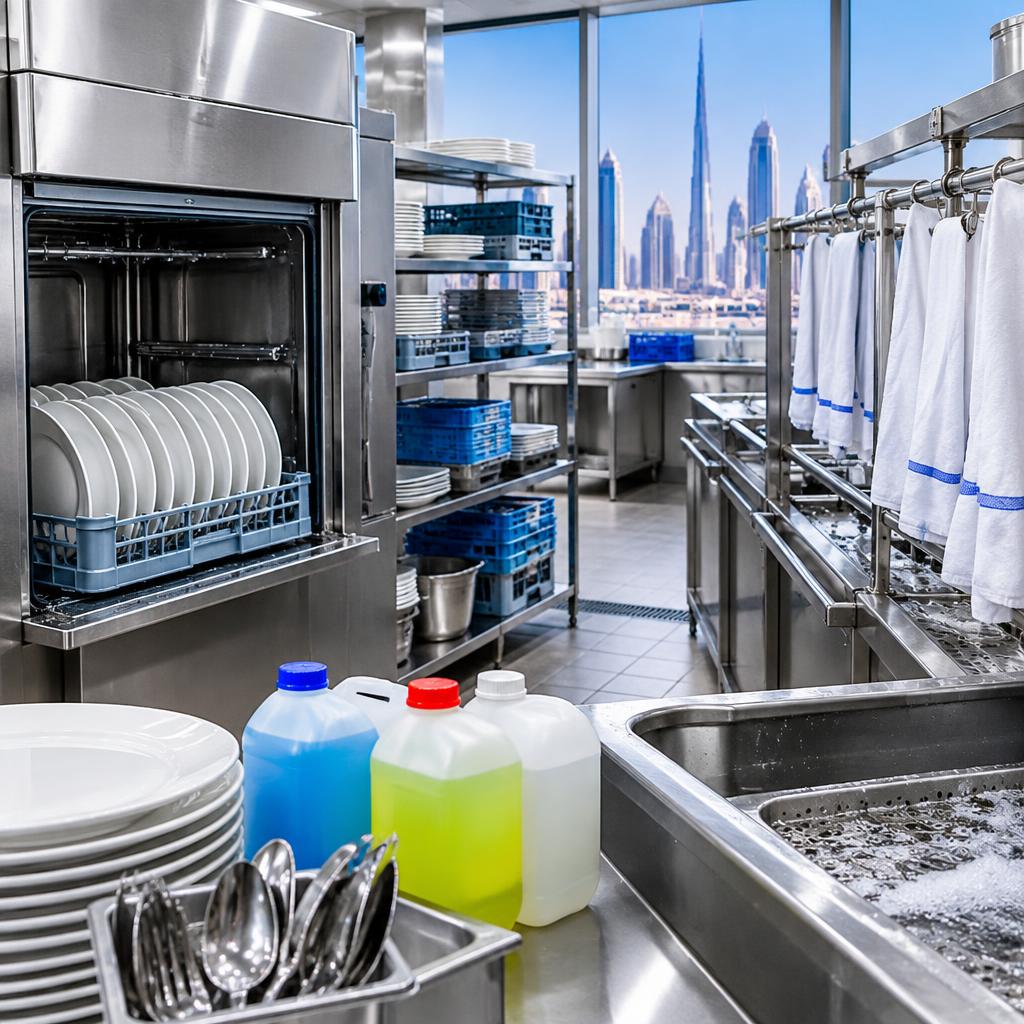
At the end of service, run any recommended rinse or maintenance cycles described by the manufacturer. Remove and clean filters and baskets with warm water and a soft brush, and run a short empty cycle with a cleaning detergent if advised. Wipe internal walls, door edges and gaskets, and leave the machine door slightly ajar where safe to encourage drying and discourage mould or odours. Clean the external drain area and check that waste lines are free-flowing.
Weekly maintenance tasks to keep performance steady
Each week, give the machine a deeper inspection: remove and clean spray arms and verify nozzle holes are clear; clean detergent and rinse-aid dispensers and inlet screens; descale small visible deposits with a manufacturer-approved descaler where appropriate; inspect pump intakes and suction hoses for debris; and check that racks and trolleys are in good condition. Replace any worn rubber gaskets or seal strips before leaks develop.
Monthly checks and preventive servicing
Schedule a monthly evaluation that includes a closer look at components that affect hygiene: test drain and recirculation pumps for unusual noise or reduced flow, examine heating elements for scale build-up, and verify that automated cycles complete correctly. If your machine is high-temperature, confirm the final rinse/heating function is operating to specification; if it relies on chemical sanitizers, confirm dosing rates and storage conditions. Keep records of monthly checks and any parts replaced to support warranty and service claims.
Choosing and handling cleaning chemicals safely
Use commercial-grade detergents, rinse aids, descalers and sanitizers recommended for your machine type. Alkaline detergents remove fats and proteins; acid-based descalers address mineral scale. Rinse aids improve drying and reduce spotting. Always follow the chemical manufacturer’s label and the dishwasher manufacturer’s guidance—incorrect products or concentrations can damage seals, inhibit sanitization, or void warranties. Store chemicals in clearly labelled containers, keep Material Safety Data Sheets (MSDS) accessible, and ensure staff use appropriate PPE when handling concentrated products.
Managing water quality and preventing limescale
Hard water accelerates limescale formation, which reduces wash efficiency and can cause persistent spotting. Test your incoming water hardness and consider appropriate measures: softened water, scale-inhibitor dosing, or regularly scheduled descaling based on measured hardness and machine usage. Inline pre-filters and sediment traps can protect pumps and nozzles from particulate contamination. When installing or upgrading equipment, discuss water-treatment options with your supplier or a water-treatment specialist to match the solution to your machine and local conditions.
Routine spare parts, consumables and service relationships
Keep a small stock of common consumables—filters, gaskets, and spray nozzles—that are quick to replace during busy service periods. Maintain a service agreement or at least a nominated technician who understands your make and model; many kitchens benefit from scheduled preventive maintenance to avoid emergency repairs. Customers consistently value suppliers who provide reliable equipment and responsive support, so build that relationship early and document agreed response times for repairs and spare-part supply.
Troubleshooting common issues and when to call a technician
Address simple faults immediately: poor cleaning can often be fixed by checking spray-arm rotation, clearing filters, or confirming detergent dosing; spotting and film frequently point to hard water or low rinse-aid levels. Persistent odours may require a targeted internal clean and inspection of drains. Call a qualified service technician when you detect mechanical faults (noisy pumps, failure to reach rinse temperature, leaks) or when regular cleaning and approved products don’t restore performance. For complex or repeated problems, rely on your equipment supplier for diagnostics, spare parts and certified repairs rather than improvising fixes that might void warranties.
Customer review


Article by
𝐅𝐚𝐥𝐜𝐨𝐧 𝐊𝐢𝐭𝐜𝐡𝐞𝐧𝐬 𝐋𝐋𝐂 - Commercial Kitchen Equipment
Welcome to Falcon Kitchens At Falcon Kitchens, we pride ourselves on being one of the leading suppliers of high-quality commercial kitchen equipment. Our products are designed to meet the varied needs of the food service industry. Whether it is a small café, an up-and-running restaurant, or an industrial kitchen, our commercial kitchen appliances here at Falcon Kitchens will ensure that you have the best solutions for efficiency, reliability, and durability. We have been leading the industry for years now, with the latest technology coupled with craftsmanship in every appliance that leaves our manufacturing line. It’s not about selling kitchen equipment at Falcon Kitchens; it’s building a long-term relationship with clients through support