How to Plan a Hotel Buffet Kitchen in the UAE: From Cooking Line to Hot Food Holding
Practical guidance for hotel F&B teams in the UAE on designing a back‑of‑house and live buffet setup—covering equipment selection, layout, hot holding, food safety, and supplier considerations to keep buffet service safe, efficient, and presentable.
Why careful planning matters for hotel buffets
A hotel buffet combines continuous food production with front‑of‑house presentation, so planning must balance capacity, speed, safety, and appearance. In the UAE climate and busy hospitality market, an efficient back‑of‑house flow and reliable hot‑holding solutions reduce waste, maintain quality across long services, and support consistent guest experience.
Start with realistic capacity and menu profiling
Begin by estimating peak covers and the menu mix for live and pre‑prepared stations. Identify which items require continuous cooking (fried items, grilled meats), which need precision (roasts, braises), and which are for holding (rice, stews, sauces). This profile drives decisions about combi ovens, cooking line size, fryers, and hot holding capacity so you avoid over‑ or under‑specifying equipment.
Choose the right cooking equipment for the line
A reliable cooking line typically includes combi ovens for multi‑mode cooking, dedicated fryers for high‑volume frying, and grills or charbroilers for direct heat. Combi ovens are particularly versatile for hotels because they handle roasting, steaming and regeneration; many hospitality teams in the UAE rely on branded combi ovens for consistency. When selecting units, prioritize even heat distribution, programmable cycles, and easy controls that match your chefs’ skill levels.
Fryers, grills and specialty appliances
Specify fryers with adequate oil capacity and thermostatic control for stable temperatures during long service periods. For grills, choose models that provide even heat and are easy to clean. Consider specialized appliances you need regularly—pasta cookers, shawarma machines, or bakery line items—so that each station is optimized for throughput and hygiene.
Designing the cooking line layout and service flow
Arrange stations to support a smooth production flow: storage and prep near the cold line, cooking line sequenced by heat type, and plating/regeneration close to the buffet pass. Allow separate routes for supply and waste to minimise cross‑traffic. For live‑cooking stations, provide adequate workspace and clear sightlines for staff to present and replenish items quickly.
Hot food holding: maintaining temperature and quality
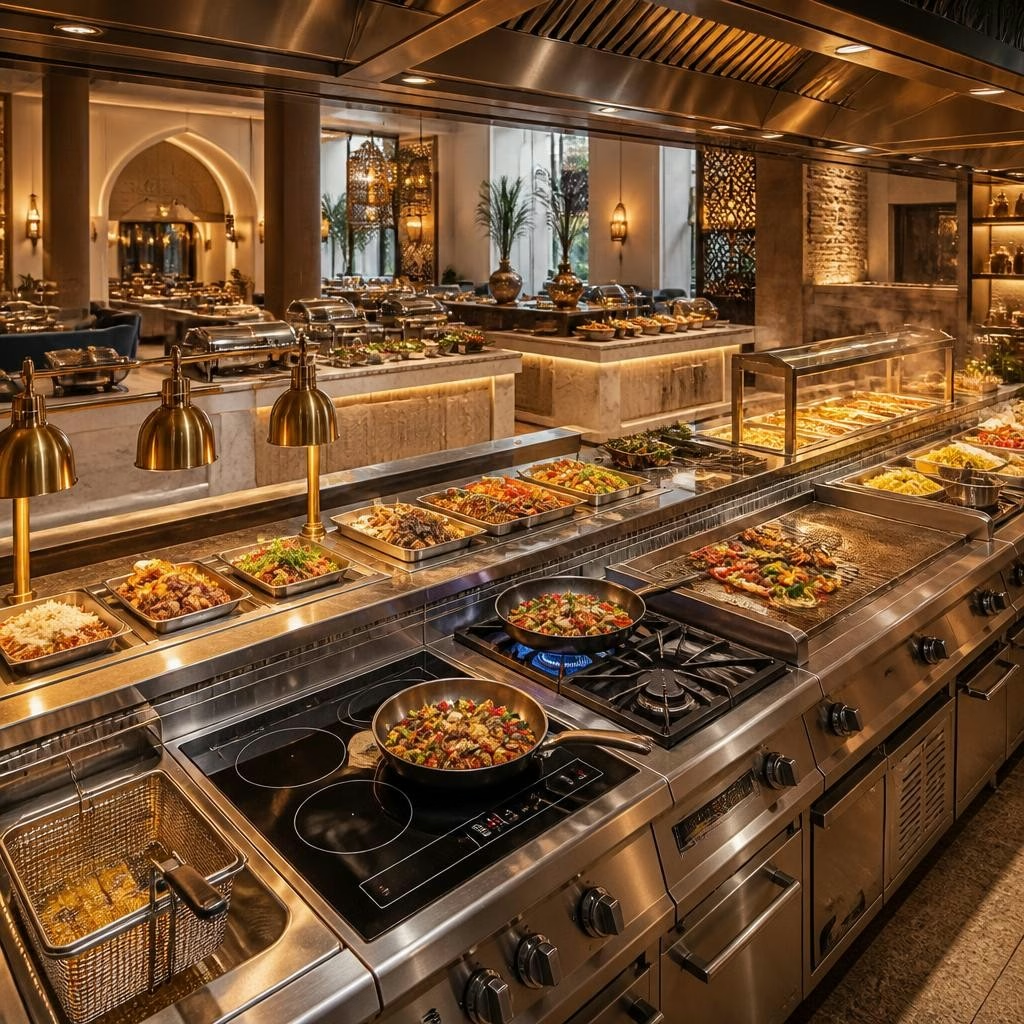
Hot holding must keep food safe and palatable for the duration of service. Use bain‑maries and hot food cabinets with accurate thermostatic control to hold foods at safe temperatures without drying them out. For regenerated items, combi ovens set to gentle humidity can restore texture. Select holding units that offer visibility and easy access for both staff and efficient replenishment.
Front‑of‑house buffet counters and presentation
Presentation affects guest perception as much as food quality. Choose display chillers and heated counters that maintain temperatures while showcasing dishes. Modular counters with removable pans let staff swap items quickly during service. For live stations, plan sneeze guards, heat lamps or induction warmers so items remain safe and visually appealing throughout the buffet period.
Food safety, monitoring and staff procedures
Implement clear HACCP‑based procedures: time‑and‑temperature limits, scheduled temperature logging for holding equipment, and rapid cooling protocols for leftovers. Equip staff with calibrated thermometers and train them on cross‑contamination prevention and safe replenishment practices. Regular checks during service keep food both safe and consistent across long buffet shifts.
Utilities, ventilation and service access
Plan gas, electrical and water requirements early—each heavy appliance has specific supply and drainage needs. Adequate extraction and make‑up air are essential for comfort and safety in Dubai or Sharjah climates, and they protect equipment life as well. Also ensure service access for routine maintenance and repair without disrupting operations, and allocate space for spare parts and consumables.
Maintenance, cleaning and lifecycle considerations
Choose equipment that is accessible for daily cleaning and periodic servicing. Stainless surfaces, removable components and straightforward control panels reduce downtime. Budget for preventive maintenance and fast access to spare parts; many hotels find that local suppliers who provide commissioning, servicing and spare‑parts support shorten repair times and extend equipment life.
Working with suppliers and local support
When sourcing, look for suppliers who understand hotel workflows and offer after‑sales support in the UAE. Customers consistently highlight the value of reliable branded equipment and strong service relationships—particularly for combi ovens and coffee machines—when keeping operations running smoothly. Selecting a supplier that can advise on layout, supply, installation and maintenance helps translate your plan into a practical, durable buffet kitchen.
Customer review


Article by
𝐅𝐚𝐥𝐜𝐨𝐧 𝐊𝐢𝐭𝐜𝐡𝐞𝐧𝐬 𝐋𝐋𝐂 - Commercial Kitchen Equipment
Welcome to Falcon Kitchens At Falcon Kitchens, we pride ourselves on being one of the leading suppliers of high-quality commercial kitchen equipment. Our products are designed to meet the varied needs of the food service industry. Whether it is a small café, an up-and-running restaurant, or an industrial kitchen, our commercial kitchen appliances here at Falcon Kitchens will ensure that you have the best solutions for efficiency, reliability, and durability. We have been leading the industry for years now, with the latest technology coupled with craftsmanship in every appliance that leaves our manufacturing line. It’s not about selling kitchen equipment at Falcon Kitchens; it’s building a long-term relationship with clients through support