Starting a Specialty Coffee Bar in Dubai: Equipment Checklist and UAE Power & Water Guidance
A practical, installation-focused guide for new specialty coffee bars in the UAE covering essential equipment, site and electrical considerations, water treatment, refrigeration and commissioning steps to avoid under‑spec’d installations.

Why equipment and power planning matters
Opening a specialty coffee bar is as much about reliable infrastructure as it is about recipes. Choosing the right machines, arranging proper power and water connections, and planning space and drainage reduce downtime, protect investments and ensure consistent beverage quality. Early coordination between your supplier, builder, and a certified electrician will prevent common problems such as under‑rated circuits, inadequate water treatment, or poor equipment siting that can compromise performance on day one.
Core equipment checklist for a specialty coffee bar
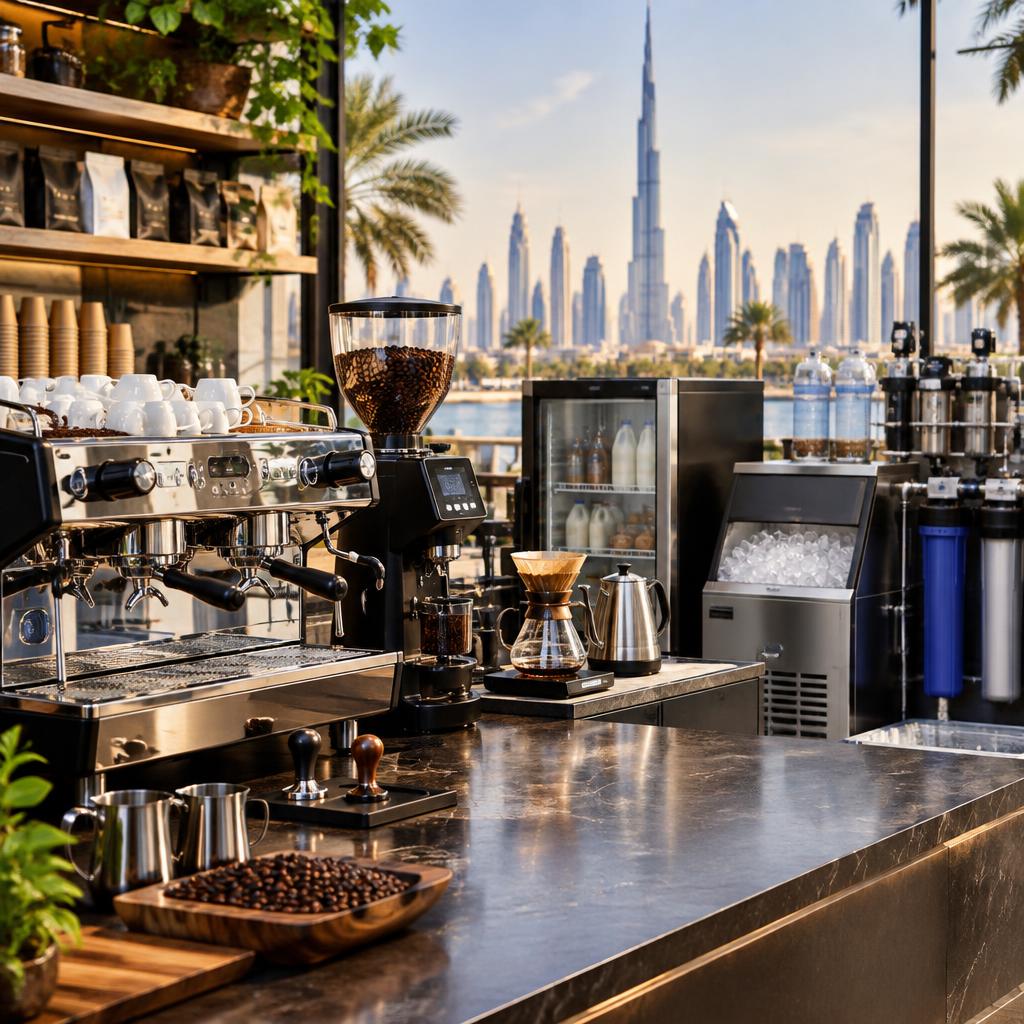
A basic, practical checklist covers the main systems you will need: a commercial espresso machine (or machines), one or more commercial grinders, a brew/alternative coffee station (batch brewer, pour-over setup or specialty filter equipment), reliable refrigeration for milk and perishables, an ice maker if serving iced drinks, a coffee line (cups, knock box, tampers, scales and tools), a sanitary sink and dishwasher/washing system, and point‑of‑sale. Falcon Kitchens' service list shows they supply and support coffee machines, grinders, cold‑line refrigeration, display chillers, ice makers and dishwashers—items commonly requested by new coffee shops.
Selecting your espresso machine: siting and utilities
Espresso machines are the heart of the bar and drive many installation requirements. Before purchase, confirm the machine’s electrical and water specifications from the supplier and the equipment nameplate. Key site questions are whether the machine requires a dedicated circuit or three‑phase power, where the water inlet will be located, and whether a separate drain or waste filter is needed. Plan bench space, clearances for maintenance, ventilation and proximity to grinders and service sinks to optimize workflow.
Grinders, dose control and placement
Commercial grinders should be selected for capacity and consistency. Consider at least one grinder dedicated to espresso and, depending on volume, an additional grinder for decaf or filter coffee. Place grinders near the machine to minimize workflow steps and ensure stable power supply—some grinders can share a circuit, but high use may require dedicated protection. Allow enough bench depth for hopper removal and comfortable access for dosing and cleaning.
Water quality: why testing and treatment are essential
Water chemistry directly affects machine longevity, extraction consistency and taste. Have the site water tested for hardness, chlorine and total dissolved solids before installation. Based on results, install an appropriate multi‑stage filtration and scale‑prevention system sized for commercial coffee equipment. Use a filtration plan that protects boilers and hot water lines and that is easy to service; include an accessible bypass and clear maintenance schedule to avoid interruptions.
Refrigeration and cold‑line considerations
Reliable cold storage is necessary for milk, perishables and some ingredient staging. Options range from under‑counter refrigeration to display chillers and upright storage; Falcon Kitchens lists display chillers, table top and upright freezers/chillers in their offerings. Plan cooling capacity around peak service periods, allow ventilation clearance for condenser units, and ensure drain and floor‑leveling considerations are included in the installation scope to prevent water leaks and condensation issues.
Ice makers and ice handling best practices
If your menu includes iced beverages, an ice maker is a common addition. Ice machines and ice crushers should have dedicated drainage and a hygienic storage bin, and they must be fed by treated water to prevent scale and bacterial growth. Plan ice machine placement with easy access for cleaning and with appropriate ventilation clearance for the condenser. Consider separate service access for maintenance.
Electrical and power distribution checklist (UAE context)
Confirm the site’s main supply type early—commercial premises may offer single‑phase or three‑phase service—and verify the available supply capacity and distribution board layout. Check that each major appliance has the correct dedicated circuit protection, RCD/earth leakage protection where required, and clear labeling. Coordinate cable routing, socket types and breaker sizes with the equipment supplier; many commercial espresso machines and ovens require dedicated, fixed wiring rather than simple plug sockets. Always engage a licensed electrician to produce an electrical load schedule and certification before equipment delivery.
Drainage, ventilation and practical installation details
Plan drainage for espresso machine waste, ice machine overflow and dishwasher discharge; include grease‑traps where required by local regulations. Ensure adequate ventilation for hot equipment and hot water boilers to prevent heat buildup behind counters. Allow removable sections or service panels in cabinetry for routine maintenance and rapid repairs. Small planning choices—location of water shutoffs, access panels and service clearances—make servicing faster and less disruptive to operations.
Commissioning, maintenance and choosing a supplier
When equipment arrives, follow a formal commissioning process: verify correct electrical wiring, confirm water treatment is active, check drainage and run a test program under load. Arrange routine preventive maintenance with your supplier or certified service partner to protect warranties and maintain consistency. Many customers praise suppliers who provide clear installation and after‑sales support; for example, one customer specifically recommended Falcon Kitchens as an excellent place to buy coffee machines and found their staff helpful and professional. Before final purchase, request an installation plan, site checklist and maintenance agreement so expectations and responsibilities are clear.
Next steps for a Sharjah/Dubai coffee bar and quick action checklist
Practical next steps: commission a short site survey, obtain a water test, request electrical load details from your landlord or utility, and prepare a written installation brief for your equipment supplier. If you intend to source machines, grinders, refrigeration or ice makers, confirm lead times and whether installation and commissioning are included. Falcon Kitchens, located in Sharjah and supplying equipment across the UAE, lists coffee machines, grinders, cold‑line equipment and installation/maintenance services that many new coffee bars require. Work with your designer, supplier and a licensed electrician to produce a single, coordinated plan before placing orders—this is the most reliable way to avoid under‑spec’d installations and ensure your coffee bar opens smoothly.
Customer review


Article by
𝐅𝐚𝐥𝐜𝐨𝐧 𝐊𝐢𝐭𝐜𝐡𝐞𝐧𝐬 𝐋𝐋𝐂 - Commercial Kitchen Equipment
Welcome to Falcon Kitchens At Falcon Kitchens, we pride ourselves on being one of the leading suppliers of high-quality commercial kitchen equipment. Our products are designed to meet the varied needs of the food service industry. Whether it is a small café, an up-and-running restaurant, or an industrial kitchen, our commercial kitchen appliances here at Falcon Kitchens will ensure that you have the best solutions for efficiency, reliability, and durability. We have been leading the industry for years now, with the latest technology coupled with craftsmanship in every appliance that leaves our manufacturing line. It’s not about selling kitchen equipment at Falcon Kitchens; it’s building a long-term relationship with clients through support