What to Expect on Installation Day: Professional Kitchen Equipment Setup in Sharjah & Dubai
A practical guide for restaurant, hotel and café owners that explains the typical steps of a commercial kitchen equipment installation—site checks, delivery and positioning, connections, testing and staff handover—so you can plan downtime and avoid surprises.

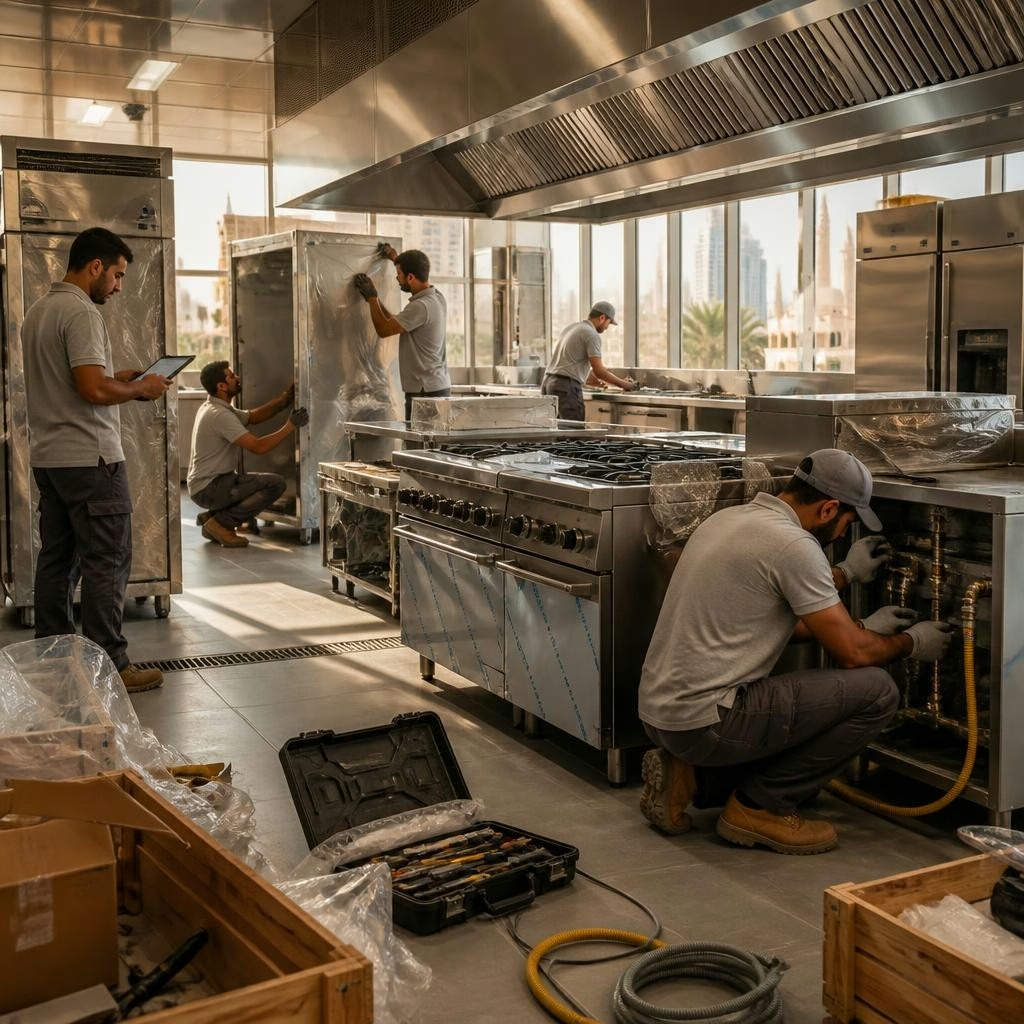
Why a planned installation matters
A professional installation day is more than moving appliances into place: it is the moment your kitchen design becomes operational. Proper planning reduces disruption, prevents avoidable rework and ensures equipment performs reliably from day one. Falcon Kitchens provides supply, installation and aftercare for a wide range of commercial appliances, and many customers note that clear coordination with the supplier makes a complex installation run smoothly.
Pre‑installation site check: what installers look for
Before installers arrive, the project team typically completes a site survey to confirm measurements, clearances and utility locations. Key checks include floor strength and level, doorway and corridor widths for delivery, the positions of gas, water and drainage points, electrical panel capacity and the location of ventilation and extract ducts. If any of these differ from the contract drawings, the team will flag them so you can arrange minor modifications before installation.
Scheduling delivery and managing access
Delivery and access are often the practical constraints that determine how smoothly installation proceeds. Communicate loading bay access, vehicle routes, elevator availability and any on‑site security procedures to the supplier in advance. A coordinated delivery slot reduces waiting time for installation crews and helps you minimise service interruption during busy periods.
On arrival: team roles, paperwork and safety briefing
A professional installer will begin with a short site meeting: introductions, review of the installation plan, confirmation of work areas and a safety briefing. The team lead will check permits or authorisations and identify points of contact for your facility. Customers commonly appreciate installers who are professional and communicative—this helps set expectations and reduces misunderstandings during the day.
Positioning equipment: careful placement and anchoring
Positioning is critical for both operation and service access. Installers will place ovens, fryers, dishwashers, refrigeration and other units according to the agreed layout, check clearances for heat and service access, level equipment and secure it or anchor it where required. For benchtop items and modular lines, alignment and stable mounting ensure consistent workflow and simplify future maintenance.
Utility connections: gas, electrical, water and drainage
Connecting utilities must be handled by qualified technicians and comply with local regulations. The installation team will verify incoming electrical capacity, make final cable connections or coordinate with your electrician, connect water supply and wastewater lines for washing equipment, and check gas fittings for proper pressure and leak‑free joints. Clear documentation of connection points and fuse/circuit details is useful for your operations team after handover.
Ventilation and refrigeration considerations
Extract, canopy and ducting affect safety and kitchen comfort; installers confirm that ventilation meets the equipment’s extraction needs and that refrigeration systems have appropriate condensate drainage and ventilation clearance. Where ductwork, canopy modifications or external condensers are involved, coordination with HVAC contractors may be necessary to complete the installation on the same day or shortly afterwards.
Testing, calibration and the first run
Once installed and connected, each unit is tested to ensure safe operation. Typical checks include powering up controls, running safety interlocks, checking gas ignition and flame stability, verifying temperature control on ovens and refrigeration, and running a wash cycle for dishwashers. Installers will record test results and note any items requiring follow‑up so you have a clear record of the equipment’s initial condition.
Staff briefing and operational handover
A productive installation ends with a concise handover for your staff. The team should demonstrate basic operation, daily cleaning points and simple troubleshooting steps. You should receive manuals and a checklist for routine maintenance items. Customers often value clear, respectful training from installers because it reduces the learning curve and helps staff use equipment safely and efficiently.
Aftercare, maintenance planning and minimising downtime
After installation, establish a plan for routine maintenance and any required spare parts or servicing. Falcon Kitchens provides servicing and repairs as part of its offering, and many clients report ongoing support as a key benefit. To limit future disruption, schedule preventive maintenance during quieter periods, keep installation records and contact details for the installer handy, and document any agreed follow‑up actions from installation day.
Article by
𝐅𝐚𝐥𝐜𝐨𝐧 𝐊𝐢𝐭𝐜𝐡𝐞𝐧𝐬 𝐋𝐋𝐂 - Commercial Kitchen Equipment
Welcome to Falcon Kitchens At Falcon Kitchens, we pride ourselves on being one of the leading suppliers of high-quality commercial kitchen equipment. Our products are designed to meet the varied needs of the food service industry. Whether it is a small café, an up-and-running restaurant, or an industrial kitchen, our commercial kitchen appliances here at Falcon Kitchens will ensure that you have the best solutions for efficiency, reliability, and durability. We have been leading the industry for years now, with the latest technology coupled with craftsmanship in every appliance that leaves our manufacturing line. It’s not about selling kitchen equipment at Falcon Kitchens; it’s building a long-term relationship with clients through support